When writing or speaking about someone’s death, the words you choose carry emotional weight. Many people wonder about “passed away vs past away” and which one is correct. It’s a common confusion, especially because both phrases sound similar but only one is actually correct.
In this guide, you’ll learn the real difference, see clear examples, avoid common mistakes, and feel confident using the right phrase in sensitive situations. If you’re writing formally or expressing sympathy, this small detail makes a big impact.
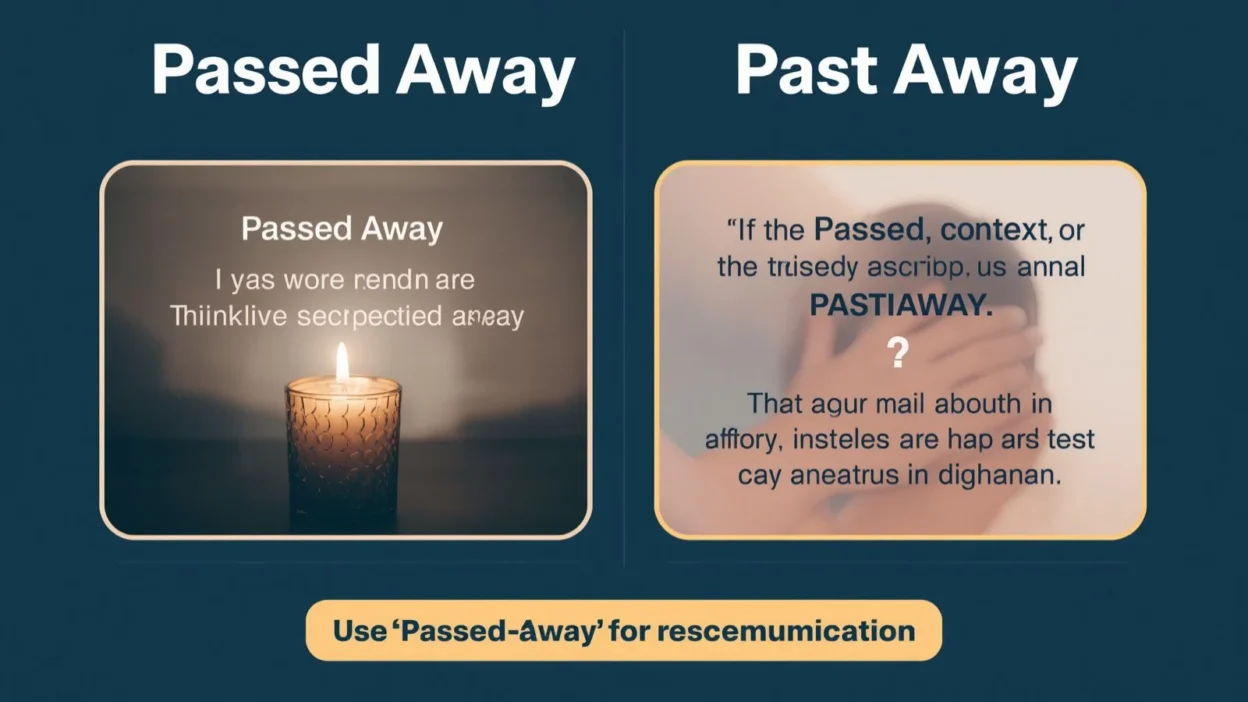
Quick Answer
- ✅ Correct: Passed away
- ❌ Incorrect: Past away
“Passed away” is a polite, respectful euphemism for death.
“Past away” is grammatically incorrect and should not be used.
What Does “Passed Away” Mean?
“Passed away” is a gentle and respectful way to say that someone has died. It’s often used to soften the emotional impact of the word death.
Why people use “passed away”:
- It sounds more compassionate and less harsh
- It’s appropriate in formal and informal contexts
- It shows empathy and respect for the deceased and their family
Examples:
- My grandfather passed away peacefully last night.
- She was deeply saddened when her friend passed away.
- We regret to inform you that our colleague has passed away.
Why “Past Away” Is Incorrect
The phrase “past away” is simply a mistake. It comes from confusion between the words passed and past, which sound alike but have different meanings.
Understanding the difference:
- Passed → past tense of pass (a verb)
- Past → refers to time gone by or position (a noun, adjective, or preposition)
Because “passed away” uses a verb phrase, replacing it with “past” breaks the grammar.
Incorrect Examples:
- ❌ He past away yesterday.
- ❌ Her dog past away last year.
These sentences should always use passed away instead.
Passed vs Past: Simple Breakdown
Understanding these two words helps prevent many errors beyond this phrase.
Passed (Verb)
- Means: moved, completed, died (in context)
- Example: She passed the exam.
Past (Noun/Adjective/Preposition)
- Means: earlier time or beyond
- Example: That happened in the past.
Comparison Table: Passed Away vs Past Away
| Feature | Passed Away ✅ | Past Away ❌ |
| Correct usage | Yes | No |
| Part of speech | Verb phrase | Incorrect combination |
| Meaning | A polite way to say “died” | No valid meaning |
| Example | He passed away peacefully | He past away peacefully ❌ |
| Acceptable in writing | Yes | Never |
Common Mistakes to Avoid
Many learners and even native speakers mix these up. Here are the most common pitfalls:
1. Spelling Confusion
Because passed and past sound identical, they’re often swapped accidentally.
2. Autocorrect Errors
Sometimes typing tools incorrectly suggest “past,” so always double-check.
3. Lack of Grammar Awareness
Not knowing that “passed” is a verb leads to misuse in phrases like this.
Quick Tip:
If you’re talking about an action (something happening), you likely need passed, not past.
When to Use “Passed Away”
Use this phrase in situations that require sensitivity and respect.
Appropriate contexts:
- Obituaries
- Sympathy messages
- Formal announcements
- Personal conversations about loss
Example Sentences:
- We are heartbroken that she passed away so suddenly.
- His father passed away after a long illness.
- The community mourns those who have passed away.
Alternatives to “Passed Away”
Sometimes you may want variety or different tones. Here are some alternatives:
Gentle Alternatives:
- Passed on
- No longer with us
- Departed
- Gone to rest
More Direct (use carefully):
- Died
- Deceased
Each option carries a slightly different tone, so choose based on context.
American vs British English Usage
Good news: there is no difference between American and British English when it comes to this phrase.
- 🇺🇸 American English: passed away ✔
- 🇬🇧 British English: passed away ✔
Both forms use the same spelling and meaning. The confusion with past away is considered incorrect in all English varieties.
Why This Mistake Matters
You might think it’s a small spelling issue but in sensitive contexts, it matters a lot.
FAQs
1. Is “past away” ever correct?
No, it is always incorrect. The correct phrase is passed away.
2. Why do people confuse passed and past?
They sound the same (homophones), which makes them easy to mix up.
3. Can I just say “died” instead?
Yes, but “passed away” is softer and more respectful in many situations.
4. Is “passed away” formal or informal?
It works in both formal and informal contexts, especially when expressing sympathy.
5. What is the grammar rule behind “passed away”?
“Passed” is the past tense of the verb pass, making it the correct form in this phrase.
6. Is “passed on” the same as “passed away”?
Yes, it has a similar meaning but is slightly less formal.
7. Should I correct someone who says “past away”?
If appropriate, yes but do it politely, especially in sensitive contexts.
8. Is this mistake common in SEO writing?
Yes, and fixing it can improve credibility and search rankings.
Final Summary
The difference between passed away vs past away is simple but important. “Passed away” is the correct and respectful phrase used to describe someone’s death, while “past away” is a grammatical error that should be avoided completely. Understanding the role of passed as a verb helps eliminate confusion.
Using the right phrase shows empathy, clarity, and professionalism especially in emotional or formal writing. Small language choices like this can make a big difference in how your message is received.
Actionable Takeaway
- Always write “passed away” when referring to death
- Remember: passed = verb, past = time/place
- Proofread sensitive writing carefully
- Choose words that reflect empathy and respect
Mastering small distinctions like this improves both your writing accuracy and emotional impact.

Matthew Benjamin is a contributing author at SpellPeak, dedicated to clear, engaging, and purposeful writing. He focuses on creating informative content that helps readers understand complex ideas with ease. His work emphasizes accuracy, creativity, and practical value, supporting better communication and thoughtful digital learning for a global audience.