If you’ve ever paused mid-sentence wondering whether to write “anyway” or “anyways,” you’re not alone. These two words look almost identical, but their usage can subtly affect how polished and professional your writing sounds.
The good news? The difference is simple once you understand it. In this guide, you’ll learn when to use anyway, when anyways might be acceptable, and how to avoid common mistakes with confidence.
Quick Answer:
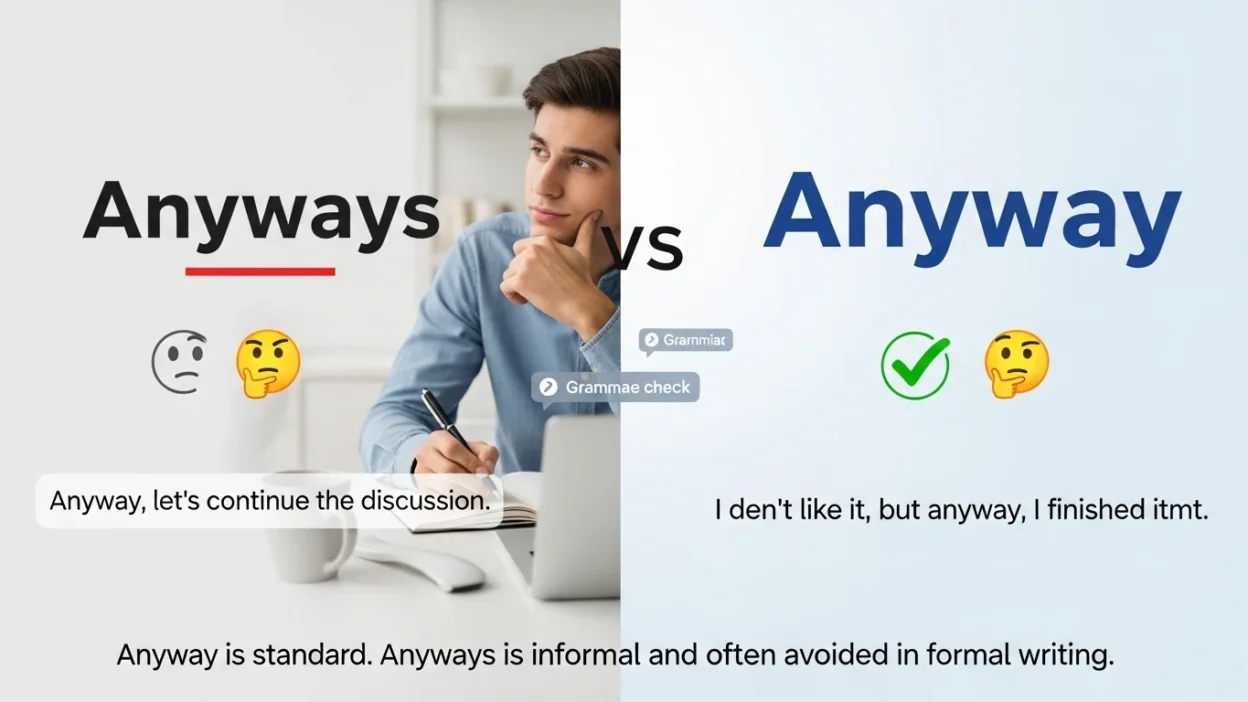
- “Anyway” is the standard, correct form used in both formal and informal English.
- “Anyways” is considered informal or nonstandard, though it appears in casual speech, especially in American English.
- For professional, academic, or polished writing, always choose “anyway.”
What Does “Anyway” Mean?
“Anyway” is an adverb with several useful meanings in everyday English. It helps you transition thoughts, emphasize a point, or return to a topic.
Common meanings of “anyway”:
- Despite something
Example: I was tired, but I went to the gym anyway. - To change or return to a topic
Example: Anyway, let’s get back to the main issue. - To emphasize a statement
Example: It wasn’t important anyway.
Why it matters:
“Anyway” is widely accepted in formal writing, academic papers, emails, and professional communication, making it the safer and smarter choice.
What Does “Anyways” Mean?
“Anyways” carries the same meaning as “anyway,” but it is considered informal, conversational, and sometimes nonstandard.
Where you might hear “anyways”:
- Casual conversations
- Regional dialects (especially in parts of the United States)
- Informal storytelling
Example: Anyways, I decided not to go.
Important note:
While “anyways” isn’t technically wrong in casual speech, it can sound unpolished or incorrect in formal contexts.
Anyway vs Anyways: Key Differences
Here’s a simple comparison to make things crystal clear:
| Feature | Anyway | Anyways |
| Correctness | Standard and correct | Informal/nonstandard |
| Formal writing | ✔ Always appropriate | ✘ Avoid |
| Casual speech | ✔ Common | ✔ Sometimes used |
| Tone | Neutral and professional | Relaxed and conversational |
| Global acceptance | Widely accepted worldwide | Limited and regional |
Examples in Sentences
Seeing both words in context can make the difference stick instantly.
Using “Anyway” (Correct)
- I didn’t like the movie, but I watched it anyway.
- Anyway, let’s move on to the next topic.
- She said it didn’t matter anyway.
Using “Anyways” (Informal)
- Anyways, I’ll call you later.
- He didn’t care anyways.
👉 Tip: If you’re unsure, replace “anyways” with “anyway”—it will almost always improve your sentence.
Common Mistakes to Avoid
Even native speakers mix these up. Here are the most frequent errors:
1. Using “anyways” in formal writing
❌ Anyways, we should proceed with the plan.
✔ Anyway, we should proceed with the plan.
2. Assuming both are equally correct
They’re not. “Anyway” is standard; “anyways” is informal.
3. Overusing “anyway” as filler
Using it too often can weaken your writing.
❌ Anyway, I think anyway we should anyway go.
✔ I think we should go.
4. Confusing tone and audience
- Formal email → use anyway
- Chat with friends → either works, but “anyway” still sounds cleaner
American vs British English Differences
This is where things get interesting.
- American English:
“Anyways” appears more frequently in casual speech, though it’s still informal. - British English:
“Anyways” is rarely used and often considered incorrect. “Anyway” is strongly preferred.
👉 Bottom line: If you’re writing for a global audience, stick with “anyway.”
When Should You Use “Anyway”?
Use “anyway” in these situations:
- Professional emails
- Academic writing
- Blog posts and articles
- Business communication
- Public speaking (formal settings)
Example:
Anyway, I appreciate your time and look forward to your response.
When (If Ever) Is “Anyways” Acceptable?
“Anyways” is acceptable in:
- Casual conversations
- Informal texting
- Dialogue in storytelling
But even here, many people still prefer “anyway” because it sounds more natural and correct.
👉 Think of “anyways” as optional—but not ideal.
Synonyms and Related Words (LSI Keywords)
To improve your vocabulary and writing variety, here are alternatives to “anyway”:
- Regardless
- Nevertheless
- In any case
- Still
- At any rate
- Back to the point
Example:
At any rate, we need to finish this project today.
Why This Difference Matters
You might wonder: does this really matter?
Yes—especially in writing.
Choosing “anyway” over “anyways” can:
- Make your writing look more professional
- Improve clarity and credibility
- Help you avoid sounding informal in serious contexts
Small word choices can leave a big impression.
FAQs
1. Is “anyways” grammatically correct?
“Anyways” is considered informal and nonstandard. It’s better to use “anyway” in most situations.
2. Why do people say “anyways”?
It’s often used in casual speech or regional dialects, especially in American English.
3. Can I use “anyways” in essays?
No. Always use “anyway” in academic or formal writing.
4. Is “anyways” wrong?
Not exactly wrong in conversation, but it’s not appropriate for formal contexts.
5. Which is more common: anyway or anyways?
“Anyway” is far more widely used and accepted worldwide.
6. Is “anyways” slang?
It’s not strictly slang, but it’s informal and conversational.
7. Do native speakers use “anyways”?
Yes, some do in casual speech—but many avoid it in writing.
8. Should I completely avoid “anyways”?
For clarity and professionalism, yes—especially in writing.
Final Summary
The difference between “anyway vs anyways” comes down to formality and correctness. “Anyway” is the standard, widely accepted word used in both spoken and written English. It fits seamlessly into formal communication, making it the safest and most reliable choice.
“Anyways,” on the other hand, lives in the world of casual conversation. While you may hear it in everyday speech, it lacks the polish needed for professional or academic writing. Choosing “anyway” ensures your message is clear, credible, and appropriate for any audience.
Actionable Takeaway
Whenever you’re writing or speaking, ask yourself: Is this formal or informal? If there’s any doubt, go with “anyway.” It’s correct, clean, and universally accepted.
To build stronger writing habits:
- Replace “anyways” with “anyway” by default
- Use synonyms to avoid repetition
- Keep your tone consistent with your audience
Mastering small differences like this can significantly improve your communication skills over time.

Ethan William is the author behind SpellPeak, passionate about clear communication and meaningful language. He writes to help readers express ideas with confidence, simplicity, and impact. His work focuses on clarity, learning, and empowering individuals and businesses through thoughtful, practical content. He values creativity, consistency, and ethical digital publishing worldwide.