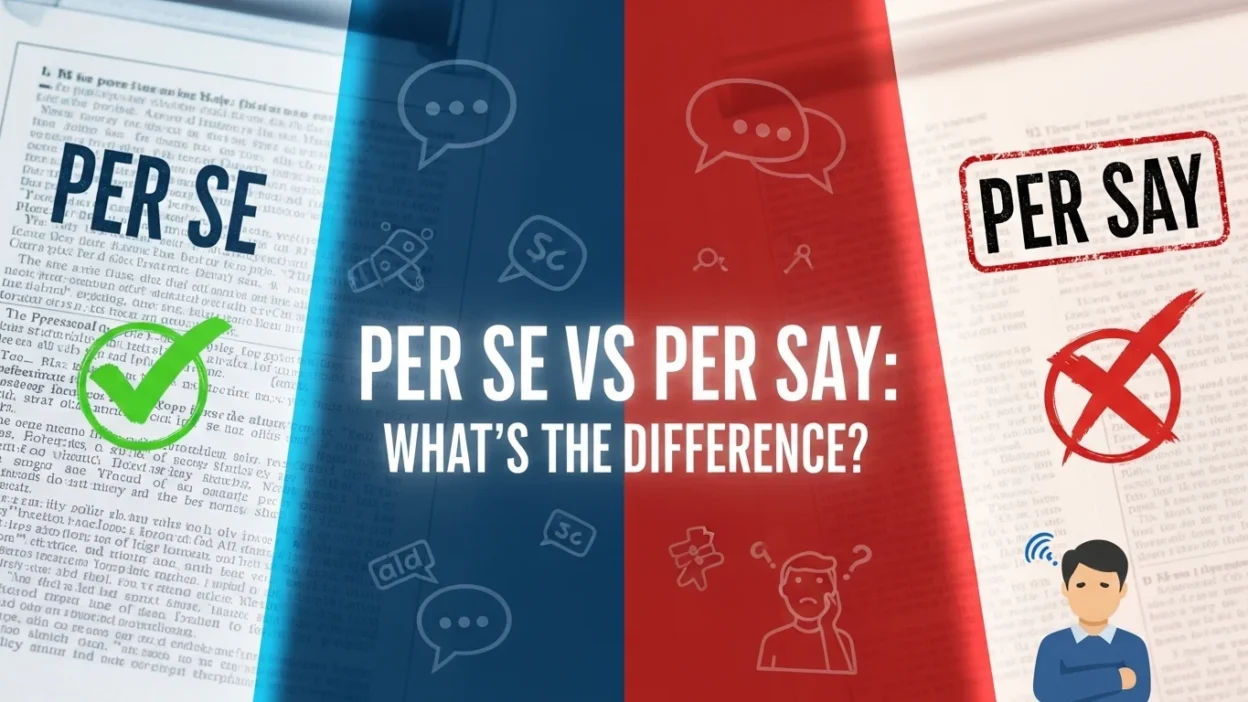
If you’ve ever typed “per say” and paused, wondering if it’s right you’re not alone. This small phrase causes a surprisingly big amount of confusion, especially in everyday writing and online conversations.
The truth is simple, but often misunderstood. In this guide, you’ll learn exactly what “per se” means, why “per say” is incorrect, and how to use the phrase confidently in both formal and casual contexts.
Quick Answer
- ✅ Correct: per se
- ❌ Incorrect: per say
- Meaning: “By itself” or “intrinsically”
- Origin: Latin
- Use it when: You want to clarify something isn’t inherently true, but depends on context
What Does “Per Se” Mean?
Per se is a Latin phrase that translates to “by itself” or “in and of itself.” It’s used when you want to separate the core nature of something from its surrounding context.
For example:
- “The movie isn’t bad per se, but it’s too long.”
- “Money isn’t the problem per se it’s how it’s managed.”
In both cases, per se helps clarify that the issue isn’t the thing itself, but something related to it.
Why “Per Say” Is Incorrect
“Per say” is a misspelling based on how per se sounds when spoken. Since the phrase is borrowed from Latin, its spelling doesn’t follow standard English phonetics.
People often write “per say” because:
- It sounds identical to per se
- They’ve heard it more than they’ve seen it written
- Autocorrect sometimes doesn’t catch it
But in formal, academic, or professional writing, using “per say” can hurt your credibility.
Examples of “Per Se” in Sentences
Here are clear, real-life examples to help you use per se naturally:
- “I’m not against working late per se, but I prefer better planning.”
- “The idea isn’t wrong per se, just poorly executed.”
- “He’s not rude per se, just very direct.”
Notice how per se softens the statement and adds nuance.
Common Mistakes to Avoid
Even though per se is simple, it’s easy to misuse. Here are the most common errors:
1. Writing “Per Say”
- ❌ “It’s not bad per say”
- ✅ “It’s not bad per se”
2. Overusing the Phrase
Using per se too often can make your writing sound unnatural or overly formal.
- ❌ “This isn’t expensive per se, and it’s not difficult per se…”
- ✅ Use it only when it adds clarity
3. Using It Without Context
Per se works best when you’re making a distinction.
- ❌ “It’s per se a good product”
- ✅ “It’s not a good product per se, but it has some useful features”
Per Se vs Per Say: Side-by-Side Comparison
| Feature | Per Se | Per Say |
| Correct Spelling | ✅ Yes | ❌ No |
| Meaning | By itself; intrinsically | No meaning |
| Origin | Latin | Misheard English spelling |
| Usage | Formal and informal writing | Incorrect usage |
| Example | “Not wrong per se” | “Not wrong per say” ❌ |
When Should You Use “Per Se”?
Use per se when you want to:
- Clarify that something isn’t inherently true
- Add nuance to your argument
- Separate the idea from its context
It’s especially common in:
- Academic writing
- Professional communication
- Thoughtful conversations
American vs British English Usage
Good news there’s no difference between American and British English when it comes to per se. Both forms:
- Use the same spelling
- Follow the same meaning
- Apply it in similar contexts
However, British English writers may use Latin phrases slightly more often in formal writing, while American English leans toward simpler alternatives in casual contexts.
Alternatives to “Per Se”
If per se feels too formal, here are some simpler alternatives:
- “necessarily”
- “in itself”
- “intrinsically”
- “by itself”
Example:
- “It’s not bad in itself, but it could be better.”
Using alternatives can improve readability, especially for a broader audience.
SEO and Writing Tip: Should You Avoid “Per Se”?
Not at all but use it wisely.
For SEO and readability:
- Keep sentences clear and simple
- Use per se only when it adds meaning
- Avoid forcing it into content unnaturally
Google values clarity and user experience, so always prioritize helpful, natural writing.
FAQs
1. Is “per say” ever correct?
No, “per say” is always incorrect. The correct phrase is per se.
2. What language does “per se” come from?
It comes from Latin, meaning “by itself.”
3. Can I use “per se” in casual writing?
Yes, but use it sparingly. It may sound slightly formal in everyday conversation.
4. Is “per se” outdated?
No, it’s still widely used in modern English, especially in professional and academic contexts.
5. How do you pronounce “per se”?
It’s pronounced: per say (which is why people often misspell it).
6. Can I replace “per se” with simpler words?
Yes phrases like “in itself” or “necessarily” work well in most cases.
7. Why do people confuse “per se” and “per say”?
Because they sound identical when spoken, leading to spelling errors.
8. Is it okay to use “per se” in SEO content?
Yes, as long as it fits naturally and improves clarity.
Final Thoughts
Understanding the difference between per se and “per say” is less about memorization and more about awareness. Once you know that per se is the correct Latin phrase meaning “by itself,” the confusion quickly fades. It’s a small detail but one that makes a big difference in polished writing.
The key is to use per se intentionally. Don’t force it into sentences where simpler words would do. Instead, let it serve its purpose: adding nuance and clarity when distinguishing between something’s essence and its context.
Actionable Takeaway
Next time you’re about to write “per say,” pause and correct it to per se. Then ask yourself: does this phrase actually add value to your sentence? If yes, use it confidently. If not, swap it for a clearer alternative.
Strong writing isn’t about sounding complex it’s about being understood. Mastering small distinctions like this helps you communicate with precision and confidence.

Noah Jacob is the administrator of SpellPeak, responsible for managing website operations, content coordination, and platform performance. He ensures smooth functionality, security, and reliability while supporting the team in delivering a seamless, user-focused experience and maintaining high standards of quality across the site.