When it comes to English words that sound almost identical but mean completely different things, “specs vs specks” is one of the most confusing pairs for learners and even native speakers. This confusion often leads to spelling mistakes, miscommunication, and incorrect usage in writing.
In this guide, you’ll clearly understand the difference between specs and specks with simple explanations, real-life examples, a comparison table, and common mistakes to avoid. If you’re a student, writer, or just improving your English, this article will make the distinction crystal clear.
Quick Answer:
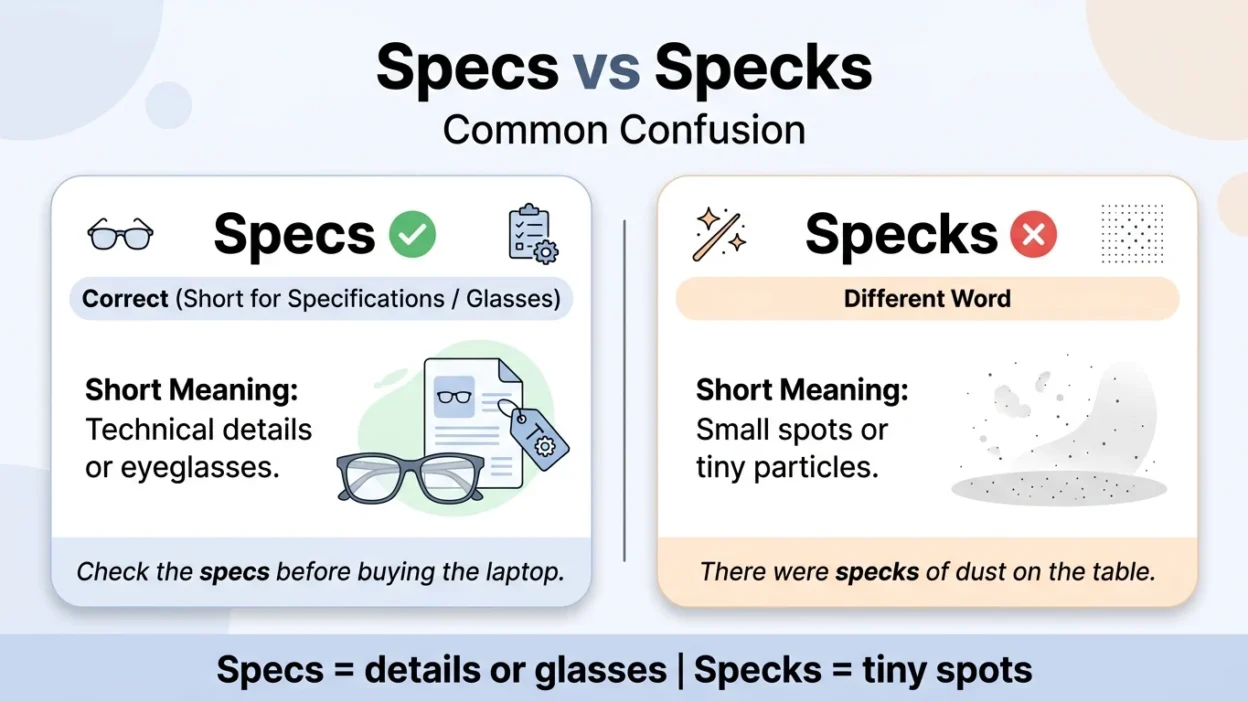
“Specs” usually refers to specifications (details about something) or eyeglasses in informal English, while “specks” means tiny spots, dots, or small particles.
- Specs = short form of specifications / glasses
- Specks = very small particles or tiny spots
They sound similar but are completely unrelated in meaning and usage.
Meaning of Specs
The word “specs” has two common meanings depending on context:
- Specifications
“Specs” is a shortened form of “specifications,” which refers to technical details or requirements of something.
Examples:
- The phone specs include 8GB RAM and 256GB storage.
- Please check the specs before buying a laptop.
- Eyeglasses (informal usage)
In casual English, especially spoken language, “specs” means glasses.
Examples:
- He can’t read without his specs.
- She bought new specs yesterday.
So, “specs” is mostly used in tech, shopping, and informal conversation.
Meaning of Specks
“Specks” refers to tiny particles, small spots, or very small amounts of something visible.
It is often used for:
- Dust particles
- Tiny dots
- Small stains
- Small pieces of matter
Examples:
- There were specks of dust on the table.
- I saw specks of paint on the floor.
- Her dress had specks of glitter.
Unlike “specs,” specks are always physical and visual in nature.
Key Differences Between Specs and Specks
Although they sound almost identical, their meanings and usage are very different. Here’s a simple breakdown:
| Feature | Specs | Specks |
| Meaning | Specifications or glasses | Tiny particles or spots |
| Type | Abbreviation / informal noun | Regular noun |
| Usage | Technology, eyewear, details | Physical objects, dust, spots |
| Context | Technical or casual speech | Visual description |
| Example | Laptop specs, wearing specs | Specks of dust, specks of dirt |
This table makes it clear that the two words cannot be used interchangeably.
Examples to Understand Specs vs Specks Better
Let’s look at more real-world examples to eliminate confusion:
Specs examples:
- The camera specs are impressive for its price.
- I always check the specs before buying a phone.
- He lost his specs during travel.
Specks examples:
- I noticed specks of dust on the old book.
- There were specks of sunlight coming through the window.
- The glass had specks of dirt after the storm.
Notice how “specs” relates to information or glasses, while “specks” always refers to something tiny and visible.
Common Mistakes People Make
Many English learners confuse these two words due to similar pronunciation. Here are common mistakes:
- Writing “specks” instead of “specs”
Incorrect: The laptop specks are good.
Correct: The laptop specs are good. - Using “specs” for dust or particles
Incorrect: There are specs on the table.
Correct: There are specks on the table. - Mixing both in formal writing
Using the wrong word can make your writing unclear or unprofessional, especially in academic or technical content.
Tip: Always check whether you are talking about information/details (specs) or tiny particles (specks).
American vs British English Usage
Interestingly, both words are used the same way in American and British English, but there is a slight difference in informal usage:
- “Specs” (glasses) is more commonly used in British English casual speech.
- In American English, people often say “glasses” instead of “specs.”
- “Specks” remains the same in both varieties and is universally understood.
So while pronunciation is similar across regions, usage preferences may differ slightly.
Why People Confuse Specs and Specks
The confusion happens mainly because:
- They are homophones (sound very similar)
- They differ by only one letter
- Fast speech makes them hard to distinguish
- Auto-correct errors in typing
Understanding meaning instead of sound is the key to avoiding mistakes.
Quick Memory Trick to Remember
Here’s a simple trick:
- Specs = Specifications or Spectacles (glasses)
- Specks = Small Specks (tiny particles)
Think:
Specs = “Specific details”
Specks = “Small spots”
This association helps you remember the correct spelling easily.
FAQs
1. What is the main difference between specs and specks?
Specs refers to specifications or glasses, while specks means tiny particles or spots.
2. Are specs and specks pronounced the same?
Yes, they are nearly homophones, which is why they are often confused.
3. Can specs mean dust or dirt?
No, specs never refers to dust. Dust is always “specks.”
4. Is specs a formal word?
“Specs” is informal when used for glasses but acceptable in technical contexts for specifications.
5. What is the plural of speck?
The plural form is “specks.”
6. Which is correct: laptop specs or laptop specks?
“Laptop specs” is correct because it refers to specifications.
7. Do British people say specs?
Yes, “specs” is commonly used in British informal English for glasses.
8. How can I avoid confusing specs and specks?
Focus on meaning: details/glasses = specs, tiny particles = specks.
Summary :
The confusion between specs vs specks is common, but once you understand their meanings, it becomes very easy to use them correctly.
“Specs” refers to specifications or glasses, often used in technical or informal contexts, while “specks” refers to small visible particles like dust, dirt, or tiny spots.
Remembering this difference will improve your writing accuracy and help you avoid embarrassing mistakes in both academic and professional communication.
Whenever you’re unsure, think about whether you’re talking about details (specs) or tiny particles (specks).
Actionable Takeaway
Next time you write or speak, pause and identify the context. If it involves technical details or glasses, use “specs.” If it involves tiny visible particles, use “specks.” Practicing this small habit will make your English more precise and professional over time.

Ethan William is the author behind SpellPeak, passionate about clear communication and meaningful language. He writes to help readers express ideas with confidence, simplicity, and impact. His work focuses on clarity, learning, and empowering individuals and businesses through thoughtful, practical content. He values creativity, consistency, and ethical digital publishing worldwide.