English can be confusing, especially when two words seem almost identical but are used in different situations. One of the most common grammar questions people ask is: Should you say “hung” or “hanged”? If you have ever paused while writing a sentence like “He was hung” or “The picture was hanged,” you are not alone.
The good news is that the difference between hung vs hanged is actually simple once you understand the rule. In this guide, you’ll learn the meanings, correct usage, examples, common mistakes, and grammar tips so you can use both words confidently in everyday writing and conversation.
Quick Answer
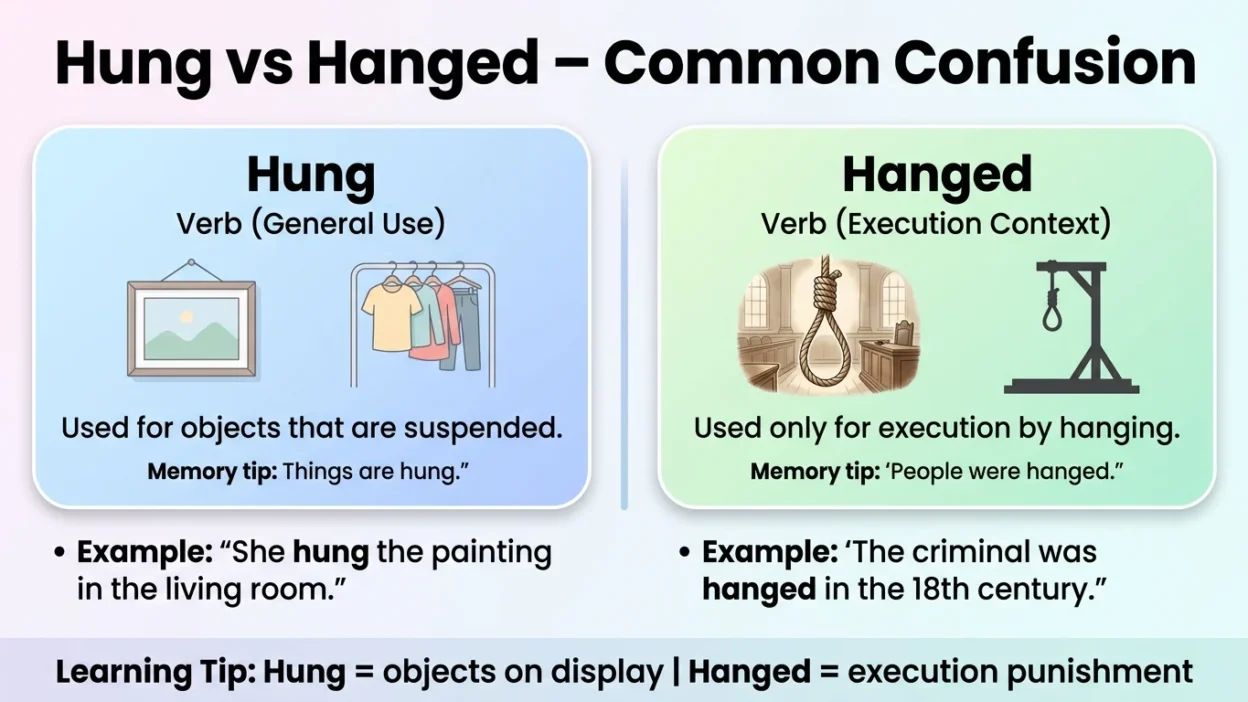
- Hung is the standard past tense and past participle of hang for most situations.
- Example: She hung the painting on the wall.
- Hanged is used specifically when talking about execution by hanging.
- Example: The criminal was hanged in the 18th century.
In short:
- Use hung for objects, decorations, clothing, or general actions.
- Use hanged only for death by hanging.
What Does “Hang” Mean?
The verb hang means to suspend or attach something from above so it can dangle freely.
Examples:
- Hang a picture
- Hang clothes
- Hang decorations
- Hang a lamp
The confusion begins because the verb has two past tense forms:
- Hung
- Hanged
Both are technically correct, but they are used in different contexts.
What Does “Hung” Mean?
Hung is the most common form and is used in almost every everyday situation.
Examples of “Hung”
- She hung the mirror in the hallway.
- We hung Christmas lights outside.
- He hung his jacket near the door.
- The chef hung herbs to dry.
In modern English, “hung” is the default choice unless you are specifically referring to execution.
Common Situations Where “Hung” Is Used
- Decorations
- Art and paintings
- Clothing
- Signs and banners
- Curtains
- Lights
- Plants or food drying
Example Sentences
- The family hung photos around the living room.
- They hung a beautiful chandelier from the ceiling.
- I hung my backpack on the chair.
What Does “Hanged” Mean?
Hanged has a very specific meaning. It refers to someone being executed by hanging.
Examples of “Hanged”
- The prisoner was hanged for treason.
- In ancient times, criminals were often hanged publicly.
- The outlaw was hanged at dawn.
This usage is connected to legal or historical punishment.
Important Grammar Rule
If the sentence involves:
- execution,
- capital punishment,
- or death by hanging,
then hanged is the correct word.
Hung vs Hanged: Main Difference
Here is the simplest way to remember it:
| Word | Meaning | Example |
| Hung | General past tense of hang | She hung the painting. |
| Hanged | Executed by hanging | The criminal was hanged. |
Why Does English Have Two Forms?
The difference comes from the history of English grammar. Long ago, many verbs had multiple forms. Over time, English simplified most of them, but “hanged” survived in legal and historical contexts.
Today:
- “Hung” became the everyday standard.
- “Hanged” remained tied to executions.
That is why modern English still keeps both versions.
Examples of Hung and Hanged in Sentences
Correct Use of “Hung”
- The artist hung her newest work in the gallery.
- Mom hung fresh towels in the bathroom.
- He hung the keys beside the door.
- We hung balloons for the birthday party.
Correct Use of “Hanged”
- The pirate was hanged for his crimes.
- Historical records show that several men were hanged.
- The king ordered the traitor to be hanged.
Common Mistakes People Make
Even native English speakers mix these up. Here are the most common errors.
Mistake 1: Using “Hanged” for Objects
❌ She hanged the picture on the wall.
✅ She hung the picture on the wall.
Pictures are not executed, so use “hung.”
Mistake 2: Using “Hung” for Execution
❌ The prisoner was hung last year.
✅ The prisoner was hanged last year.
Legal execution requires “hanged.”
Mistake 3: Assuming Both Words Are Interchangeable
They are not fully interchangeable in formal English.
While some casual speakers may say “hung” in every situation, professional writing, journalism, academic work, and grammar guides still follow the traditional distinction.
Easy Trick to Remember the Difference
Use this simple memory tip:
If it dies, use “hanged.”
If it hangs, use “hung.”
Examples:
- A coat hangs → hung
- A person executed → hanged
This trick helps many learners remember the rule instantly.
American vs British English
The good news is that both American and British English follow the same basic rule.
American English
- Uses hung for normal situations.
- Uses hanged for executions.
British English
- Follows the same distinction.
- “Hanged” is still mainly reserved for legal execution contexts.
So there is no major difference between the two varieties of English in this case.
Is “Hung” Ever Used Informally for People?
Yes, sometimes.
In casual conversation, people may say:
- “He hung himself.”
However, formal grammar guides usually prefer:
- “He hanged himself.”
This is because the action involves death by hanging.
Still, in modern spoken English, “hung” is increasingly common in informal speech. Formal writing, though, should keep the traditional distinction.
Grammar Notes for “Hang”
Here are the verb forms:
| Tense | General Meaning | Execution Meaning |
| Present | Hang | Hang |
| Past | Hung | Hanged |
| Past Participle | Hung | Hanged |
Examples
- I hang decorations every year.
- I hung decorations yesterday.
- The decorations were hung beautifully.
Execution example:
- The criminal was hanged.
- The prisoner had been hanged.
Related Words and Synonyms
Here are some related terms and LSI keywords connected to hung vs hanged:
- past tense of hang
- grammar difference
- English usage
- correct grammar
- hung meaning
- hanged meaning
- English grammar rules
- commonly confused words
- word usage
- grammar mistakes
- hang verb forms
- proper English
Using these naturally improves understanding and SEO relevance.
When Should You Use “Hung”?
Use “hung” when talking about:
- decorations,
- art,
- clothing,
- signs,
- curtains,
- lights,
- or anything physically suspended.
Examples
- The café hung vintage lights from the ceiling.
- She hung her dress carefully in the closet.
- The school hung banners for graduation.
When Should You Use “Hanged”?
Use “hanged” only when referring to:
- execution,
- suicide by hanging,
- or legal punishment involving hanging.
Examples
- The spy was hanged during wartime.
- According to the report, the accused man was hanged.
FAQs
1. Is “hung” or “hanged” a picture?
The correct phrase is:
- “I hung a picture.”
Pictures are suspended objects, not executions.
2. Why is “hanged” only used for executions?
English kept “hanged” as a special historical and legal form connected to death by hanging.
3. Can I use “hung” for a person?
In informal speech, yes. But in formal grammar, “hanged” is preferred if the meaning involves execution or death by hanging.
4. Is “hanged” old-fashioned?
Not entirely. It is still actively used in legal, historical, and formal writing.
5. Which word is more common?
“Hung” is far more common because it applies to everyday situations.
6. Do British people say “hung” or “hanged”?
British English uses the same rule:
- “hung” for objects,
- “hanged” for execution.
7. Is “hunged” a word?
No. “Hunged” is incorrect grammar.
8. What is the past participle of “hang”?
It can be either:
- “hung” for normal contexts,
- “hanged” for execution contexts.
Final Thoughts :
Understanding the difference between hung vs hanged is easier than it first appears. In almost every everyday situation, hung is the correct choice. Whether you are talking about pictures, decorations, clothes, or signs, “hung” is the standard past tense and past participle form of “hang.”
The word hanged should only be used in specific contexts involving execution or death by hanging. Keeping this simple distinction in mind will help your writing sound more natural, accurate, and professional. When in doubt, remember the easy rule: objects are hung, people executed are hanged.
Actionable Takeaway
Before using either word, ask yourself one question:
“Am I talking about execution or simply hanging something?”
- If it is an object or decoration → use hung
- If it involves execution by hanging → use hanged
This quick check will help you avoid one of the most common English grammar mistakes.

Ethan William is the author behind SpellPeak, passionate about clear communication and meaningful language. He writes to help readers express ideas with confidence, simplicity, and impact. His work focuses on clarity, learning, and empowering individuals and businesses through thoughtful, practical content. He values creativity, consistency, and ethical digital publishing worldwide.