If you’ve ever seen the words yea and nay and wondered whether they’re just fancy versions of yes and no, you’re not alone. These two terms often pop up in formal settings, historical texts, or even online discussions, leaving many people unsure about their correct usage.
Understanding the difference between yea vs nay is simpler than it looks but using them correctly can instantly elevate your writing and comprehension, especially in formal or political contexts.
Let’s break it down in a clear, practical way so you can use both words with confidence.
Quick Answer:
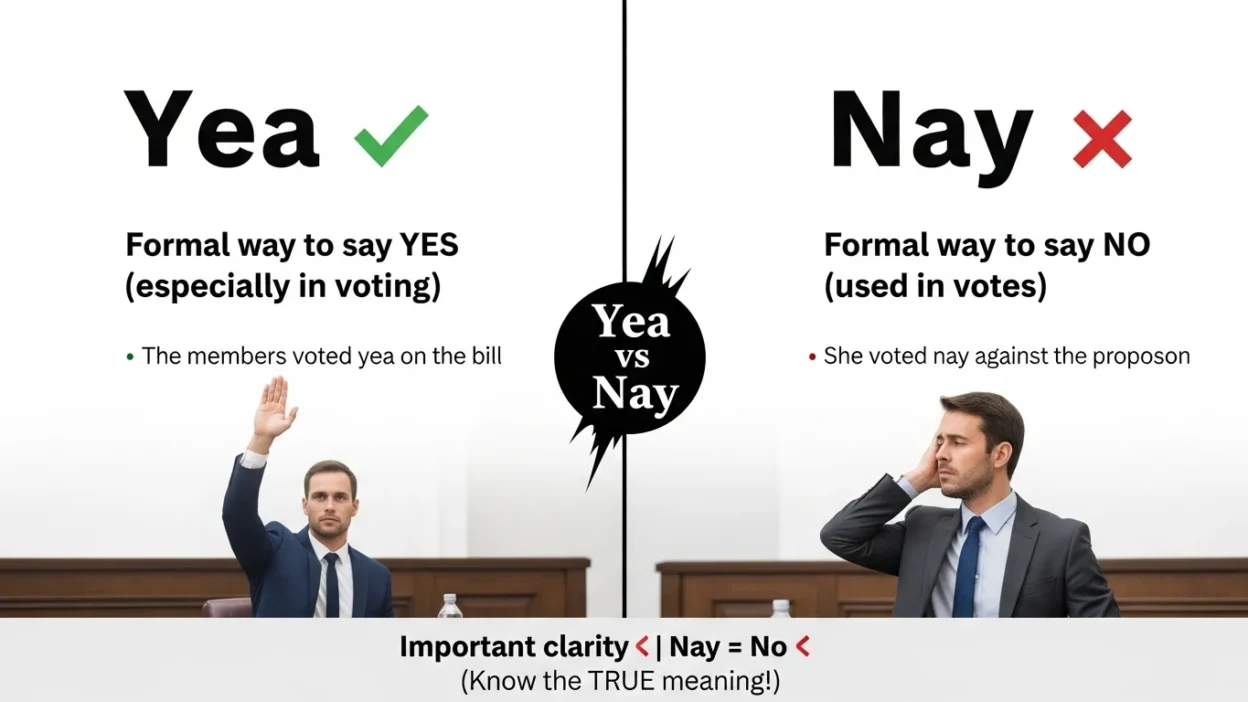
- Yea = Yes (used mainly in formal voting or old-fashioned contexts)
- Nay = No (used mainly in formal voting or old-fashioned contexts)
In modern everyday English, people usually say yes and no, but yea and nay still appear in official decisions, parliamentary language, and historical references.
What Does “Yea” Mean?
Yea is an old or formal way of saying yes. It expresses agreement, approval, or support.
Where You’ll See “Yea”
- Government or parliamentary votes
- Formal decision-making settings
- Historical or biblical language
- Occasionally in poetic or dramatic writing
Examples of “Yea”
- The council voted yea on the proposal.
- All those in favor, say yea.
- She nodded in agreement, whispering a quiet yea.
In modern conversation, you wouldn’t normally say “yea” unless you’re being humorous or deliberately formal.
What Does “Nay” Mean?
Nay is the opposite of yea. It means no and indicates disagreement or rejection.
Where You’ll See “Nay”
- Official votes and proceedings
- Historical or legal contexts
- Formal announcements
Examples of “Nay”
- The motion received more nays than yeas.
- All opposed, say nay.
- He responded with a firm nay to the suggestion.
Just like “yea,” this word isn’t common in everyday speech, but it remains important in formal language.
Yea vs Nay: Key Differences
Here’s a quick comparison to make things crystal clear:
| Feature | Yea | Nay |
| Meaning | Yes / Agreement | No / Disagreement |
| Usage Context | Formal, voting, historical | Formal, voting, historical |
| Tone | Positive / supportive | Negative / opposing |
| Modern Usage | Rare in casual speech | Rare in casual speech |
When to Use Yea vs Nay
Use “Yea” When:
- You are expressing approval in a formal vote
- You’re writing about historical decisions
- You want a dramatic or archaic tone
Use “Nay” When:
- You are expressing disapproval in a formal vote
- You’re describing opposition in official settings
- You want to sound traditional or literary
Common Mistakes to Avoid
Even though these words are simple, they’re often confused or misused. Here are some common pitfalls:
1. Confusing “Yea” with “Yeah”
- Yeah = informal way of saying yes
- Yea = formal or old-fashioned yes
✅ Correct: Yeah, I’ll come with you.
❌ Incorrect: Yea, I’ll come with you. (too formal for casual speech)
2. Using “Yea/Nay” in Casual Conversations
These words can sound unnatural in everyday talk.
❌ “Yea, I like pizza.”
✔ “Yes” or “Yeah” is better here.
3. Mixing Contexts
Don’t use “yea” or “nay” unless the tone fits—like in formal writing or historical discussion.
Real-Life Usage Examples
Let’s see how “yea vs nay” works in real-world contexts:
In Government or Voting
- “The final count was 45 yeas and 30 nays.”
- “All those in favor say yea; those opposed say nay.”
In Writing or Storytelling
- “He answered not with a yes, but with a resolute yea.”
- “Her response was a quiet yet firm nay.”
In Everyday Speech (Rare)
Sometimes used humorously:
- “Pizza tonight?” — “Yea!”
- “Another meeting?” — “Nay!”
American vs British English
There’s no major difference between American and British English when it comes to yea vs nay. Both varieties use these words in:
- Formal voting contexts
- Historical or literary texts
However, in modern everyday usage, both Americans and Brits prefer:
- Yes instead of yea
- No instead of nay
So while the words are technically correct in both regions, they’re equally uncommon in casual conversation.
Related Words and Synonyms (LSI Keywords)
To better understand and naturally use this topic, here are some related terms:
- Yes vs No
- Affirmative vs Negative
- Agreement vs Disagreement
- Approve vs Reject
- Formal language vs informal language
- Parliamentary voting terms
- Old English expressions
Using these variations can improve your writing clarity and SEO relevance.
Why “Yea vs Nay” Still Matters
Even though these words seem outdated, they still play an important role in:
- Legal and political systems
- Historical understanding
- Formal writing and speeches
Knowing them helps you:
- Read official documents correctly
- Understand news about voting results
- Write with precision in formal contexts
FAQs
1. Is “yea” the same as “yeah”?
No. Yea is formal and means yes, while yeah is casual and used in everyday speech.
2. Are “yea” and “nay” still used today?
Yes, but mainly in formal settings like voting or in historical references.
3. Can I use “yea” in casual writing?
It’s not recommended unless you’re aiming for humor or a dramatic tone.
4. What is the plural of “nay”?
The plural is nays, often used in voting results.
5. Why do governments use “yea” and “nay”?
These terms provide clarity and tradition in official voting procedures.
6. Is “nay” always negative?
Yes, it always indicates disagreement or refusal.
7. Do British people use “yea” more than Americans?
No, both use it similarly mainly in formal or historical contexts.
8. Can “yea” and “nay” be used in exams or essays?
Yes, but only if the context is formal, historical, or analytical.
Summary
Understanding yea vs nay is all about context. While both words simply mean yes and no, they belong to a more formal and traditional style of English. You’ll mostly encounter them in voting systems, legal language, or historical texts not in everyday conversation.
Using these words correctly can make your writing more precise and polished, especially when discussing official decisions or formal processes. But in casual situations, sticking with yes and no will always sound more natural.
Actionable Takeaway
If you want to master yea vs nay, remember this simple rule:
👉 Use them only in formal or historical contexts never in casual speech.
Next time you read about a vote or write a formal piece, you’ll know exactly when to use yea and nay with confidence.

Ethan William is the author behind SpellPeak, passionate about clear communication and meaningful language. He writes to help readers express ideas with confidence, simplicity, and impact. His work focuses on clarity, learning, and empowering individuals and businesses through thoughtful, practical content. He values creativity, consistency, and ethical digital publishing worldwide.