If you’ve ever paused mid-sentence wondering whether to write “sneaked” or “snuck,” you’re not alone. This tiny grammar choice confuses even fluent English speakers because both forms appear in everyday use. The good news? You’re not making a mistake you’re facing a fascinating quirk of English evolution.
In this guide, you’ll learn the difference between sneaked vs snuck, when each is correct, and how to use them confidently in writing and speech. If you’re a student, blogger, or professional writer, this breakdown will help you avoid common pitfalls and sound more natural.
Quick Answer:
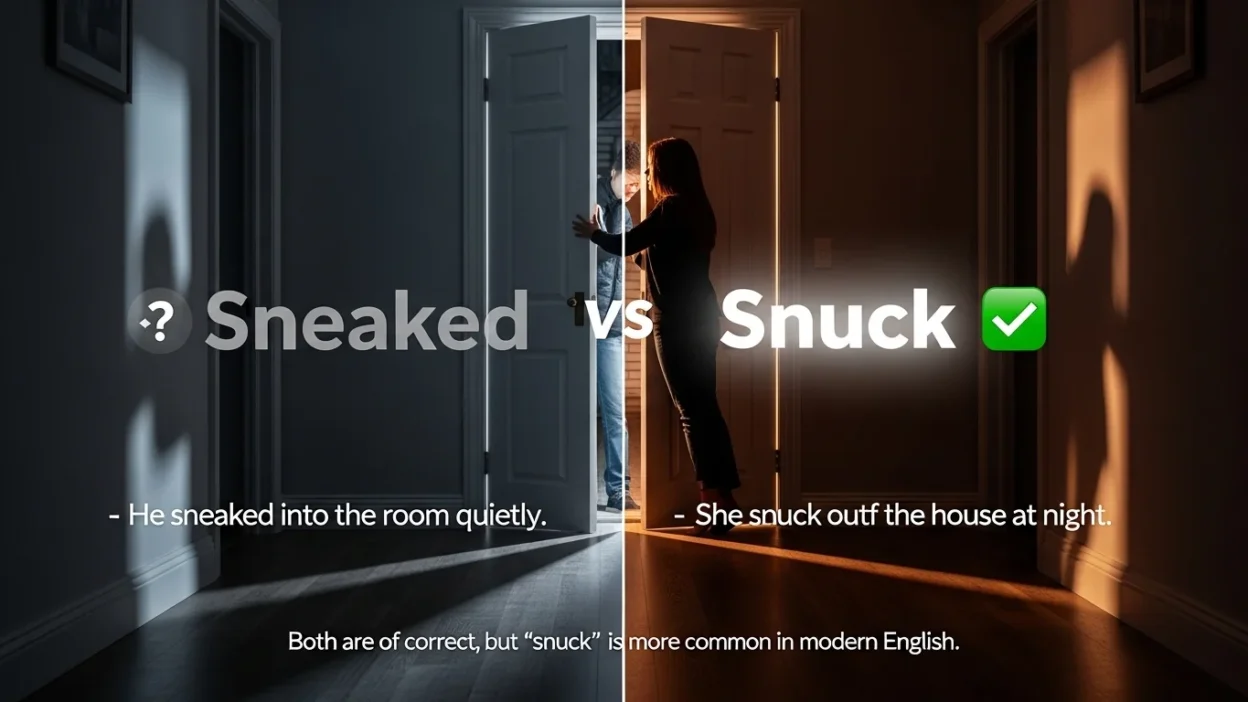
Both “sneaked” and “snuck” are correct past tense forms of “sneak.”
- Sneaked is the traditional and more widely accepted form, especially in formal writing.
- Snuck is informal but very common in American English and widely accepted today.
If you’re writing formally, go with sneaked. In casual conversation, snuck works just fine.
What Do “Sneaked” and “Snuck” Mean?
Both words are past tense forms of the verb “sneak,” which means:
- To move quietly and secretly
- To do something without being noticed
Examples:
- She sneaked into the room without anyone hearing her.
- He snuck out of the house late at night.
The meaning doesn’t change only the form does.
Why Are There Two Forms?
English has a mix of regular verbs (like walk → walked) and irregular verbs (like go → went).
- Sneaked follows the regular pattern (add -ed).
- Snuck developed later as an irregular form, similar to stick → stuck.
Over time, snuck became popular in spoken English, especially in the United States. While some traditionalists resisted it, modern dictionaries now recognize both forms as correct.
Sneaked vs Snuck: Key Differences
Here’s a simple comparison to help you decide which to use:
| Feature | Sneaked | Snuck |
| Grammar Type | Regular verb | Irregular verb |
| Formal Writing | Preferred | Less preferred |
| Spoken English | Common | Very common |
| American English | Used | Widely used |
| British English | More common | Less common |
| Tone | Neutral/Formal | Casual/Conversational |
American vs British English Usage
The difference between American and British English plays a big role here:
- In American English, both sneaked and snuck are widely used. Snuck is especially popular in casual speech.
- In British English, sneaked is strongly preferred, and snuck may sound informal or even incorrect to some speakers.
Tip:
If you’re writing for an international or formal audience, stick with sneaked to stay safe.
Real-Life Examples of Sneaked vs Snuck
Seeing these words in context makes the difference clearer.
Using “Sneaked” (Formal or Neutral)
- The reporter sneaked into the event to gather information.
- She sneaked a look at her phone during the meeting.
- He sneaked away quietly after the ceremony.
Using “Snuck” (Informal or Conversational)
- The kids snuck cookies from the kitchen.
- I snuck out early to avoid traffic.
- They snuck into the movie without tickets.
Common Mistakes to Avoid
Even though both forms are correct, there are still some pitfalls to watch for:
1. Mixing Tone in Formal Writing
Using snuck in an academic paper or professional report can feel too casual.
✔ Use: The suspect sneaked into the building.
✘ Avoid: The suspect snuck into the building.
2. Assuming One Is Wrong
Some people believe snuck is incorrect. That’s outdated modern dictionaries accept it. The issue is tone, not correctness.
3. Inconsistent Usage
Switching between sneaked and snuck in the same piece can feel sloppy. Choose one and stay consistent.
4. Overthinking Everyday Use
In casual conversation, both forms sound natural. Don’t stress too much clarity matters more than perfection.
When Should You Use Sneaked vs Snuck?
Here’s a practical way to decide:
Use “Sneaked” When:
- Writing essays, reports, or formal emails
- Communicating with a global audience
- You want to sound professional or neutral
Use “Snuck” When:
- Speaking casually
- Writing dialogue or storytelling
- Creating a relaxed, conversational tone
Memory Trick to Remember the Difference
If you’re unsure which to choose, try this simple trick:
- Think of “sneaked” as the “safe” option (formal and always accepted).
- Think of “snuck” as the “spoken” option (casual and friendly).
This makes it easy to decide based on context.
Related Words and LSI Keywords
To deepen your understanding, here are related terms and phrases often used alongside sneaked vs snuck:
- Past tense of sneak
- Irregular vs regular verbs
- Grammar differences
- American vs British English
- Verb forms in English
- Sneak meaning and examples
- Common grammar mistakes
- Informal vs formal language
FAQs
1. Is “snuck” grammatically correct?
Yes, snuck is grammatically correct and widely accepted, especially in American English.
2. Which is better: sneaked or snuck?
Neither is “better.” Sneaked is more formal, while snuck is more conversational.
3. Is “snuck” used in British English?
It’s less common. British English strongly prefers sneaked.
4. Can I use “snuck” in formal writing?
It’s best to avoid it in formal contexts. Use sneaked instead.
5. Why do people say “snuck”?
It evolved naturally in spoken English, following patterns of other irregular verbs like stick → stuck.
6. Are both forms in dictionaries?
Yes, modern dictionaries include both sneaked and snuck as correct.
7. Which form should students use in exams?
Students should use sneaked to be safe, especially in formal or academic settings.
8. Is one more common than the other?
In American English, snuck is very common in speech, while sneaked dominates in formal writing.
Summary
The debate over sneaked vs snuck isn’t about right or wrong it’s about context. Both forms are correct, but they serve slightly different purposes. Sneaked is the traditional, formal choice that works everywhere, while snuck adds a casual, conversational tone that fits everyday speech.
Understanding this distinction gives you more control over your writing style. Instead of second-guessing yourself, you can choose the version that best matches your audience and tone. That’s what strong communication is all about clarity, confidence, and intention.
Actionable Takeaway
When in doubt, use sneaked it’s universally accepted and safe for all situations. Save snuck for relaxed conversations, storytelling, or informal writing where a natural tone matters more than strict formality.
As you write, focus less on “perfect grammar” and more on clear communication. With this small distinction mastered, you’ll sound more polished and confident in every sentence you write.

Noah Jacob is the administrator of SpellPeak, responsible for managing website operations, content coordination, and platform performance. He ensures smooth functionality, security, and reliability while supporting the team in delivering a seamless, user-focused experience and maintaining high standards of quality across the site.