If you’ve ever paused mid-sentence wondering whether to write make do or make due, you’re not alone. These two phrases sound identical, but only one is correct in standard English and using the wrong one can quietly undermine your writing.
In this guide, you’ll get a clear, easy-to-remember explanation of make do vs make due, along with practical examples, common mistakes to avoid, and tips to use the phrase confidently in everyday writing.
Quick Answer
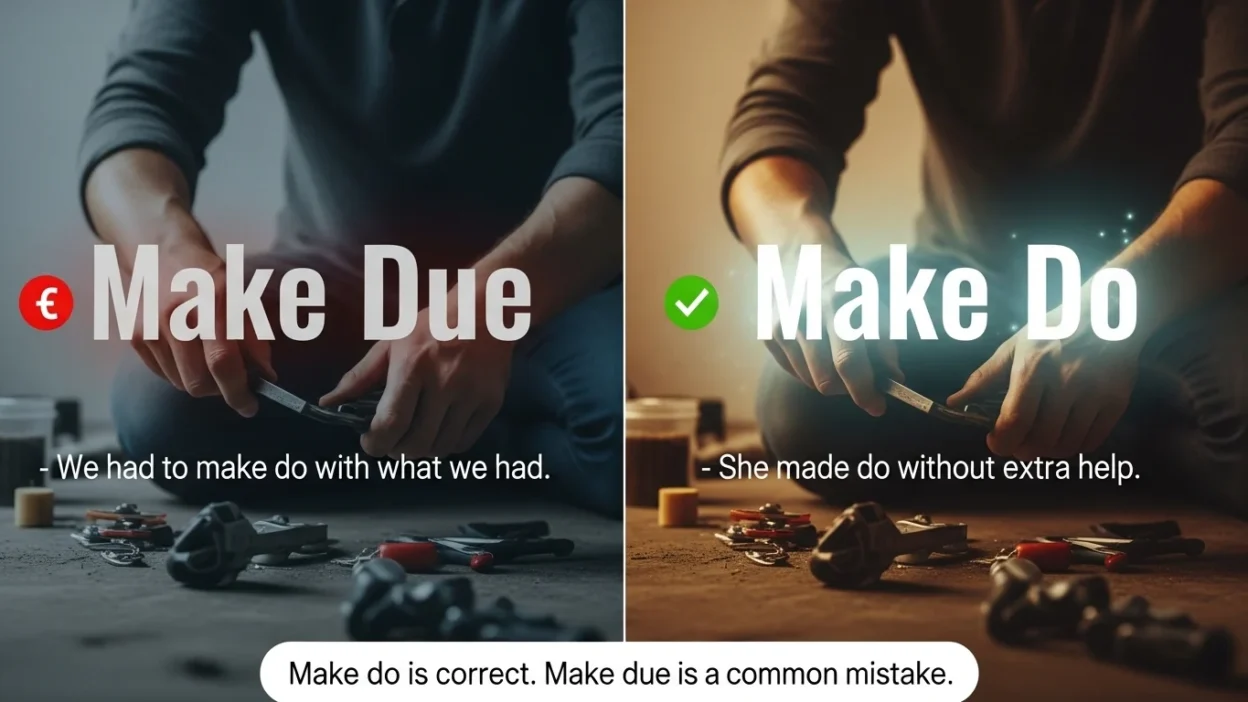
- ✅ Make do is correct. It means to manage with what you have, even if it’s not ideal.
- ❌ Make due is incorrect in this context and is a common spelling mistake.
👉 Always use make do, not make due.
What Does “Make Do” Mean?
The phrase make do means to cope, manage, or get by with limited resources or something less than ideal. It often implies creativity, resilience, or compromise.
Simple Definition
Make do = manage with what’s available, even if it’s not perfect
Everyday Examples
- We didn’t have enough chairs, so we had to make do with cushions.
- She forgot her charger and had to make do without her phone all day.
- During the trip, we made do with basic food and supplies.
When to Use It
Use make do when:
- Resources are limited
- You’re improvising or adapting
- You’re accepting a temporary solution
Why “Make Due” Is Incorrect
Although make due looks logical (because “due” is a real word), it doesn’t carry the same meaning.
What “Due” Actually Means
The word due typically relates to:
- Something owed (e.g., payment is due)
- Something expected (e.g., a baby is due)
So when people write make due, they’re mixing up sound with meaning a classic homophone error.
Example of Incorrect Usage
- ❌ We had to make due with what we had.
✔️ Correct version: We had to make do with what we had.
Comparison Table: Make Do vs Make Due
| Feature | Make Do ✅ | Make Due ❌ |
| Correct Usage | Yes | No |
| Meaning | Manage with limited resources | No valid meaning in this context |
| Common Context | Shortage, compromise, adaptation | Mistaken spelling |
| Example | We made do with leftovers | ✖ Incorrect |
Common Mistakes and How to Avoid Them
Even experienced writers sometimes confuse these two. Here’s how to stay on track:
1. Spelling by Sound
Because do and due sound the same, people often write what they hear.
Tip: Remember that “do” relates to action you’re doing your best with what you have.
2. Overthinking Formality
Some assume due sounds more formal or correct.
Reality: Make do is correct in both formal and informal English.
3. Autocorrect Errors
Spell-check tools sometimes miss this mistake because due is a valid word.
Tip: Always double-check context, not just spelling.
Memory Trick to Remember the Difference
Here’s a simple way to lock it in:
👉 “Make do” = do your best with what you have
If you can replace the phrase with “manage” or “cope,” then make do is the right choice.
More Example Sentences for Clarity
To build confidence, here are more examples across different situations:
Daily Life
- We didn’t have milk, so we had to make do with water in the recipe.
- He forgot his wallet and had to make do without buying lunch.
Work & Business
- The team had a limited budget but made do with creative solutions.
- Without proper tools, they had to make do and finish the job anyway.
Travel & Emergencies
- Our luggage got lost, so we made do with spare clothes.
- During the storm, people had to make do with minimal supplies.
American vs British English
Good news: there’s no difference here.
- 🇺🇸 American English: make do
- 🇬🇧 British English: make do
Both forms use make do exclusively. The incorrect version (make due) appears in both regions but is considered a mistake everywhere.
Related Phrases and Synonyms (LSI Keywords)
Using variations can improve your writing and SEO naturally. Here are some alternatives:
- Get by
- Manage with
- Cope with
- Improvise
- Make the best of it
- Scrape by
- Work with what you have
Example with Synonyms
- Instead of: We had to make do
- You can say: We had to manage with what we had
FAQs
1. Is “make due” ever correct?
No, make due is not correct in standard English. Always use make do.
2. Why do people say “make due”?
It’s a homophone error people confuse do and due because they sound the same.
3. Can “make do” be used in formal writing?
Yes, make do is perfectly acceptable in both formal and informal contexts.
4. What is the origin of “make do”?
The phrase dates back centuries and comes from the idea of “doing” with what is available, especially in times of scarcity.
5. Is “make do with” the correct full phrase?
Yes, the complete expression is often make do with something.
Example:
- We had to make do with limited resources.
6. Can I replace “make do” with another phrase?
Yes, depending on context, you can use:
- Get by
- Cope
- Manage
7. Is “make do” considered informal?
It’s neutral widely accepted in both spoken and written English.
Final Summary
The confusion between make do vs make due is incredibly common, but the rule is simple once you understand it. Make do is the correct phrase and means to manage with limited resources or less-than-ideal conditions. On the other hand, make due is just a spelling mistake caused by similar pronunciation.
By remembering that “do” connects to action and effort, you can avoid this error in your writing. If you’re writing an email, an article, or a social post, using the correct phrase builds clarity and credibility.
Actionable Takeaway
Next time you’re unsure, pause and ask: Am I talking about managing or coping? If yes, go with make do. You can also replace it with “manage” to double-check your sentence.
Practice using it in real sentences, and soon it will feel natural. Small corrections like this make a big difference in polished, professional writing.

Mia Elizabeth is a contributing author at SpellPeak, passionate about thoughtful writing and clear communication. She creates engaging, well-researched content that helps readers learn and connect with ideas easily. Her work emphasizes clarity, creativity, and practical value, supporting meaningful digital experiences and accessible knowledge sharing worldwide.