If you’ve ever paused mid-sentence wondering whether to write “laid” or “layed,” you’re not alone. This is one of those small but surprisingly tricky English mistakes that even fluent speakers make.
The good news? Once you understand a simple rule, you’ll never get confused again. In this guide, you’ll learn exactly when to use laid, why layed is usually incorrect, and how to avoid common mistakes with confidence.
Quick Answer:
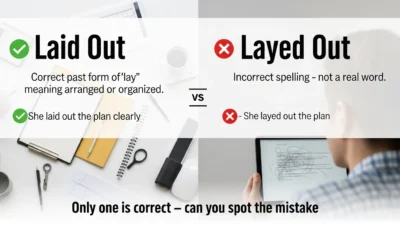
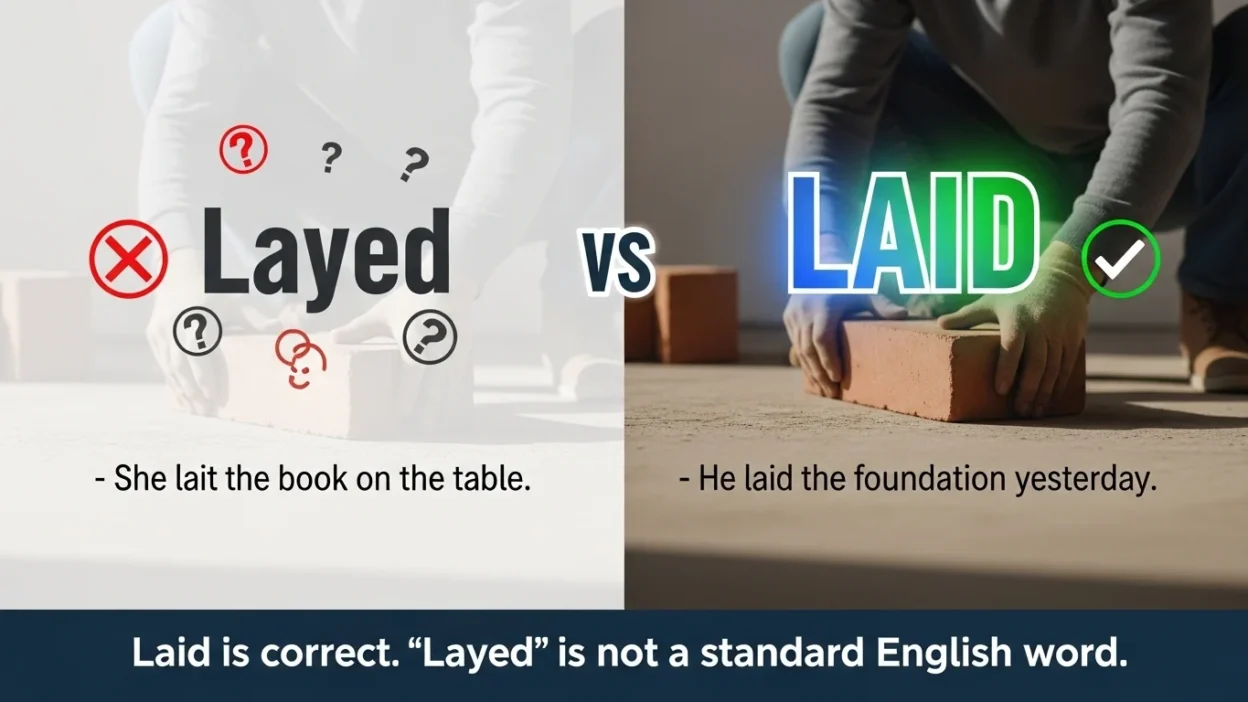
- ✅ Laid = Correct past tense of lay (to put something down)
- ❌ Layed = Almost always incorrect in standard English
Example:
- ✔ She laid the book on the table.
- ❌ She layed the book on the table.
👉 Bottom line: Always use “laid”, not “layed,” in proper writing.
What Does “Laid” Mean?
Laid is the past tense and past participle of the verb “lay.”
The verb lay means to place or put something down, and it always needs a direct object (something being placed).
Examples:
- He laid his keys on the counter.
- They laid the foundation for the house.
- She has laid the baby in the crib.
Tip:
If you can ask “laid what?”, then you’re using it correctly.
What About “Layed”?
Here’s the truth:
👉 “Layed” is not considered correct in standard English.
However, there’s a small exception.
Rare Exception:
“Layed” may appear when referring to gold leaf application (a very specific craft term).
Example:
- The artisan layed gold onto the surface. (rare, technical usage)
But for everyday writing, emails, blogs, or academic work:
👉 Avoid “layed” completely. Use “laid.”
Understanding “Lay” vs “Lie” (Why This Gets Confusing)
The confusion often comes from mixing up “lay” and “lie.”
- Lay = to put something down (needs an object)
- Lie = to recline or rest (no object needed)
Present vs Past Forms:
| Verb | Present | Past | Past Participle |
| Lay | lay | laid | laid |
| Lie | lie | lay | lain |
Examples:
- I lay the book down. → I laid it down yesterday.
- I lie on the bed. → Yesterday, I lay on the bed.
👉 Notice how “lay” is both present (of lay) and past (of lie) that’s where most confusion happens.
Key Differences: Laid vs Layed
| Feature | Laid | Layed |
| Correct spelling | ✅ Yes | ❌ No |
| Common usage | Standard English | Incorrect in most cases |
| Verb form | Past of lay | Not standard |
| Used in writing | Always | Avoid |
Real-Life Examples of “Laid”
Here are some everyday examples to make it stick:
- She laid the clothes on the bed.
- The company laid the groundwork for success.
- He laid his phone on the desk and left.
- They laid bricks for the new wall.
In Idioms:
- Laid-back (relaxed personality)
- Laid the foundation (started something important)
Common Mistakes to Avoid
Even experienced writers slip up here. Let’s fix that.
❌ Mistake 1: Writing “layed” instead of “laid”
- Incorrect: He layed the bag down.
- Correct: He laid the bag down.
❌ Mistake 2: Confusing “lay” and “lie”
- Incorrect: I will lay down for a nap.
- Correct: I will lie down for a nap.
❌ Mistake 3: Using wrong past tense
- Incorrect: Yesterday, I laid on the couch.
- Correct: Yesterday, I lay on the couch.
👉 Remember:
- Lay → laid (needs object)
- Lie → lay (no object, past tense)
American vs British English
Good news there’s no difference between American and British English for this word.
- 🇺🇸 American English: laid
- 🇬🇧 British English: laid
👉 Both forms follow the same rules, and “layed” is incorrect in both dialects.
Why “Layed” Is So Common Online
You might still see “layed” on social media or blogs. Why?
- It sounds logical (like “played” or “stayed”)
- English spelling patterns can be misleading
- Many people don’t know the irregular verb form
Memory Trick to Remember the Difference
Try this simple trick:
👉 “You laid something down.”
If there’s an object → use laid
👉 “You lie down yourself.”
No object → use lie
Or even simpler:
“Laid is always right. Layed is almost never.”
FAQs
1. Is “layed” ever correct?
Only in very rare technical contexts (like gold leaf work). For everyday English, it’s incorrect.
2. Why do people write “layed”?
Because it follows common past tense patterns (like “played”), but “lay” is irregular.
3. What is the past tense of “lay”?
The correct past tense is laid.
4. What is the difference between “laid” and “lay”?
- Lay = present tense
- Laid = past tense
5. Is “laid down” correct?
Yes, completely correct. Example: She laid down the book.
6. Is “layed down” wrong?
Yes, it’s incorrect in standard English.
7. How do I avoid this mistake?
Always remember: “laid” is correct, “layed” is not.
8. What’s the past tense of “lie”?
The past tense of lie is lay (which causes confusion).
Summary:
Understanding the difference between laid vs layed is simpler than it seems. The correct form, “laid,” is the past tense of lay, meaning to put something down. On the other hand, “layed” is not accepted in standard English, except in rare technical uses that most people will never need.
The confusion usually comes from irregular verb patterns and the overlap between lay and lie. But once you remember that “laid” is always the safe and correct choice, you eliminate the guesswork completely.
Actionable Takeaway
- Always use “laid” in writing
- Avoid “layed” entirely
- Check if there’s an object → if yes, use laid
- Practice with simple sentences to build confidence

Mia Elizabeth is a contributing author at SpellPeak, passionate about thoughtful writing and clear communication. She creates engaging, well-researched content that helps readers learn and connect with ideas easily. Her work emphasizes clarity, creativity, and practical value, supporting meaningful digital experiences and accessible knowledge sharing worldwide.