If you’ve ever paused mid-sentence wondering whether to write dreamed or dreamt, you’re not alone. Both forms appear correct and that can feel confusing, especially when you’re trying to write clearly and professionally.
The good news? This isn’t a trick question or a grammar trap. It’s simply a case of language evolution and regional preference. In this guide, you’ll learn exactly when to use dreamed vs dreamt, with simple explanations, real-life examples, and easy tips you can apply instantly.
Quick Answer:
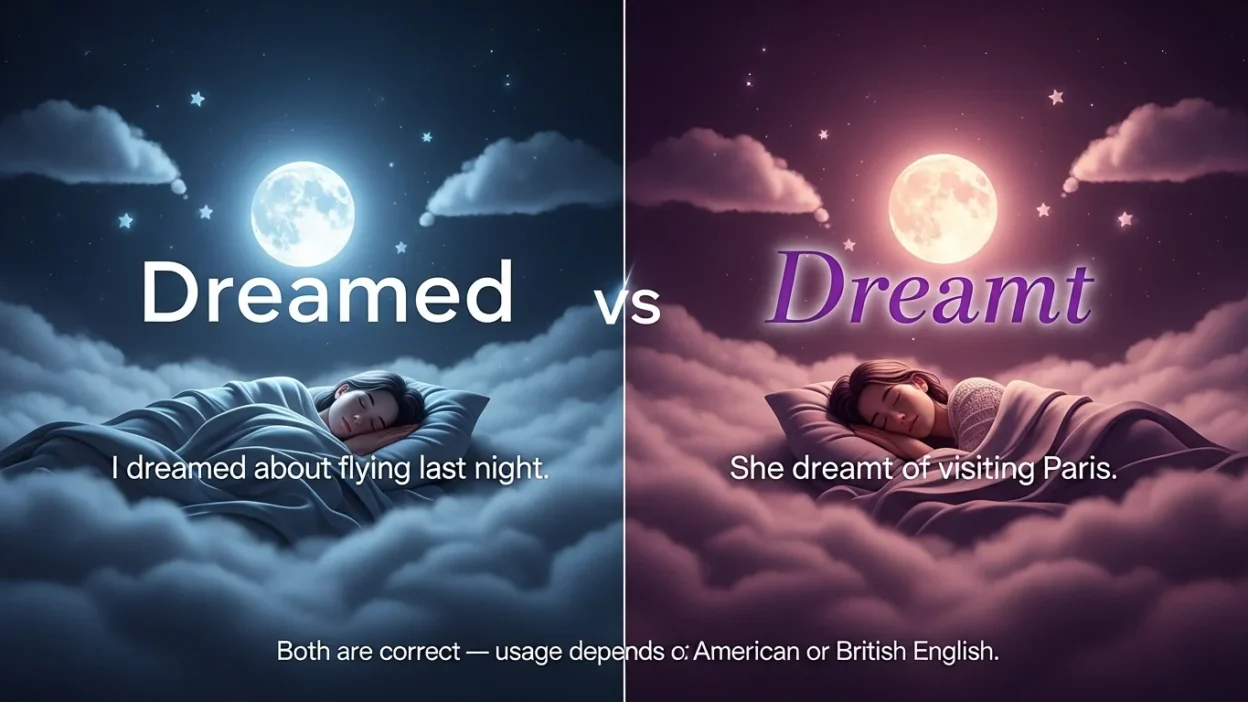
Both dreamed and dreamt are correct past tense forms of “dream.”
- Dreamed is more common in American English
- Dreamt is more common in British English
You can safely use either, but consistency and audience matter.
What Do “Dreamed” and “Dreamt” Mean?
At their core, dreamed and dreamt mean the same thing:
👉 The past tense of “dream,” referring to experiences during sleep or imagined thoughts.
Examples:
- I dreamed about flying last night.
- She dreamt of visiting Paris someday.
Both sentences are grammatically correct. The difference lies in style and usage not meaning.
Why Are There Two Forms?
English often has two past tense forms for verbs:
- Regular verbs: Add -ed (dream → dreamed)
- Irregular verbs: Change form (dream → dreamt)
“Dream” is one of those verbs that evolved over time and now accepts both forms. Similar examples include:
- Learned / Learnt
- Burned / Burnt
- Spoiled / Spoilt
This dual usage reflects how English blends history with modern usage.
American vs British English Usage
Understanding regional preferences helps you choose the right form for your audience.
American English
- Strong preference for dreamed
- Seen as standard in schools, media, and formal writing
Example:
- I dreamed of starting my own business.
British English
- Both forms are used, but dreamt is more traditional and common
Example:
- He dreamt about his childhood home.
Which Should You Choose?
- Writing for a global or US audience? → Use dreamed
- Writing for UK readers or a literary tone? → dreamt works well
- Not sure? → Stick with dreamed for safety and clarity
Dreamed vs Dreamt: Comparison Table
| Feature | Dreamed | Dreamt |
| Correctness | ✅ Correct | ✅ Correct |
| Usage Type | Regular verb form | Irregular/traditional form |
| Common Region | American English | British English |
| Tone | Neutral, modern | Slightly literary/classic |
| Frequency | More widely used globally | Less common overall |
Example Sentences in Context
Seeing both forms in real-life usage makes things clearer.
Using “Dreamed”
- I dreamed about passing my exams.
- They dreamed of building a successful company.
- She dreamed she was walking on the moon.
Using “Dreamt”
- I dreamt of a better future.
- He dreamt about old memories.
- We dreamt of traveling the world together.
👉 Notice how both sound natural just slightly different in tone.
Common Mistakes to Avoid
Even though both forms are correct, there are still a few pitfalls to watch out for.
1. Mixing Styles in the Same Text
❌ Incorrect:
- I dreamed about success and later dreamt of failure.
✔ Better:
- Stick to one form consistently:
- I dreamed about success and later dreamed of failure.
2. Assuming One Is Wrong
Some people think dreamt is incorrect it’s not. It’s simply less common in certain regions.
3. Overusing “Dreamt” in Formal Writing
While correct, dreamt can sound overly poetic in professional or academic contexts.
4. Forgetting Audience Preference
If you’re writing for a US audience, using dreamt may feel unusual or outdated.
When to Use Dreamed vs Dreamt
Here’s a simple way to decide quickly:
Use dreamed when:
- Writing blog posts, business content, or academic work
- Targeting a global or American audience
- You want a clean, modern tone
Use dreamt when:
- Writing creatively (stories, poetry)
- Targeting British readers
- You want a slightly classic or emotional tone
Related Keywords and Synonyms
- Past tense of dream
- Dream meaning in past tense
- Dream verb forms
- Dream grammar rules
- Dreamed meaning vs dreamt meaning
- Sleep dreams vs imagined dreams
These variations help reinforce understanding and make your writing more natural.
FAQs
1. Is “dreamt” outdated?
No, it’s not outdated. It’s still widely used, especially in British English and creative writing.
2. Which is more correct: dreamed or dreamt?
Both are equally correct. The choice depends on regional preference and writing style.
3. Do Americans use “dreamt”?
Rarely. Most Americans prefer “dreamed” in both speech and writing.
4. Can I use both in the same sentence?
Technically yes, but it’s better to stay consistent within a piece of writing.
5. Is “dreamt” more formal?
Not necessarily formal, but it can sound more literary or poetic.
6. Why does English have two forms?
Because English evolved from multiple linguistic influences, allowing both regular and irregular verb forms.
7. Which should I use for SEO writing?
Use dreamed, as it’s more widely searched and recognized globally.
Summary
The difference between dreamed vs dreamt is simple once you understand it. Both words mean the same thing and are grammatically correct. The key distinction lies in regional usage and tone dreamed is more common in American English, while dreamt is often preferred in British English and creative contexts.
Ultimately, there’s no “wrong” choice here. What matters most is consistency and knowing your audience. If you’re writing for clarity, global readability, or professional content, dreamed is usually the safest option. If you’re aiming for a poetic or traditional feel, dreamt adds a subtle stylistic touch.
Actionable Takeaway
When deciding between dreamed and dreamt, ask yourself: Who am I writing for, and what tone do I want? Choose one form, stick with it throughout your content, and prioritize clarity over style when in doubt.
If you’re ever unsure, go with dreamed it’s universally accepted, easy to understand, and perfect for most writing situations.

Matthew Benjamin is a contributing author at SpellPeak, dedicated to clear, engaging, and purposeful writing. He focuses on creating informative content that helps readers understand complex ideas with ease. His work emphasizes accuracy, creativity, and practical value, supporting better communication and thoughtful digital learning for a global audience.