
English is full of confusing word pairs, and flair vs flare is one of the most commonly mixed-up examples. These two words sound exactly alike, but they have completely different meanings and uses. If you’ve ever wondered whether someone has a “flare for design” or a “flair for design,” you’re not alone.
Understanding the difference between flair and flare can instantly improve your writing, help you avoid embarrassing mistakes, and make your communication sound more polished.
In this guide, you’ll learn the meaning of each word, see real-life examples, discover common errors, and finally know exactly when to use each one.
Quick Answer
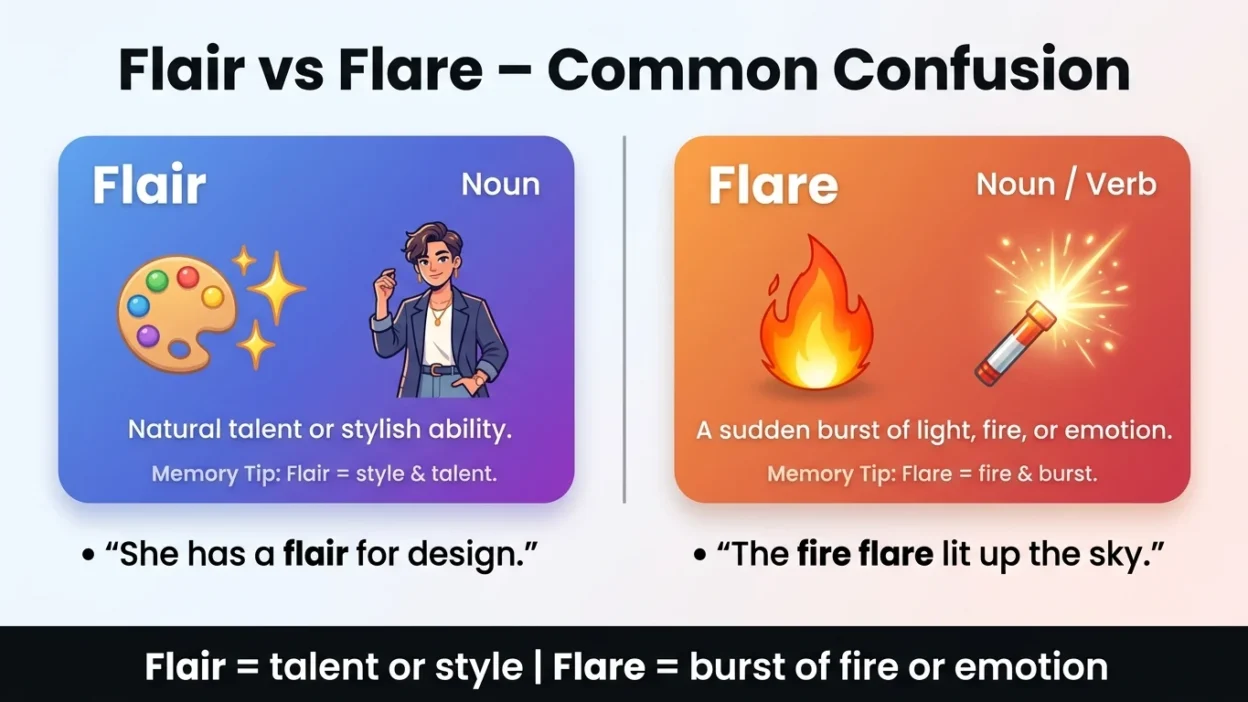
- Flair = natural talent, style, or elegance
Example: She has a flair for photography. - Flare = a sudden burst, widening shape, or bright light
Example: The fire began to flare up.
The easiest trick to remember is:
- Flair = talent
- Flare = fire or burst
What Does “Flair” Mean?
The word flair refers to a natural ability, special talent, or stylish quality. It often describes someone who does something creatively or impressively.
Common Uses of Flair
- Flair for writing
- Flair for fashion
- Flair for cooking
- Artistic flair
- Creative flair
Examples of Flair in Sentences
- Maria has a real flair for interior design.
- He writes with style and dramatic flair.
- The chef’s dishes show incredible culinary flair.
- She decorated the room with artistic flair.
In most cases, flair has a positive meaning connected to creativity, elegance, or skill.
What Does “Flare” Mean?
The word flare has several meanings, but it usually relates to something spreading outward, suddenly becoming stronger, or producing bright light.
Common Uses of Flare
- Fire flare
- Flare-up
- Sun flare
- Emotional flare
- Bell-bottom flare jeans
Examples of Flare in Sentences
- The campfire began to flare in the wind.
- His temper started to flare during the argument.
- Doctors warned that the illness could flare up again.
- A bright emergency flare lit the sky.
Unlike flair, flare is often connected with intensity, heat, light, or sudden action.
Flair vs Flare Comparison Table
| Word | Meaning | Common Context | Example |
| Flair | Natural talent or stylish ability | Creativity, fashion, skill | She has a flair for music. |
| Flare | Burst of light, fire, or emotion | Fire, anger, illness, shape | The flames began to flare. |
The Main Difference Between Flair and Flare
The confusion happens because both words are pronounced the same way. They are homophones, meaning they sound alike but have different spellings and meanings.
Use “Flair” When Talking About:
- Talent
- Creativity
- Style
- Elegance
- Natural ability
Use “Flare” When Talking About:
- Fire or light
- Sudden emotional reactions
- Worsening conditions
- Spreading outward
- Bright signals
Easy Memory Trick
Here’s a simple way to remember the difference:
Flair = Skill
The word flair contains “air,” and talented people often appear stylish and confident “in the air.”
Flare = Fire
The word flare looks similar to “flame,” which helps connect it to fire, bursts, or explosions.
Common Mistakes People Make
Many English learners and even native speakers accidentally swap these words.
Incorrect:
- She has a flare for painting.
Correct:
- She has a flair for painting.
Why? Because painting involves talent, not fire or explosions.
Another common mistake:
Incorrect:
- His anger began to flair up.
Correct:
- His anger began to flare up.
Here, the emotion suddenly becomes stronger, so flare is correct.
Flair vs Flare in Everyday English
These words appear often in daily conversation, social media posts, articles, and professional writing.
Examples Using Flair
- fashion flair
- dramatic flair
- creative flair
- flair for languages
- flair for storytelling
Examples Using Flare
- solar flare
- flare gun
- flare-up symptoms
- tempers flare
- nostrils flare
Learning these common phrases helps you recognize the correct spelling naturally.
American vs British English Differences
There is no major spelling difference between American and British English for flair and flare. Both versions of English use the same spelling and meanings.
However, usage frequency may vary slightly:
- British English sometimes uses flair more often in artistic or theatrical contexts.
- American English frequently uses flare-up in medical and emotional situations.
Still, the definitions remain the same in both dialects.
Why Do People Confuse Flair and Flare?
There are three main reasons:
1. They Sound Identical
Since both words are pronounced the same way, writers often choose the wrong spelling without noticing.
2. Autocorrect Doesn’t Always Help
Spell check tools may not catch the mistake because both words are real English words.
3. Fast Typing Causes Errors
People often type quickly and rely on pronunciation instead of meaning.
That’s why understanding the context matters more than memorizing spelling alone.
Real-Life Examples of Flair vs Flare
In Business
- A marketer with creative flair can make campaigns more engaging.
- Public criticism caused tensions to flare within the company.
In Fashion
- She dresses with unique flair.
- The skirt begins to flare at the bottom.
In Health
- Arthritis symptoms may flare up in cold weather.
- A talented doctor may have a flair for patient communication.
Synonyms for Flair
Using related words can improve your vocabulary and SEO understanding.
Similar Words for Flair
- talent
- style
- elegance
- creativity
- gift
- knack
- ability
Synonyms for Flare
Similar Words for Flare
- burst
- blaze
- flash
- erupt
- spread
- intensify
- ignite
How to Use Flair and Flare Correctly in Writing
If you want your writing to look professional, focus on the sentence meaning before choosing the spelling.
Ask Yourself:
Is it about talent or style?
Use flair
Is it about fire, emotion, light, or spreading outward?
Use flare
This simple check can prevent most mistakes instantly.
Flair vs Flare in Grammar and SEO Writing
In SEO content writing, using the wrong word can hurt readability and trust. Search engines value clear, accurate language because it improves user experience.
For example:
- “She has a flare for writing” looks unprofessional.
- “She has a flair for writing” sounds polished and correct.
Writers, bloggers, students, and marketers should pay extra attention to commonly confused words like these.
FAQs
Is it “flair for fashion” or “flare for fashion”?
The correct phrase is “flair for fashion” because it refers to natural style and talent.
What does “flare up” mean?
“Flare up” means to suddenly become stronger or more intense, especially with emotions, illness, or fire.
Can flair and flare ever mean the same thing?
No. Although they sound alike, they have completely different meanings.
Is “flair” always positive?
Usually yes. Flair normally describes skill, creativity, or elegance in a positive way.
What is a solar flare?
A solar flare is a sudden burst of energy from the sun’s surface.
Why are flair and flare confusing?
They are confusing because they are homophones words that sound the same but have different meanings and spellings.
Is “flair” used in professional writing?
Yes. It is commonly used in journalism, business, education, fashion, and creative industries.
How can I remember flair vs flare?
Remember:
- Flair = talent
- Flare = fire or burst
Final Thoughts :
The difference between flair vs flare becomes much easier once you focus on context. Flair is connected to talent, creativity, and style, while flare relates to bursts of light, emotion, fire, or spreading outward. Even though the words sound identical, their meanings are completely separate.
Mastering commonly confused words like these can improve your grammar, strengthen your communication skills, and make your writing more professional. The next time you write about someone’s talent, choose flair. If you’re describing fire, intensity, or sudden action, choose flare.
Actionable Takeaway
Before using either word, pause and ask:
- “Am I talking about skill or style?” → Flair
- “Am I talking about fire, light, emotion, or expansion?” → Flare
That quick habit will help you avoid mistakes every time.

Mia Elizabeth is a contributing author at SpellPeak, passionate about thoughtful writing and clear communication. She creates engaging, well-researched content that helps readers learn and connect with ideas easily. Her work emphasizes clarity, creativity, and practical value, supporting meaningful digital experiences and accessible knowledge sharing worldwide.