English can sometimes feel confusing especially when two words look or sound almost the same. One common example is skiddish vs skittish. Many writers and learners wonder if both words are correct or if one is simply a spelling mistake.
If you’ve ever typed skiddish while trying to describe someone nervous or easily frightened, you’re not alone. The truth is that only one of these words is correct in standard English, and understanding the difference will help you write more confidently and clearly.
Quick Answer
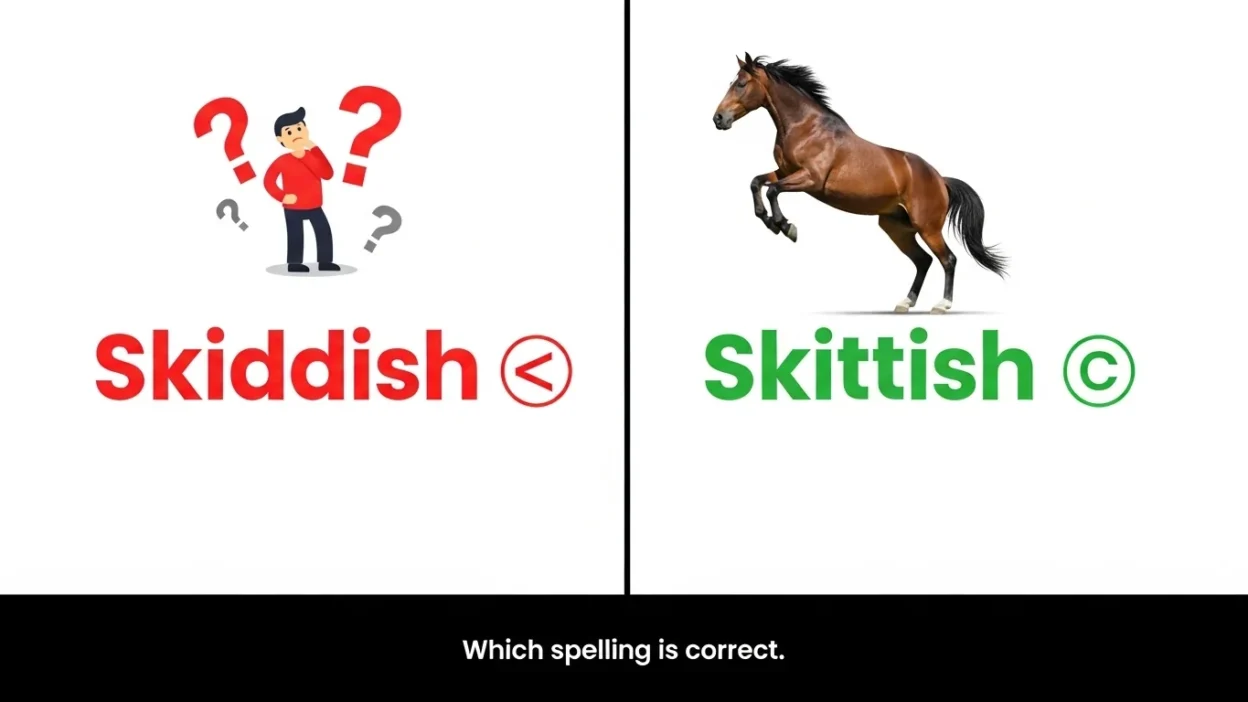
Skittish is the correct English word. It means easily scared, nervous, or easily startled.
Skiddish is generally considered a misspelling or informal variant of skittish and is not accepted in formal writing.
Example:
- Correct: The horse became skittish during the thunderstorm.
- Incorrect: The horse became skiddish during the thunderstorm.
What Does “Skittish” Mean?
The word skittish describes someone or something that is nervous, easily frightened, or quick to react to sudden movements or sounds.
It is commonly used for animals especially horses but it can also describe people or situations.
Common meanings of skittish
- Easily startled
- Nervous or jumpy
- Unpredictable due to fear
- Hesitant or wary
Example sentences
- The puppy was skittish around strangers.
- Investors became skittish after the market dropped.
- The horse grew skittish when it heard the loud fireworks.
- She felt skittish walking alone in the dark alley.
Related words and synonyms
Using related vocabulary improves clarity and SEO. Some synonyms include:
- Nervous
- Jumpy
- Timid
- Easily frightened
- Restless
- Uneasy
These words often appear in similar contexts when describing anxious behavior.
What Does “Skiddish” Mean?
In standard English dictionaries, skiddish is not recognized as a correct spelling. It is widely considered a misspelling of skittish.
However, you might occasionally see “skiddish” in:
- Informal online writing
- Social media posts
- Regional speech or dialect
- Typing mistakes
Because it isn’t standard English, you should avoid using skiddish in professional or academic writing.
Example of the mistake
Incorrect:
- The cat seemed skiddish after the loud noise.
Correct:
- The cat seemed skittish after the loud noise.
Why Do People Confuse Skiddish and Skittish?
There are several reasons this confusion happens.
1. Pronunciation similarity
When spoken quickly, skittish may sound like “skid-ish,” which leads people to spell it as skiddish.
2. Spelling patterns
English contains many words ending in -ish, so people assume the base word might be skid.
3. Typing habits
Autocorrect doesn’t always catch the error, allowing the incorrect spelling to spread online.
Skiddish vs Skittish: Key Differences
| Feature | Skittish | Skiddish |
| Correct spelling | Yes | No |
| Meaning | Easily frightened or nervous | Misspelling of skittish |
| Dictionary recognition | Yes | Generally not recognized |
| Formal writing | Acceptable | Not recommended |
| Usage frequency | Common | Rare and incorrect |
Common Mistakes When Using “Skittish”
Many English learners and writers make similar mistakes when using this word.
Mistake 1: Using “skiddish” in formal writing
Incorrect spelling can reduce credibility in essays, blogs, or professional communication.
Incorrect:
- The dog looked skiddish around visitors.
Correct:
- The dog looked skittish around visitors.
Mistake 2: Confusing meaning with “shy”
While skittish and shy are related, they are not identical.
- Shy describes someone who avoids social interaction.
- Skittish describes someone who reacts quickly due to fear or nervousness.
Example:
- She is shy at parties.
- The horse is skittish around loud sounds.
Mistake 3: Overusing the word
Sometimes writers use skittish when simpler words work better.
Alternatives include:
- nervous
- uneasy
- wary
- jumpy
Using variety improves readability.
American vs British English
Unlike many English words, skittish has the same spelling in both American and British English.
Examples:
- American English: The market became skittish after the announcement.
- British English: Investors felt skittish about the sudden policy change.
In both versions of English:
- Skittish = correct
- Skiddish = incorrect or informal
Real-Life Usage Examples
Understanding how the word appears in real situations helps reinforce correct usage.
Animals
- The deer became skittish when it heard footsteps nearby.
- The horse grew skittish during the storm.
People
- He felt skittish before his first public speech.
- Travelers became skittish after hearing the news.
Business and finance
The word also appears in economic discussions.
Example:
- Investors grew skittish after the company reported losses.
Here, skittish describes uncertainty and nervous reactions in the market.
Helpful Memory Trick
A simple trick can help you remember the correct spelling.
Think of the word kit inside skittish.
Skit + tish → Skittish
Remember:
Two T’s = the correct word
This small memory trick can prevent common spelling mistakes.
FAQs
1. Is “skiddish” a real word?
No. Skiddish is generally considered a misspelling of skittish and should be avoided in standard English.
2. What does skittish mean?
Skittish means easily frightened, nervous, or quick to react to sudden movements or sounds.
3. Can skittish describe people?
Yes. It can describe people, animals, or even markets that behave nervously or unpredictably.
4. Is skittish negative?
Not always. It usually describes temporary nervousness, especially in unfamiliar situations.
5. How do you spell skittish correctly?
The correct spelling is S-K-I-T-T-I-S-H.
6. Is skiddish used in slang?
Sometimes it appears in informal speech or online writing, but it is not considered standard English.
7. What are synonyms for skittish?
Common synonyms include:
- nervous
- jumpy
- uneasy
- timid
- wary
8. Can animals be described as skittish?
Yes. The word is very commonly used for animals, especially horses, deer, and pets that scare easily.
Summary
The difference between skiddish vs skittish is actually quite simple. Skittish is the correct English word used to describe someone or something that is easily startled, nervous, or wary.
It appears frequently in conversations about animals, people, and even financial markets. The spelling has remained consistent in both American and British English.
On the other hand, skiddish is generally just a spelling mistake that occurs because of pronunciation confusion.
While you might occasionally see it in informal writing or social media, it should not be used in professional, academic, or polished content.
Actionable Takeaway
Whenever you want to describe someone who is nervous or easily frightened, always use “skittish.” Remember the simple rule: two T’s in the middle mean the correct spelling.
Before publishing or submitting any writing, quickly check for common spelling errors like this. Small corrections such as replacing skiddish with skittish can significantly improve the clarity, credibility, and professionalism of your writing.

Matthew Benjamin is a contributing author at SpellPeak, dedicated to clear, engaging, and purposeful writing. He focuses on creating informative content that helps readers understand complex ideas with ease. His work emphasizes accuracy, creativity, and practical value, supporting better communication and thoughtful digital learning for a global audience.