
If you’ve ever paused while writing and wondered whether to use handiwork or handywork, you’re not alone. These two words look almost identical, sound the same, and often confuse even confident writers. But here’s the good news: understanding the difference is simple once you see how each word is used in real life.
In this guide, you’ll learn the exact meaning of both terms, when to use each one correctly, and how to avoid common mistakes. If you’re writing professionally or just improving your English skills, this article will help you use the right word with confidence.
Quick Answer
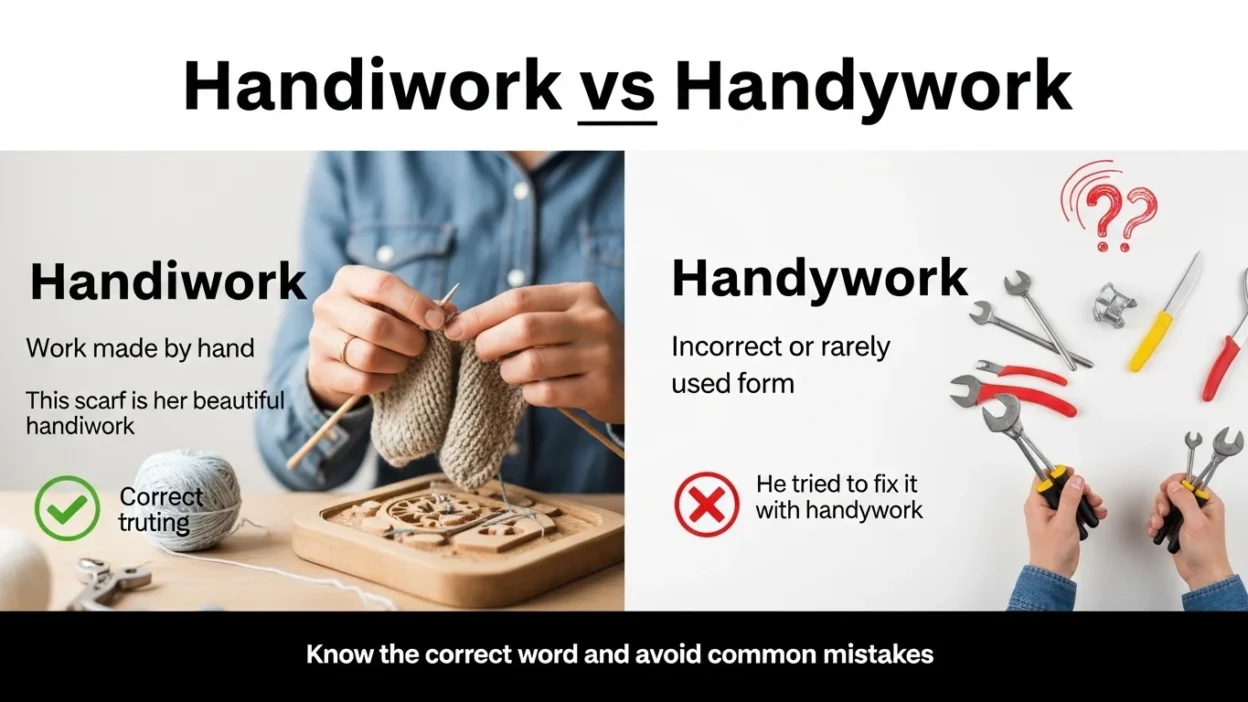
- Handiwork → Refers to something made or created by hand (correct and widely accepted)
- Handywork → Less common; sometimes used informally but often considered incorrect or nonstandard
👉 In most cases, “handiwork” is the correct choice.
What Does “Handiwork” Mean?
Handiwork refers to something that has been made, crafted, or produced by a person’s hands. It often highlights skill, effort, or craftsmanship.
Examples:
- The beautiful embroidery was her handiwork.
- This wooden table is the handiwork of a skilled carpenter.
- The damage was clearly the handiwork of vandals.
Notice that handiwork can be used both positively (creative work) and negatively (damage or wrongdoing).
Key Idea:
It emphasizes manual effort or personal creation.
What Does “Handywork” Mean?
Handywork is rarely used in modern English. When it does appear, it’s usually an informal or mistaken variation of handiwork. Some people may use it to describe small practical tasks or DIY jobs, but this usage is not widely accepted.
Examples (less common):
- He spent the weekend doing some handywork around the house.
Even in this context, most writers would prefer:
- He spent the weekend doing some handiwork around the house.
- Or better: “DIY work” or “repairs”
Key Idea:
It’s nonstandard or uncommon, so it’s best avoided in formal writing.
Handiwork vs Handywork: Comparison Table
| Feature | Handiwork | Handywork |
| Correct spelling | ✅ Yes | ❌ Usually no |
| Usage frequency | Common | Rare |
| Meaning | Work made by hand | Informal/unclear meaning |
| Formal writing | ✅ Recommended | ❌ Not recommended |
| Tone | Neutral to professional | Informal or mistaken |
Common Mistakes to Avoid
Many writers mix up these two words because they sound identical. Here are the most common mistakes and how to fix them.
1. Using “handywork” in formal writing
❌ Incorrect: The sculpture is his handywork.
✅ Correct: The sculpture is his handiwork.
2. Assuming both words are interchangeable
They are not. While they may seem similar, only handiwork is widely accepted.
3. Confusing with “handy”
The word handy means useful or convenient, which leads people to think handywork makes sense but it doesn’t follow standard usage.
4. Overusing “handiwork” in negative contexts
While it’s correct, try to balance tone:
- “The graffiti was the handiwork of vandals” ✔
- But in casual writing, you might say “done by vandals” for simplicity
American vs British English
Good news there’s no major difference between American and British English when it comes to handiwork.
- 🇺🇸 American English → Uses handiwork
- 🇬🇧 British English → Also uses handiwork
Both varieties agree that handiwork is the standard and preferred form. Handywork remains uncommon in both.
Synonyms and Related Words (LSI Keywords)
Using related words can improve clarity and SEO value in your writing. Here are some helpful alternatives:
- Craftsmanship
- Manual work
- Handmade creation
- Artisan work
- DIY work
- Handcrafted item
- Skilled labor
- Creation
Example:
Instead of repeating handiwork, you can write:
- “This is a fine example of expert craftsmanship.”
When Should You Use “Handiwork”?
Use handiwork when you want to:
- Describe something made by hand
- Highlight effort, skill, or creativity
- Refer to responsibility (positive or negative)
Example Sentences:
- The quilt is her grandmother’s handiwork.
- The broken window was likely the handiwork of thieves.
- Every detail shows the artist’s careful handiwork.
Simple Trick to Remember the Difference
Here’s an easy way to avoid confusion:
👉 “Handiwork = Hand + Work (made by hand)”
👉 Ignore “handywork” in most cases
If you stick to handiwork, you’ll almost always be correct.
FAQs
1. Is “handywork” a real word?
Yes, but it’s rare and considered nonstandard. Most dictionaries prefer handiwork.
2. Which is correct: handiwork or handywork?
Handiwork is correct in nearly all situations.
3. Can I use “handywork” in casual writing?
You can, but it may still look incorrect to many readers. It’s safer to use handiwork.
4. Does “handiwork” only refer to art?
No, it can refer to anything made by hand, including repairs, crafts, or even damage.
5. Is there a difference in pronunciation?
No, both are pronounced the same: HAN-dee-work.
6. Can “handiwork” be used negatively?
Yes. It can describe harmful actions, like vandalism or destruction.
7. What’s a better alternative for house repairs?
Use terms like:
- DIY work
- Home repairs
- Maintenance work
8. Why do people confuse these words?
Because they sound the same and “handy” is a familiar word, leading to incorrect assumptions.
Summary
Understanding the difference between handiwork and handywork is easier than it seems. Handiwork is the correct, standard term used to describe something made by hand or created through personal effort. It’s widely accepted in both American and British English and works in both formal and informal writing.
On the other hand, handywork is rarely used and often considered incorrect or nonstandard. While you might occasionally see it in casual contexts, it’s best avoided if you want your writing to appear polished and professional.
Actionable Takeaway
Whenever you’re unsure, choose handiwork it’s the safe, correct, and widely accepted option. To improve your writing further, practice using it in sentences and replace repetitive usage with synonyms like craftsmanship or manual work for better variety and clarity.

Noah Jacob is the administrator of SpellPeak, responsible for managing website operations, content coordination, and platform performance. He ensures smooth functionality, security, and reliability while supporting the team in delivering a seamless, user-focused experience and maintaining high standards of quality across the site.