When talking about death, choosing the right words matters both for clarity and sensitivity. Many people get confused between “past away” and “passed away”, especially in writing. If you’ve ever paused while typing this phrase, you’re not alone.
In this guide, you’ll learn the correct usage, simple explanations, real-life examples, and common mistakes to avoid. By the end, you’ll confidently use the right phrase in any situation formal or personal.
Quick Answer
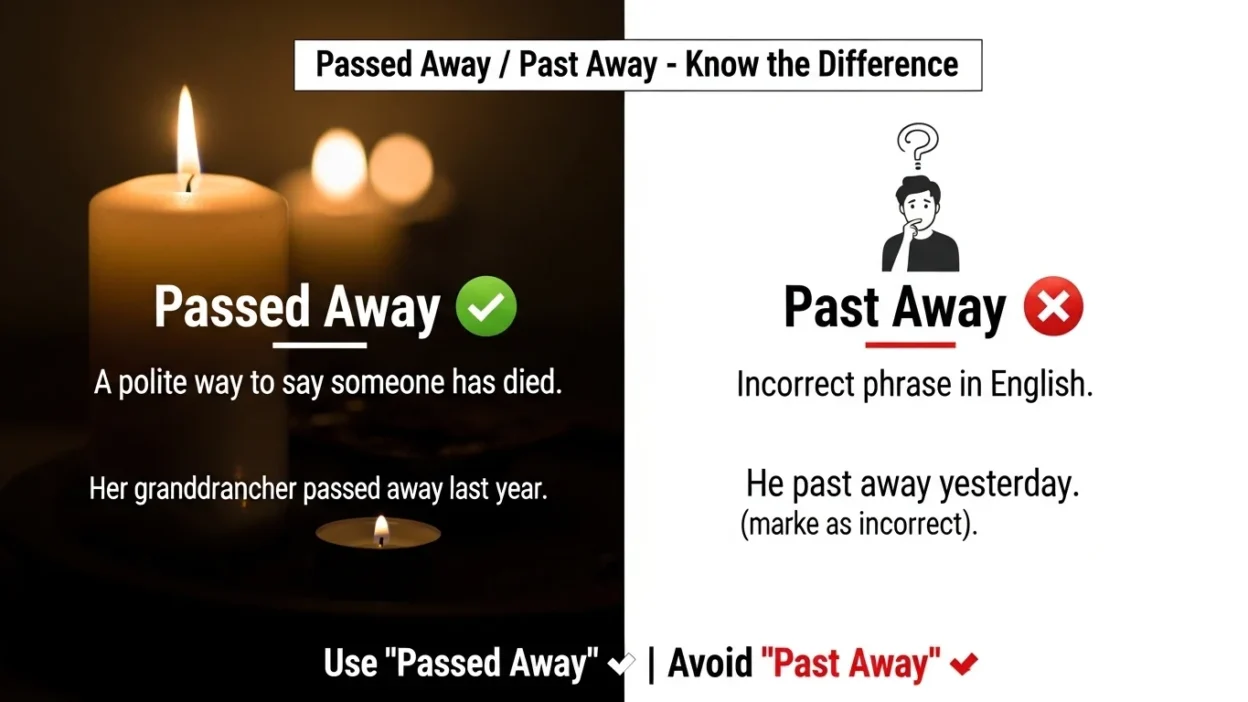
- ✅ Correct: Passed away
- ❌ Incorrect: Past away
“Passed away” is the proper phrase used to politely say someone has died.
“Past away” is a grammatical error and should not be used.
What Does “Passed Away” Mean?
“Passed away” is a gentle, respectful way of saying that someone has died. It’s commonly used in conversations, writing, obituaries, and condolences because it sounds softer and more compassionate than simply saying “died.”
Why people use “passed away”
- It shows respect and empathy
- It avoids harsh or direct wording
- It is socially accepted in both formal and informal settings
Example Sentences
- My grandfather passed away peacefully last night.
- She was deeply saddened when her teacher passed away.
- His dog passed away after a long illness.
Why “Past Away” Is Incorrect
“Past away” is a common spelling mistake caused by confusion between “past” and “passed.”
Understanding the difference:
- Passed → past tense of pass (a verb)
- Past → refers to time or position (a noun, adjective, or preposition)
Since “passed away” uses a verb action (to pass), the correct form must be passed, not past.
Incorrect Examples
- ❌ He past away yesterday.
- ❌ Her uncle has past away.
These sentences are grammatically incorrect and may reduce the credibility of your writing.
Simple Trick to Remember
If you can replace the word with “went”, then “passed” is correct.
- He passed away → He went away ✔
- He past away → He went away ❌ (doesn’t work grammatically)
Past Away vs Passed Away: Comparison Table
| Feature | Passed Away ✅ | Past Away ❌ |
| Correct grammar | Yes | No |
| Meaning | Someone has died | No valid meaning |
| Part of speech | Verb phrase | Incorrect usage |
| Usage in writing | Formal & informal | Avoid completely |
| Common mistake | Rare | Very common |
Common Mistakes to Avoid
Even fluent English speakers make this error. Here are the most common mistakes and how to fix them:
1. Mixing “past” and “passed”
- ❌ She past away last year
- ✅ She passed away last year
2. Autocorrect confusion
Sometimes typing quickly leads to wrong word selection. Always double-check before publishing.
3. Informal writing habits
People often write phonetically (“past”) because it sounds similar. But spelling matters in professional content.
When Should You Use “Passed Away”?
Use “passed away” in situations where you want to sound respectful and considerate.
Appropriate contexts:
- Condolence messages
- Obituaries
- Formal writing
- Personal conversations
Example:
- We are sorry to hear that your father passed away.
Alternatives to “Passed Away”
Depending on tone and context, you can also use these alternatives:
Formal alternatives:
- Deceased
- Departed
- No longer with us
Neutral alternatives:
- Died
- Lost his/her life
Gentle expressions:
- Gone to a better place
- At rest
Each phrase carries a slightly different tone, so choose based on the situation.
American vs British English Differences
Good news there’s no difference between American and British English for this phrase.
- Both use “passed away”
- Both consider “past away” incorrect
So whether you’re writing for a US or UK audience, the rule stays the same.
FAQs
1. Is “past away” ever correct?
No, it is always incorrect. It’s a spelling and grammar mistake.
2. Why do people confuse past and passed?
They sound the same when spoken, which leads to confusion in writing.
3. Can I say “died” instead of “passed away”?
Yes, but “passed away” sounds more polite and respectful.
4. Is “passed away” too informal?
No, it’s widely accepted in both formal and informal contexts.
5. What is the grammar rule behind “passed away”?
“Passed” is the past tense of the verb “pass,” which is required in this phrase.
6. Is “passed on” similar to “passed away”?
Yes, both mean the same but “passed on” is slightly more informal.
7. Which is better for writing sympathy messages?
“Passed away” is the best choice because it sounds compassionate.
8. Can I use “past” in any similar phrase?
Yes, but only when referring to time or direction, like:
- In the past
- Walked past the house
Summary
The difference between past away vs passed away is simple but important. “Passed away” is the correct and respectful phrase used to describe someone’s death, while “past away” is a common but incorrect mistake. Understanding the role of verbs and context helps you avoid this error easily.
Using the right phrase not only improves your grammar but also ensures your message is thoughtful and appropriate. Especially in sensitive situations, word choice matters more than ever.
Actionable Takeaway
Always remember:
👉 If you’re describing someone’s death, use “passed away” never “past away.”
Before publishing or sending a message, take a second to double-check your wording. This small step can make your writing more professional, clear, and compassionate.

Mia Elizabeth is a contributing author at SpellPeak, passionate about thoughtful writing and clear communication. She creates engaging, well-researched content that helps readers learn and connect with ideas easily. Her work emphasizes clarity, creativity, and practical value, supporting meaningful digital experiences and accessible knowledge sharing worldwide.