Many people get confused when writing villain vs villian. At first glance, both words may seem correct, but only one of them is actually the proper spelling in English. This confusion happens because the words sound very similar, and small spelling differences can easily go unnoticed.
If you’ve ever wondered whether “villain” or “villian” is correct, you’re not alone. Writers, students, and even experienced bloggers sometimes make this mistake. In this guide, we’ll clearly explain the difference, show real examples, highlight common mistakes, and help you remember the correct spelling every time.
Quick Answer
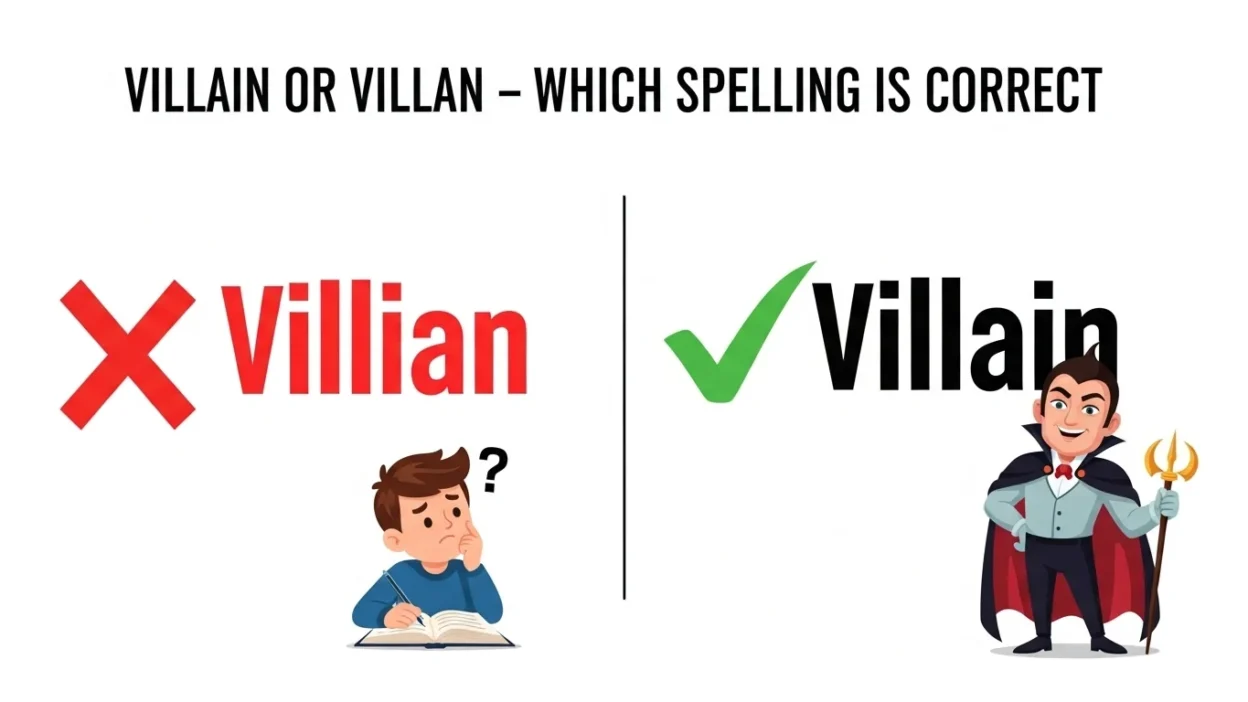
The correct spelling is villain.
Villian is a misspelling and is not recognized in standard English dictionaries.
- ✅ Villain Correct spelling, meaning a bad or evil character in a story.
- ❌ Villian Incorrect spelling caused by a common typing or memory error.
Example:
- The villain tried to destroy the city.
- ❌ The villian tried to destroy the city. (Incorrect)
What Does “Villain” Mean?
The word villain refers to a bad, evil, or immoral character, especially in stories, movies, books, or plays. A villain usually opposes the hero and creates conflict in the storyline.
In literature and entertainment, villains play a critical role because they challenge the hero and make the story exciting.
Simple Definition
A villain is someone who does harmful, dishonest, or evil actions.
Examples in Sentences
- The villain in the movie planned to steal the treasure.
- Every superhero story has a powerful villain.
- The detective finally caught the villain behind the crimes.
- In fairy tales, the villain often tries to defeat the hero.
Common Contexts Where “Villain” Appears
You will often see the word villain used in:
- Movies and TV shows
- Books and novels
- Comics and superhero stories
- Video games
- Everyday descriptions of bad people
Examples:
- The villain in the story was very clever.
- Some movies have villains who later become heroes.
Why Do People Write “Villian”?
The spelling villian is a very common mistake. It usually happens for a few simple reasons.
1. Pronunciation Confusion
When people pronounce the word quickly, it can sound like vil-ee-an, which leads some writers to type villian.
2. Typing Errors
Since the letters a and i are close together, people sometimes switch their order while typing.
3. Memory Mistakes
Some writers remember the sound of the word but forget the exact spelling.
4. Lack of Spell-Checking
When writing quickly, people may not notice the spelling error if they skip spell-check tools.
Villain vs Villian: Comparison Table
| Feature | Villain | Villian |
| Spelling Status | Correct | Incorrect |
| Dictionary Recognition | Yes | No |
| Meaning | Evil or bad character | None |
| Common Usage | Literature, movies, storytelling | Typo or mistake |
| Example | The villain attacked the hero | ❌ The villian attacked the hero |
The table clearly shows that villain is the only correct spelling.
American vs British English
One helpful thing to know is that there is no difference between American and British English for this word.
Both use the same spelling:
- 🇺🇸 American English: villain
- 🇬🇧 British English: villain
Unlike words such as color vs colour or organize vs organise, the spelling of villain remains the same in both versions of English.
So if you see villian, it is simply a spelling error not a regional variation.
Synonyms of Villain
Using synonyms can improve your writing and help avoid repetition. Some words that have a similar meaning to villain include:
- Criminal
- Evil character
- Antagonist
- Bad guy
- Enemy
- Wrongdoer
- Rogue
- Monster
Example sentences:
- The antagonist tried to destroy the kingdom.
- The criminal was finally arrested.
- Every superhero needs a strong enemy.
These synonyms are helpful when writing stories, essays, or articles.
How to Remember the Correct Spelling
A simple trick can help you avoid the villain vs villian mistake.
Memory Trick
Remember this phrase:
“A villain has an A before the N.”
The correct spelling always follows this pattern:
vill + ain
Another trick:
Think of the word “pain.”
Many villains cause pain, and both words end with “ain.”
So remember:
villain → pain → ain
Examples From Popular Culture
The word villain is widely used in entertainment and storytelling.
Examples:
- The Joker is a famous villain in Batman stories.
- Disney movies often have memorable villains.
- The villain tried to take over the world.
Many stories become popular because their villains are interesting and complex characters.
Common Sentences Using “Villain”
Here are more examples showing the correct usage.
- The villain created a dangerous plan.
- Everyone feared the powerful villain.
- The hero defeated the villain in the final battle.
- Some stories show the villain’s past to explain their actions.
These examples help reinforce the correct spelling.
Common Writing Mistakes
Writers often make small spelling mistakes related to villain.
Frequent Errors
❌ villian
❌ villen
❌ villan
❌ vilain
Correct spelling:
✅ villain
Using the correct spelling improves professionalism, especially in:
- blog articles
- academic writing
- storytelling
- SEO content
Frequently Asked Questions
1. Is villian a real word?
No, villian is not a real English word. It is a spelling mistake of villain.
2. What is the correct spelling: villain or villian?
The correct spelling is villain.
3. Why do people misspell villain as villian?
Most people misspell it due to pronunciation confusion or typing errors.
4. Does British English spell villain differently?
No. Both American and British English use the same spelling: villain.
5. What does villain mean in a story?
A villain is the character who opposes the hero and often causes problems or conflict.
6. Can villain be used in real life?
Yes. Sometimes people use the word villain metaphorically to describe someone behaving badly.
Example:
“He became the villain of the story.”
7. What is the opposite of a villain?
The opposite of a villain is usually a hero or protagonist.
8. Is villain always an evil person?
In many stories yes, but modern storytelling sometimes portrays complex villains with understandable motivations.
Summary
Understanding villain vs villian is simple once you know the correct spelling. The word villain is the only correct form and refers to an evil or harmful character, especially in stories, movies, and books. The spelling villian is just a common mistake caused by pronunciation confusion or typing errors.
If you are writing an article, story, or blog post, using the correct spelling improves clarity and professionalism. Remember that both American and British English use the same spelling, so there is no regional variation to worry about.
Actionable Takeaway
Whenever you write about a bad character in a story, always use villain with “ain” at the end. A helpful trick is to remember that villains often cause pain, and both words share the “ain” ending.
Before publishing your writing, quickly check for spelling errors like villian to keep your content accurate, professional.

Mia Elizabeth is a contributing author at SpellPeak, passionate about thoughtful writing and clear communication. She creates engaging, well-researched content that helps readers learn and connect with ideas easily. Her work emphasizes clarity, creativity, and practical value, supporting meaningful digital experiences and accessible knowledge sharing worldwide.