English spelling can sometimes feel confusing, especially when two words look almost the same but carry different meanings or levels of correctness. One common example people search for is saucey vs saucy. At first glance, these words seem interchangeable, but their usage and acceptance are not exactly the same.
If you’ve ever wondered whether “saucey” is a real word or just a variation of “saucy,” you’re not alone. In this guide, we’ll clearly explain the difference, show examples, highlight common mistakes, and help you confidently use the correct spelling in everyday writing.
Quick Answer
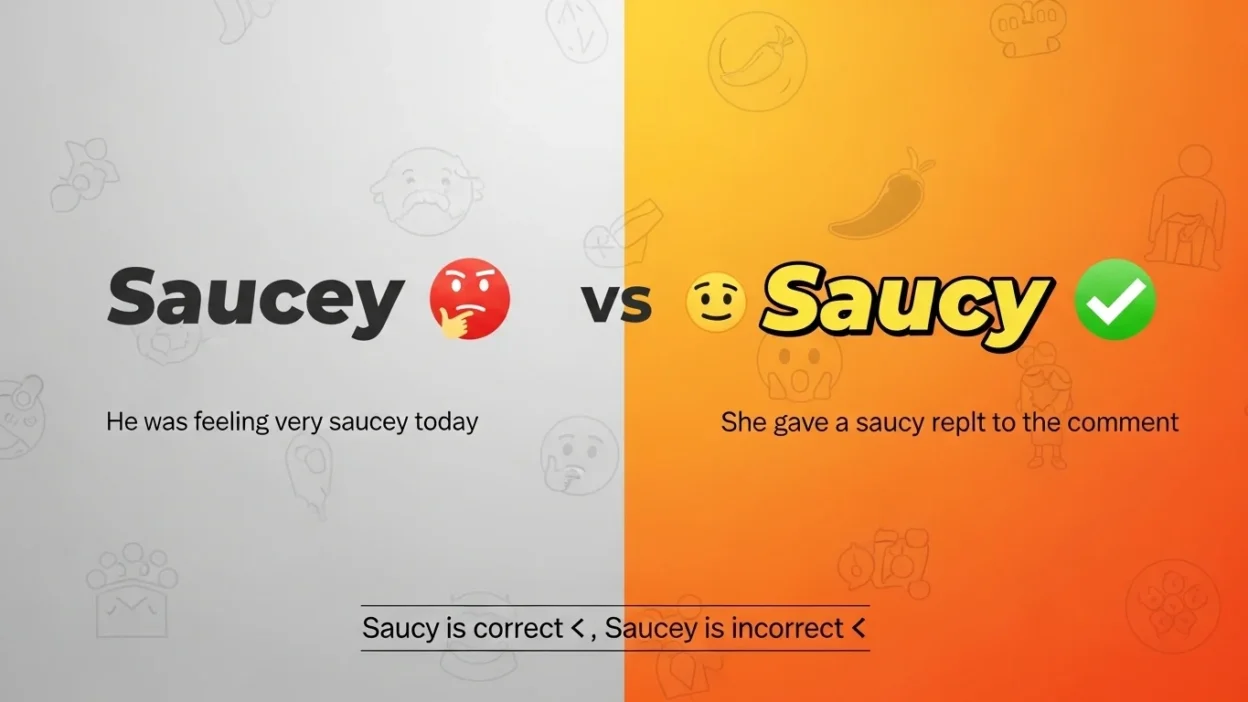
The correct and widely accepted spelling is saucy. It means bold, cheeky, slightly rude, or full of attitude.
Saucey is usually considered an informal or creative variation of saucy and is rarely used in standard English writing.
What Does “Saucy” Mean?
The word saucy has been part of English for centuries and comes from the word sauce, originally suggesting something flavorful or spicy. Over time, its meaning evolved to describe someone who is bold, cheeky, or slightly disrespectful in a playful way.
Common Meanings of Saucy
- Bold or cheeky in attitude
- Slightly rude but playful
- Stylish or confident
- Flirtatious or mischievous
Examples of “Saucy” in Sentences
- The child gave a saucy reply to his teacher.
- She wore a saucy red dress to the party.
- His saucy comment made everyone laugh.
- The character in the movie had a saucy personality.
In everyday conversation, saucy often describes someone who speaks confidently or teasingly.
What Does “Saucey” Mean?
The spelling saucey is not traditionally recognized in standard dictionaries. However, it appears in informal writing, branding, usernames, and internet slang.
Many people use saucey as a creative spelling of saucy, especially online or in marketing.
Where You Might See “Saucey”
- Social media usernames
- Brand names
- Informal posts or captions
- Creative writing or slang
Examples of “Saucey” in Sentences
- That outfit looks saucey!
- He posted a saucey caption on Instagram.
- The brand markets itself as bold and saucey.
Even though it appears online, saucey is not considered standard English.
Saucey vs Saucy: Key Differences
| Feature | Saucy | Saucey |
| Correct Standard Spelling | Yes | No |
| Dictionary Recognition | Yes | Rare/No |
| Common Usage | Formal and informal writing | Mostly slang or branding |
| Meaning | Cheeky, bold, playful | Same intended meaning |
| Recommended for Writing | Yes | No |
Bottom line: Use saucy for correct English writing.
American vs British English
Interestingly, both American and British English use the same spelling: “saucy.”
Unlike many words that differ between dialects (like color vs colour), saucy remains the same in both varieties of English.
Example
- American English: She made a saucy remark.
- British English: He gave a saucy grin.
So if you’re comparing saucey vs saucy, the correct spelling stays saucy no matter which English variant you use.
Common Mistakes People Make
Many writers accidentally use saucey instead of saucy. This usually happens because of pronunciation or spelling assumptions.
1. Adding Extra Letters
People assume the word should follow the pattern of sauce → saucey.
But the correct adjective form is saucy.
Incorrect:
- That was a saucey comment.
Correct:
- That was a saucy comment.
2. Copying Social Media Spellings
Online slang often spreads quickly, and saucey appears trendy in captions or usernames. However, it should not be used in professional writing.
3. Confusing Style with Correctness
Just because a spelling appears online doesn’t mean it’s grammatically correct.
Synonyms of “Saucy”
To enrich your writing, you can also use similar words that carry a comparable tone.
Common Synonyms
- Cheeky
- Bold
- Playful
- Sassy
- Flirtatious
- Mischievous
- Impertinent
Example Sentences
- She gave a cheeky smile.
- His sassy remark surprised everyone.
- The comedian had a playful sense of humor.
Using synonyms can improve readability and avoid repetition in your content.
When Should You Use “Saucy”?
Use saucy whenever you want to describe:
- A cheeky attitude
- Playful disrespect
- Bold humor
- Flirtatious confidence
- Stylish or daring behavior
Example Situations
- Describing a funny character
- Writing dialogue in stories
- Talking about personality traits
- Fashion descriptions
Example:
- The movie’s main character had a saucy sense of humor that audiences loved.
When Is “Saucey” Acceptable?
Although saucey is not standard English, it may be acceptable in certain creative contexts.
Acceptable Situations
- Brand names
- Social media handles
- Casual texting
- Marketing slogans
- Artistic writing
For example:
- “Saucey Streetwear” (brand name)
- Instagram caption: Feeling saucey today.
Still, for blogs, essays, or professional writing, stick with “saucy.”
Why Correct Spelling Matters
Using the correct spelling improves:
- Credibility
- SEO performance
- Professionalism
- Reader trust
Search engines and readers both prefer clear and correct language, so using saucy instead of saucey keeps your writing polished and reliable.
FAQs
1. Is “saucey” a real word?
Not in standard dictionaries. It is usually considered a creative or slang spelling of saucy.
2. What does “saucy” mean?
It means cheeky, bold, playful, or slightly rude in a humorous way.
3. Which spelling is correct: saucey or saucy?
Saucy is the correct and widely accepted spelling.
4. Why do people use “saucey” online?
People use it as a stylish or modern variation of saucy, especially on social media.
5. Is “saucy” negative or positive?
It can be both, depending on context. Often it describes playful confidence rather than real rudeness.
6. Is the spelling different in British English?
No. Both American and British English use “saucy.”
7. Can “saucy” describe clothing or style?
Yes. It can describe something bold, daring, or stylish.
8. Should bloggers use “saucey”?
Generally no. Bloggers and professional writers should use saucy for clarity and correctness.
Summary
Understanding saucey vs saucy is actually quite simple once you know the rules. The correct spelling is saucy, a well-established English adjective used to describe someone who is bold, cheeky, playful, or slightly mischievous. It appears in both American and British English and is recognized in dictionaries and formal writing.
On the other hand, saucey is mainly an informal or stylistic variation seen on social media, in branding, or in casual online conversations. While it may look trendy, it is not considered standard English and should generally be avoided in professional writing.
Actionable Takeaway
Whenever you’re unsure between saucey and saucy, remember this simple rule:
Use “saucy” for correct English writing and reserve “saucey” only for informal or creative contexts.
By choosing the proper spelling, your writing will remain clear, credible, and professional.

Ethan William is the author behind SpellPeak, passionate about clear communication and meaningful language. He writes to help readers express ideas with confidence, simplicity, and impact. His work focuses on clarity, learning, and empowering individuals and businesses through thoughtful, practical content. He values creativity, consistency, and ethical digital publishing worldwide.