When you see the words mobil and mobile, it’s easy to assume they mean the same thing. After all, they look almost identical. But in reality, one of them is the correct spelling in most situations, while the other usually appears because of a common spelling mistake or as part of a brand name.
Understanding the difference between mobil vs mobile can help you avoid writing errors, improve your communication, and make your content clearer.
In this guide, you’ll learn the meanings, correct usage, examples, common mistakes, and practical tips so you always choose the right word.
Quick Answer
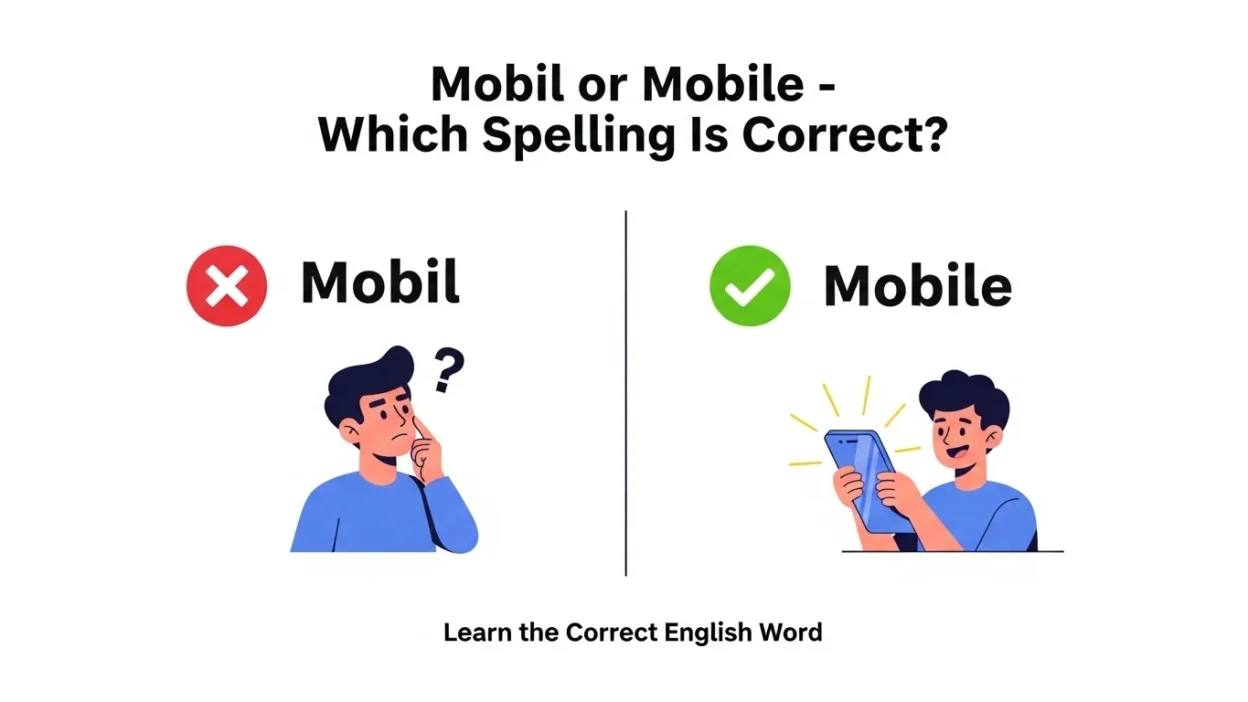
Mobile is the correct English word and is widely used to describe something that can move or a portable device like a smartphone.
Mobil is usually a misspelling of mobile, except when referring to the well-known brand Mobil.
In most writing contexts:
- ✅ Mobile = correct spelling
- ❌ Mobil = usually a spelling mistake
Meaning of Mobile
The word mobile has several meanings depending on the context. Generally, it refers to something that can move or is portable.
Common meanings of mobile
- Capable of moving easily
- Example: The medical team uses a mobile clinic to reach rural villages.
- Portable electronic devices
- Example: She bought a new mobile phone last week.
- Flexible or adaptable
- Example: A mobile workforce can work from anywhere.
Example sentences
- I left my mobile in the car.
- The company launched a mobile app for customers.
- Many people rely on mobile banking today.
Related terms (LSI keywords)
- mobile phone
- smartphone
- portable device
- mobile app
- mobile technology
- wireless communication
- mobile network
These related phrases help search engines and readers understand the broader meaning of the word mobile.
Meaning of Mobil
The word mobil is rarely used in standard English. Most of the time, it appears in two situations:
1. A misspelling of “mobile”
Many people accidentally write mobil when they actually mean mobile.
Example mistake:
- ❌ I forgot my mobil at home.
Correct version: - ✅ I forgot my mobile at home.
2. A brand name
In some contexts, Mobil is part of the famous fuel and lubricant brand owned by ExxonMobil.
Example:
- The car was filled with oil from Mobil.
So outside of branding, mobil is not considered a standard English word.
Mobil vs Mobile: Key Differences
| Feature | Mobil | Mobile |
| Spelling status | Usually incorrect | Correct spelling |
| Meaning | Mostly a misspelling | Something portable or able to move |
| Common usage | Brand name | Phones, apps, technology |
| Grammar correctness | Not standard | Standard English |
| Example | Mobil oil brand | Mobile phone |
Simple rule to remember
If you’re talking about phones, apps, technology, or something portable, mobile is always the correct spelling.
American vs British English
Unlike some English words that change spelling between American and British English, mobile stays the same in both forms.
For example:
- 🇺🇸 American English: mobile phone
- 🇬🇧 British English: mobile phone
However, Americans often say cell phone, while people in the UK commonly say mobile phone.
Example comparison:
| Region | Common term |
| United States | Cell phone |
| United Kingdom | Mobile phone |
Even with these differences in vocabulary, the spelling mobile remains correct in both dialects.
Common Mistakes People Make
Many learners and writers confuse mobil vs mobile due to small spelling differences.
Here are some common mistakes and how to fix them.
1. Dropping the “e”
Incorrect:
- I bought a new mobil yesterday.
Correct:
- I bought a new mobile yesterday.
2. Using mobil in general writing
Incorrect:
- My mobil battery is dead.
Correct:
- My mobile battery is dead.
3. Mixing brand name with general word
Incorrect:
- I forgot my Mobil phone.
Correct:
- I forgot my mobile phone.
Remember: Mobil should only appear when referring to the oil brand.
Why the Confusion Happens
There are several reasons why people mix up these two words.
Similar spelling
The only difference is the missing letter e, which makes it easy to mistype.
Fast typing
When typing quickly, people sometimes skip the last letter.
Non-native English influence
Many English learners assume both forms might be acceptable.
Autocorrect issues
Sometimes devices fail to correct mobil to mobile, allowing the mistake to remain.
Understanding these reasons helps you avoid repeating the error.
Tips to Remember the Correct Spelling
Here are simple tricks to remember the correct word.
Think of the letter “E” for electronics
- Mobil ❌
- Mobile ✅
Most electronic devices (like smartphones) use the spelling mobile.
Associate it with mobile phone
The phrase mobile phone always includes the letter e.
Read your writing aloud
When proofreading, check if the word should end with e.
These small habits can significantly reduce spelling mistakes.
Real-Life Usage Examples
To fully understand the difference, let’s look at more examples.
Correct usage of mobile
- Mobile apps help businesses reach customers faster.
- He works in mobile marketing.
- The company focuses on mobile development.
Incorrect usage
- ❌ I need to charge my mobil.
- ❌ The mobil app is slow.
Brand usage
- The engine uses oil produced by Mobil.
These examples show how context determines whether the word is correct.
FAQs
1. Is mobil a real word?
Not in standard English. It is usually a misspelling of mobile, except when referring to the Mobil brand.
2. Which spelling is correct: mobil or mobile?
Mobile is the correct spelling in nearly all contexts.
3. Why do people write mobil instead of mobile?
Most often it happens due to typing errors, spelling confusion, or autocorrect mistakes.
4. Is mobile used in both American and British English?
Yes. The spelling mobile is correct in both dialects.
5. What does mobile mean?
It usually means something portable, movable, or related to smartphones and wireless technology.
6. Is mobil used in technology?
No. Technology terms always use mobile, such as mobile apps or mobile devices.
7. Can mobil ever be correct?
Yes, but only when referring to the oil brand Mobil.
8. What is the difference between mobile phone and cell phone?
They refer to the same device. Mobile phone is more common in the UK, while cell phone is more common in the US.
Summary
The difference between mobil vs mobile mainly comes down to spelling and correct usage. Mobile is the standard English word used worldwide to describe portable devices, wireless technology, or something that can move easily. It is the correct choice in everyday communication, technology discussions, and professional writing.
On the other hand, mobil is typically just a spelling mistake. The only exception occurs when referring to the well-known fuel brand Mobil. For everything else from mobile phones to mobile apps the correct spelling always includes the final e.
Actionable takeaway
Whenever you write about phones, apps, technology, or portability, remember the simple rule: always use “mobile.” Double-check your spelling, especially in professional or online writing, to ensure accuracy and clarity.

Matthew Benjamin is a contributing author at SpellPeak, dedicated to clear, engaging, and purposeful writing. He focuses on creating informative content that helps readers understand complex ideas with ease. His work emphasizes accuracy, creativity, and practical value, supporting better communication and thoughtful digital learning for a global audience.