If you’ve ever typed lovie or lovey in a message and paused, wondering which one is actually correct you’re not alone. These two sweet-sounding words look almost identical, yet they can feel a little confusing when you’re trying to use them properly.
The truth is, both lovie and lovey exist, but they aren’t used in exactly the same way. In this guide, you’ll get a clear, simple explanation so you can confidently choose the right word every time whether you’re texting, writing, or just trying to sound natural in English.
Quick Answer
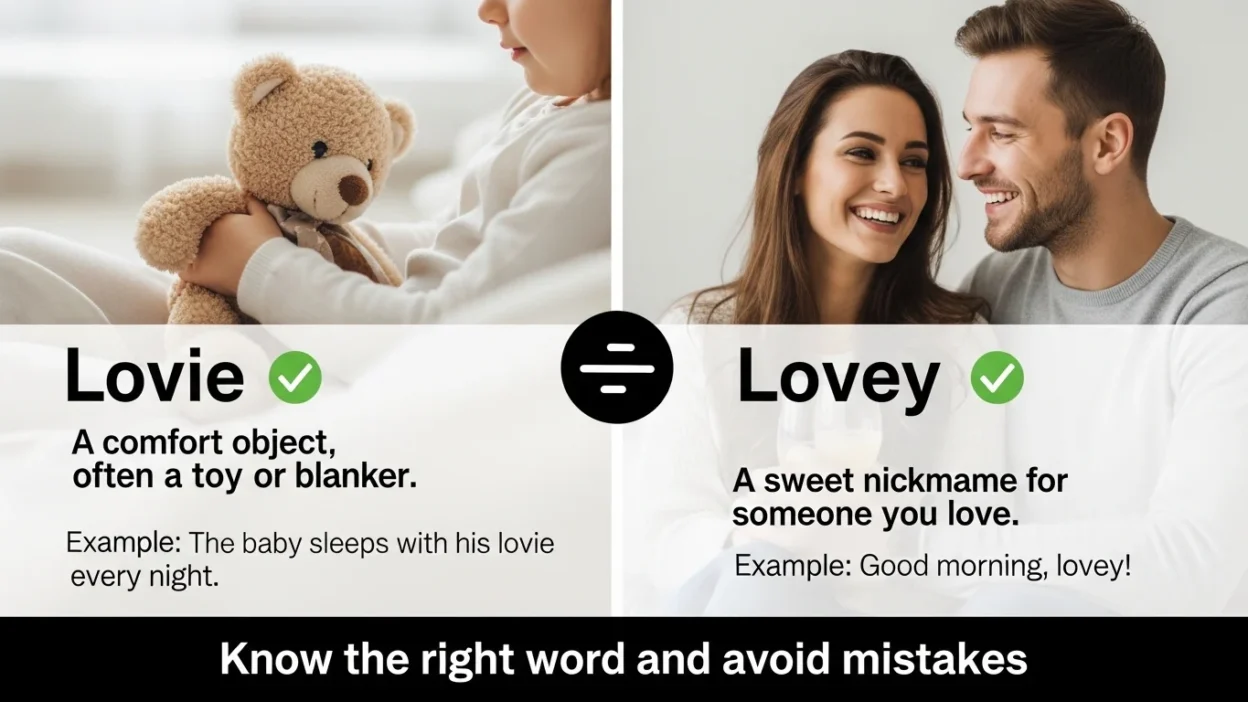
- Lovey is the more common and correct spelling for a term of endearment (like “sweetheart” or “dear”).
- Lovie is less common and often used as a nickname, personal variation, or in specific contexts (like a comfort item for a child).
What Does “Lovey” Mean?
Lovey is an informal, affectionate word used to address someone you care about. It’s similar to words like:
- Sweetheart
- Darling
- Honey
You’ll often hear it in friendly or romantic conversations.
Examples:
- “Good morning, lovey! Did you sleep well?”
- “Don’t worry, lovey, everything will be okay.”
- “Come here, lovey, I missed you.”
It carries a warm, caring tone and is widely understood in everyday English.
What Does “Lovie” Mean?
Lovie is less standardized but still used in certain situations. It can mean:
- A personal or stylized spelling of lovey
- A nickname for someone named “Love” or similar
- A child’s comfort object, like a blanket or stuffed toy
Examples:
- “She can’t sleep without her lovie.” (a child’s blanket or toy)
- “Hey, Lovie! Long time no see.” (nickname)
So while lovie isn’t wrong, it’s more context-dependent and less universally recognized as a term of endearment.
Lovie vs Lovey: Key Differences
Here’s a simple comparison to make things crystal clear:
| Feature | Lovey | Lovie |
| Common usage | Very common | Less common |
| Meaning | Term of endearment | Nickname or comfort object |
| Tone | Warm, affectionate | Casual, personal |
| Standard spelling | Yes | No (variant or informal) |
| Example | “I love you, lovey.” | “Where’s your lovie?” |
Which One Should You Use?
If you’re unsure, go with lovey it’s the safer and more widely accepted option.
Use lovey when:
- You’re expressing affection
- Writing messages, emails, or social posts
- Speaking casually with loved ones
Use lovie when:
- Referring to a child’s comfort item
- Using a specific nickname
- Matching someone’s preferred spelling
Common Mistakes to Avoid
Even though the words are simple, people often mix them up. Here are some mistakes to watch out for:
- ❌ Using lovie in formal writing as a term of endearment
✔️ Use lovey instead - ❌ Assuming both spellings are equally standard
✔️ Lovey is more widely accepted - ❌ Confusing lovie with a typo
✔️ It can be intentional, depending on context - ❌ Overusing these terms in professional settings
✔️ Keep them for informal or personal communication
American vs British English Differences
There isn’t a strong difference between American and British English when it comes to lovie vs lovey, but here’s a subtle nuance:
- Lovey is recognized and used in both American and British English.
- Lovie appears more in informal or niche usage (especially in parenting contexts in American English).
In British English, lovey can also sometimes be used humorously or even sarcastically, depending on tone.
Related Words and Synonyms (LSI Keywords)
To help you better understand and use these words, here are some related terms:
- Terms of endearment
- Pet names
- Romantic nicknames
- Affectionate language
- Cute names for partners
- Sweet nicknames
These can often be used interchangeably depending on context.
Real-Life Usage Examples
Here are some natural, everyday sentences to show how both words work:
With Lovey:
- “You’re amazing, lovey. Never forget that.”
- “Take care of yourself, lovey.”
With Lovie:
- “He carries his lovie everywhere he goes.”
- “My grandma used to call me Lovie.”
FAQs
1. Is “lovie” a correct spelling?
Yes, but it’s less standard. It’s usually used as a nickname or for a child’s comfort item.
2. Is “lovey” more popular than “lovie”?
Yes, lovey is much more commonly used as a term of endearment.
3. Can I use “lovie” in romantic messages?
You can, but lovey sounds more natural and widely accepted.
4. What does “lovie” mean for kids?
It often refers to a favorite toy, blanket, or comfort object.
5. Are both words informal?
Yes, both are informal and best used in casual or personal contexts.
6. Is “lovey” used in professional writing?
No, it’s too informal for professional communication.
7. Can “lovie” be a name?
Yes, it can be used as a nickname or even a given name in rare cases.
8. Do native speakers use both?
Yes, but lovey is far more common in everyday speech.
Final Summary
When it comes to lovie vs lovey, the difference mainly comes down to usage and familiarity. Lovey is the standard, widely recognized term of endearment that works in most casual situations. It’s warm, simple, and easy to understand making it the best choice for most people.
On the other hand, lovie has a more niche role. It’s often used as a nickname or to describe a child’s comfort item. While it’s not incorrect, it’s less common and may not always feel natural depending on the context.
Actionable Takeaway
If you want to sound natural and clear, use lovey for affection. Save lovie for personal nicknames or specific meanings like a child’s favorite toy. When in doubt, lovey is your safest and most effective choice.

Ethan William is the author behind SpellPeak, passionate about clear communication and meaningful language. He writes to help readers express ideas with confidence, simplicity, and impact. His work focuses on clarity, learning, and empowering individuals and businesses through thoughtful, practical content. He values creativity, consistency, and ethical digital publishing worldwide.