Losing a job is already stressful, and the last thing you want is to make a spelling mistake when writing about it. Many people get confused between “layed off” vs “laid off”, and this mistake is more common than you might think. If you’ve ever wondered which one is correct, you’re not alone.
In this article, we’ll clearly explain the difference between layed off vs laid off, their meanings, examples, common mistakes, and when to use the correct term. By the end, you’ll never confuse these two again.
Quick Answer
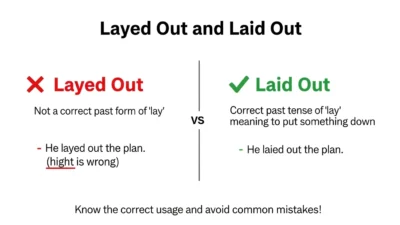
The correct phrase is “laid off.”
“Layed off” is incorrect and not a proper spelling in English.
“Laid off” is the past tense of “lay off,” which means to terminate employment, usually due to business reasons, not employee fault.
Meaning of Laid Off
The phrase “laid off” means that an employee has lost their job because the company no longer needs their position, often due to financial problems, restructuring, or downsizing. It does not usually mean the employee did something wrong.
Simple definition:
Laid off = Job ended by employer for business reasons.
Examples:
- The company laid off 50 workers due to budget cuts.
- She was laid off during the economic crisis.
- Many employees were laid off after the company closed.
Why “Layed Off” Is Incorrect
The confusion comes from the verb “lay.”
The past tense of lay is laid, not layed.
Here’s the correct verb form:
- Present: lay
- Past: laid
- Past participle: laid
So:
- Correct: laid off
- Incorrect: layed off
Example:
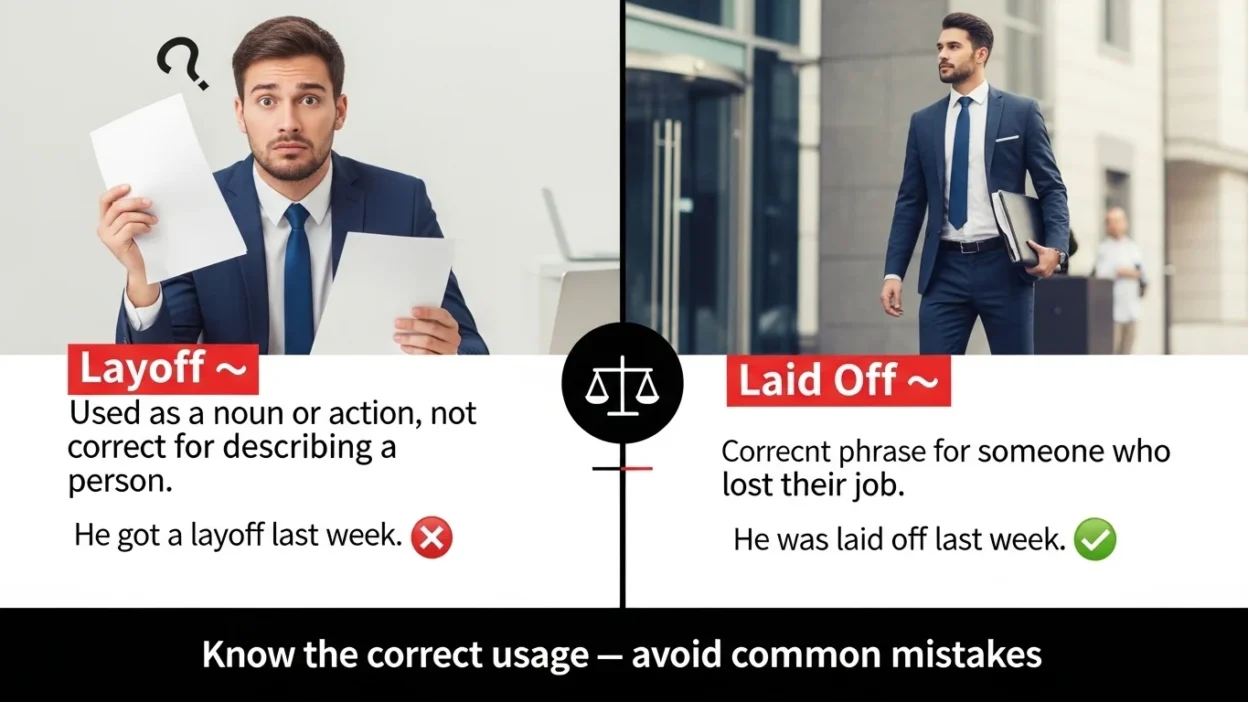
- ❌ He was layed off last week.
- ✅ He was laid off last week.
Layed Off vs Laid Off Comparison Table
| Word | Correct or Incorrect | Meaning | Example |
| Layed off | Incorrect | Not a real spelling | He was layed off |
| Laid off | Correct | Lost job due to business reasons | He was laid off |
Common Mistakes People Make
Many English learners and even native speakers make these mistakes:
- Writing layed off instead of laid off
- Confusing laid off with fired
- Using laid instead of lied (different meaning)
Laid Off vs Fired
These two are different:
| Term | Meaning |
| Laid off | Job ended due to company reasons |
| Fired | Job ended due to employee mistake or behavior |
Example:
- He was laid off because the company was losing money.
- He was fired for coming late every day.
American vs British English
Good news: There is no difference between American and British English for this phrase.
Both use “laid off” as the correct spelling and term.
However, some related vocabulary differs:
| American English | British English |
| Laid off | Made redundant |
| Company | Company |
| Vacation | Holiday |
In British English, people often say “made redundant” instead of “laid off.”
Example:
- US: She was laid off.
- UK: She was made redundant.
More Example Sentences
Here are more examples to help you understand:
- Thousands of workers were laid off during the recession.
- He was laid off after the factory shut down.
- I got laid off, but I found a new job quickly.
- She worries she might be laid off next month.
- They were laid off without warning.
Synonyms for Laid Off (LSI Keywords)
Using related words helps with SEO and vocabulary:
- Lost job
- Job terminated
- Made redundant
- Downsized
- Let go
- Workforce reduction
- Position eliminated
- Unemployed due to layoffs
Example:
- The company downsized and many employees were laid off.
When to Use “Lay Off”
Use lay off when talking about employment termination due to business reasons.
Structure:
- Present: The company may lay off workers.
- Past: The company laid off workers.
- Future: The company will lay off workers.
Mini Grammar Tip
Lay vs Lie (very common confusion)
| Verb | Meaning | Past |
| Lay | Put something down | Laid |
| Lie | To rest | Lay |
Example:
- I laid the book on the table.
- Yesterday, I lay on the bed.
This is why people mistakenly write layed, but it’s still incorrect.
FAQs
1. Is “layed off” ever correct?
No, “layed off” is always incorrect. The correct spelling is laid off.
2. What does “laid off” mean?
It means someone lost their job due to company reasons like downsizing or financial problems.
3. Is laid off the same as fired?
No. Laid off is not your fault. Fired means you did something wrong.
4. What is the present tense of laid off?
The present tense is lay off.
Example: The company may lay off workers.
5. What is British English for laid off?
In British English, people often say “made redundant.”
6. How do you use laid off in a sentence?
Example: I was laid off from my job last year.
7. Why do people write layed off?
Because they think the past of lay is layed, but the correct past tense is laid.
8. Is laid off formal or informal?
It is neutral and commonly used in both formal and informal English.
Summary
Understanding the difference between layed off vs laid off is simple once you know the basic grammar rule. The correct past tense of lay is laid, which is why “laid off” is the correct phrase when talking about job loss due to company reasons.
The spelling “layed off” is incorrect and should be avoided in all writing, especially professional or SEO content.
If you remember just one thing, remember this: People are laid off, not layed off. Using the correct spelling improves your writing, makes you look more professional, and helps your content rank better on search engines.
Actionable Takeaway
Here’s a quick trick to remember:
- Lay → Laid → Laid off ✅
- Layed off → Wrong ❌
Whenever you write about job loss, always use “laid off.” Save this rule, practice with example sentences, and you’ll never make this mistake again.

Matthew Benjamin is a contributing author at SpellPeak, dedicated to clear, engaging, and purposeful writing. He focuses on creating informative content that helps readers understand complex ideas with ease. His work emphasizes accuracy, creativity, and practical value, supporting better communication and thoughtful digital learning for a global audience.