Confused about heros vs heroes? You’re not alone. This is one of those small spelling differences that can quietly slip into emails, essays, captions, and even professional writing. It looks minor but it matters.
If you’ve ever paused mid-sentence wondering which spelling is correct, this guide will clear it up completely.
We’ll break down the rule in plain English, share memorable examples, explain common mistakes, and help you feel confident using the correct plural form every time.
Quick Answer:
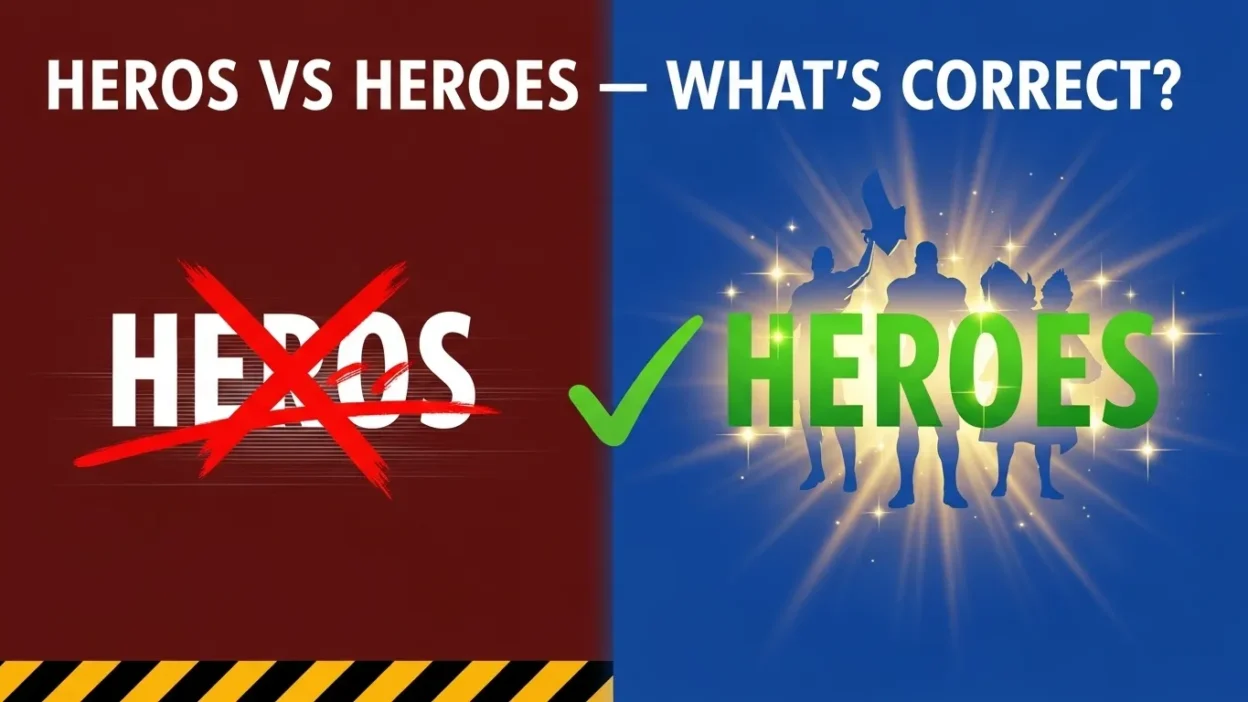
The correct spelling is heroes.
“Heros” is incorrect in standard English.
The word hero becomes heroes in the plural form because nouns ending in -o often add -es to form the plural.
Example:
- One hero
- Two heroes
That’s the short answer. Now let’s understand why.
What Does “Hero” Mean?
A hero is someone admired for courage, bravery, noble qualities, or remarkable achievements. The word is commonly used in:
- Literature
- Movies
- History
- Everyday life
- Sports
- Personal stories
For example:
- The firefighters were true heroes.
- She became a local hero after saving the child.
- In the movie, the hero defeats the villain.
The plural form simply refers to more than one heroic person.
Why Is “Heroes” Correct?
The confusion around heros vs heroes comes from English plural rules.
In English grammar, most nouns ending in -o form their plural by adding -es rather than just -s.
So:
- Hero → Heroes
- Potato → Potatoes
- Tomato → Tomatoes
- Echo → Echoes
Since “hero” follows this pattern, the correct plural spelling is heroes, not “heros.”
The Rule Explained Simply
If a singular noun ends in consonant + o, we usually add -es.
Hero
Ends with consonant (r) + o
Plural = heroes
That’s the grammatical reason behind the correct spelling.
Examples of “Heroes” in Sentences
Here are some natural examples to show proper usage:
- The comic book features several superheroes.
- War heroes are honored every year.
- Teachers are everyday heroes.
- Many heroes never seek recognition.
- The story celebrates forgotten heroes of history.
Notice how “heroes” always ends with -es.
Why Do People Write “Heros”?
Spelling errors like “heros” usually happen because:
- People apply the regular plural rule (just add -s).
- They’re typing quickly.
- Autocorrect doesn’t catch it immediately.
- They’re unsure about nouns ending in -o.
English spelling rules aren’t always consistent, which makes confusion understandable.
However, “heros” is considered incorrect in both formal and informal writing.
Heros vs Heroes: Comparison Table
Here’s a clear side-by-side comparison to help you remember:
| Feature | Heros | Heroes |
| Correct spelling | ❌ No | ✅ Yes |
| Recognized in dictionaries | ❌ No | ✅ Yes |
| Proper plural of “hero” | ❌ No | ✅ Yes |
| Accepted in academic writing | ❌ No | ✅ Yes |
| Used in American English | ❌ No | ✅ Yes |
| Used in British English | ❌ No | ✅ Yes |
The verdict is simple: heroes are always correct.
American vs British English Differences
When it comes to heros vs heroes, there is no difference between American English and British English.
Both use:
- Hero (singular)
- Heroes (plural)
Unlike words such as “color/colour” or “honor/honour,” this spelling stays the same across regions.
So whether you’re writing for a US audience, UK readers, or anywhere else, “heroes” is the only correct plural form.
Common Mistakes Related to “Heroes”
Here are a few related errors people often make:
1. Adding Just -S
❌ Heros
✅ Heroes
2. Confusing Possessive With Plural
Plural:
- The heroes saved the town.
Possessive:
- The heroes’ mission was dangerous. (belonging to multiple heroes)
Singular possessive:
- The hero’s cape was red.
Notice the apostrophe placement changes meaning.
3. Confusing “Hero” With “Superhero”
Both follow the same rule:
- Superhero → Superheroes
Never write “superheros.”
Are There Exceptions to the -O Rule?
Yes, English loves exceptions.
Some nouns ending in -o only add -s:
- Piano → Pianos
- Photo → Photos
- Video → Videos
Unfortunately, there isn’t one simple universal rule. That’s why memorizing common patterns helps.
But when it comes to hero, always remember:
Hero → Heroes
Etymology: Where Does “Hero” Come From?
The word “hero” comes from the Greek word hērōs, meaning protector or defender.
It entered English through Latin and Old French. Over time, the plural form settled as “heroes,” aligning with English pluralization patterns for similar words.
Understanding word origins often makes spelling easier to remember.
LSI Keywords and Related Terms
To strengthen your understanding (and your writing), here are related terms and synonyms often associated with “heroes”:
- Brave individuals
- Champions
- Saviors
- Protectors
- Protagonists
- Role models
- Legends
- Icons
- Superheroes
- Everyday heroes
These variations help enrich content naturally while keeping meaning clear.
When to Use “Heroes” in Writing
Use “heroes” when referring to:
- Historical figures
- Fictional characters
- First responders
- Military personnel
- Athletes
- Community leaders
- Personal inspirations
Examples:
- Our healthcare workers are true heroes.
- The novel follows two unlikely heroes.
- Many unsung heroes deserve recognition.
Using the correct plural form builds credibility and professionalism in your writing.
FAQs
1. Is “heros” ever correct?
No. “Heros” is not a correct spelling in standard English.
2. Why do heroes become heroes?
Because nouns ending in consonant + o usually add -es to form the plural.
3. Are heroes correct in both American and British English?
Yes. There is no regional spelling difference.
4. What is the singular possessive of a hero?
Hero’s
Example: The hero’s journey was inspiring.
5. What is the plural possessive of heroes?
Heroes’
Example: The heroes’ bravery saved lives.
6. Do all words ending in -o add -es?
No. Some add only -s, like photos and pianos.
7. How can I remember the correct spelling?
Think of “potatoes” and “tomatoes.” Hero follows the same pattern.
8. Is “superheros” correct?
No. The correct spelling is superheroes.
Simple Memory Trick
Here’s an easy way to remember:
If you can say:
One hero
Two heroes
And it sounds natural with “-es,” that’s your clue.
Also, remember that famous phrase:
“Not all heroes wear capes.”
You’ve probably seen it spelled correctly many times that repetition helps lock it in.
Summary:
To wrap it up clearly: heroes is the correct plural form of hero, and “heros” is a spelling mistake. The rule follows standard English pluralization patterns for many words ending in consonant + o.
There is no difference between American and British English here both use “heroes.”
If you’re writing about war heroes, movie superheroes, or everyday heroes in your community, always use the -es ending.
Actionable Takeaway
Before publishing or sending any piece of writing, quickly scan for plural nouns ending in -o. If you see “heros,” correct it to “heroes.”
Small grammar improvements make a big difference in polished, confident communication.

Mia Elizabeth is a contributing author at SpellPeak, passionate about thoughtful writing and clear communication. She creates engaging, well-researched content that helps readers learn and connect with ideas easily. Her work emphasizes clarity, creativity, and practical value, supporting meaningful digital experiences and accessible knowledge sharing worldwide.