Have you ever typed “habbit” and wondered if something looked off? You’re not alone. This common spelling confusion trips up students, writers, bloggers, and even professionals. When it comes to habbit vs habit, one letter makes all the difference.
Spelling mistakes can affect your credibility, exam scores, and even SEO rankings. If you’re trying to write clearly and professionally, understanding the correct spelling is essential.
In this guide, we’ll break down the difference in simple terms, share examples, highlight common mistakes, and help you remember the correct form forever.
Quick Answer:
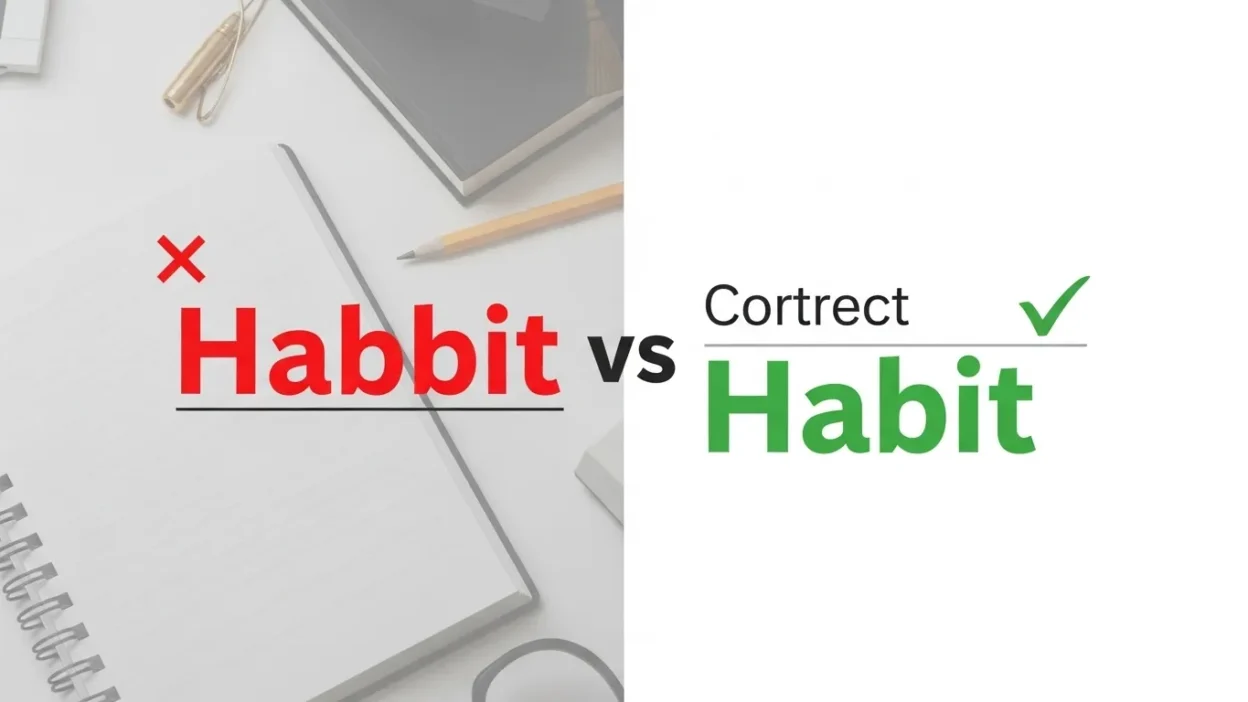
The correct spelling is habit.
“Habbit” is a misspelling and is not recognized as a correct word in standard English dictionaries.
If you’re writing about a routine behavior, repeated action, or pattern, always use habit.
What Does “Habit” Mean?
The word habit is a noun. It refers to something you do regularly or automatically, often without thinking.
Definition of Habit:
A habit is a repeated behavior or routine that becomes automatic over time.
Simple Examples:
- Brushing your teeth before bed is a good habit.
- She has a habit of waking up early.
- Checking your phone constantly can become a bad habit.
The word comes from Latin habitus, meaning condition or character. Over time, it evolved into the modern English spelling: habit.
Is “Habbit” a Real Word?
No, habbit is not a correct English word.
It’s simply a spelling error of habit. Sometimes people mistakenly double the “b,” possibly because they confuse it with words like “rabbit.” But grammatically and officially, habbit does not exist in English dictionaries.
If you type “habbit” in most spell-check tools, it will suggest correcting it to habit.
Why Do People Confuse Habbit vs Habit?
Spelling confusion often happens for a few common reasons:
- English pronunciation doesn’t always match spelling.
- Some words have double consonants (like “rabbit”).
- Fast typing or autocorrect errors.
- Lack of familiarity with the correct spelling.
The pronunciation of habit sounds like “ha-bit,” and some learners assume the middle consonant should be doubled. However, English spelling rules don’t support that in this case.
Comparison Table: Habbit vs Habit
| Word | Correct Spelling | Meaning | Usage in English | Example Sentence |
| Habit | ✅ Yes | Repeated behavior or routine | Standard English | Exercise is a healthy habit. |
| Habbit | ❌ No | None (misspelling) | Not accepted | Incorrect spelling |
As you can see, only habit is correct.
Examples of “Habit” in Sentences
Using examples helps build confidence and clarity.
Good Habits
- Reading daily is a powerful habit.
- Drinking water regularly is a healthy habit.
- She developed the habit of journaling every morning.
Bad Habits
- Nail-biting is a nervous habit.
- Procrastination can become a damaging habit.
- He has a bad habit of interrupting others.
Common Phrases with Habit
- Creature of habit
- Habit formation
- Break a habit
- Develop a habit
- Habit loop
These phrases are widely used in everyday English.
American vs British English: Is There a Difference?
When it comes to habits, there is no difference between American and British English.
In both 🇺🇸 American English and 🇬🇧 British English, the correct spelling is habit.
Unlike words such as “color” vs “colour,” this word remains the same in both versions of English. So no matter where you are writing in the US, UK, Australia, Canada, or anywhere else, always use habit.
Common Mistakes Related to Habit
Here are some frequent errors people make:
1. Writing “habbit” Instead of “habit”
Incorrect: I need to change my habbit.
Correct: I need to change my habit.
2. Confusing Habit with Hobby
A habit is something you do automatically.
A hobby is something you enjoy doing.
Example:
- Playing guitar is her hobby.
- Practicing guitar daily became her habit.
3. Using Habit as a Verb
Habit is a noun. The verb form is different.
Incorrect: I have a habit waking up early.
Correct: I have a habit of waking up early.
4. Forgetting Prepositions
The correct structure is:
- Have a habit of + verb-ing
Correct: She has a habit of overthinking.
Synonyms and Related Words (LSI Keywords)
To strengthen your vocabulary and SEO understanding, here are related terms:
- Routine
- Practice
- Custom
- Pattern
- Behavior
- Ritual
- Tendency
- Addiction (in some contexts)
- Repeated action
- Automatic behavior
These words are context-based alternatives but not exact replacements in every sentence.
How to Remember the Correct Spelling
Here are a few simple memory tricks:
Trick 1: One “B” Rule
Think of it this way:
You need only one behavior, so only one “b” in habit.
Trick 2: Compare with “Rabbit”
Rabbit has two “b” letters.
Habit does not hop so it has only one “b.”
Trick 3: Use Spell-Check Awareness
If you see a red underline under “habbit,” trust your spell-check tool.
Building awareness will help you avoid repeating the mistake.
Habit in Grammar and Sentence Structure
Let’s look at correct grammatical patterns.
Structure 1:
Have a habit of + verb-ing
- She has a habit of complaining.
Structure 2:
Make something a habit
- Make reading a daily habit.
Structure 3:
Break a habit
- It’s hard to break a bad habit.
Using proper sentence structures improves clarity and fluency.
Why Correct Spelling Matters
You might think one extra “b” doesn’t matter. But it does.
Spelling affects:
- Academic grades
- Professional emails
- Website credibility
- Search engine rankings
- First impressions
If you’re writing content online, spelling mistakes can reduce trust and authority. Clear, correct English shows professionalism and attention to detail.
FAQs
1. Is habbit ever correct?
No, “habbit” is always incorrect. The correct spelling is “habit.”
2. Why do people spell habit with two b’s?
People confuse it with similar-looking words like “rabbit” or misunderstand spelling patterns.
3. Is habit a noun or a verb?
Habit is a noun. It refers to repeated behavior.
4. What is the plural of habit?
The plural form is habits.
5. Is there a British spelling of habit?
No. Both American and British English use the same spelling: habit.
6. How can I avoid spelling mistakes like habbit?
Practice writing, read regularly, and use spell-check tools.
7. What is a habit loop?
A habit loop is a cycle of cue, routine, and reward that forms automatic behaviors.
8. Can habits be changed?
Yes. With awareness, repetition, and discipline, habits can be replaced or improved.
Final Summary
To put it simply, in the debate of habbit vs habit, the correct spelling is always habit. “Habbit” is just a common typo or spelling error.
There is no difference between American and British English for this word, and it always contains only one “b.”
Spelling correctly may seem small, but it makes a big impact. Whether you’re writing an email, essay, blog post, or social media caption, using the right spelling builds credibility and confidence.
Actionable Takeaway
From today onward, remember this: habit has one “b.”
Before publishing or submitting anything, quickly scan for spelling mistakes. Build the good habit of proofreading your work. Over time, correct spelling will become automatic and that’s one habit you’ll never regret developing.

Noah Jacob is the administrator of SpellPeak, responsible for managing website operations, content coordination, and platform performance. He ensures smooth functionality, security, and reliability while supporting the team in delivering a seamless, user-focused experience and maintaining high standards of quality across the site.