When writing in English, small spelling differences can cause big confusion. One example is gummy vs gummie. Many people see both spellings online and wonder which one is correct. Is one American English and the other British English? Or is one simply a mistake?
In this guide, you’ll learn the real difference between gummy vs gummie, their meanings, correct usage, and common mistakes. By the end, you’ll clearly understand which spelling to use in writing, marketing, and everyday communication.
Quick Answer
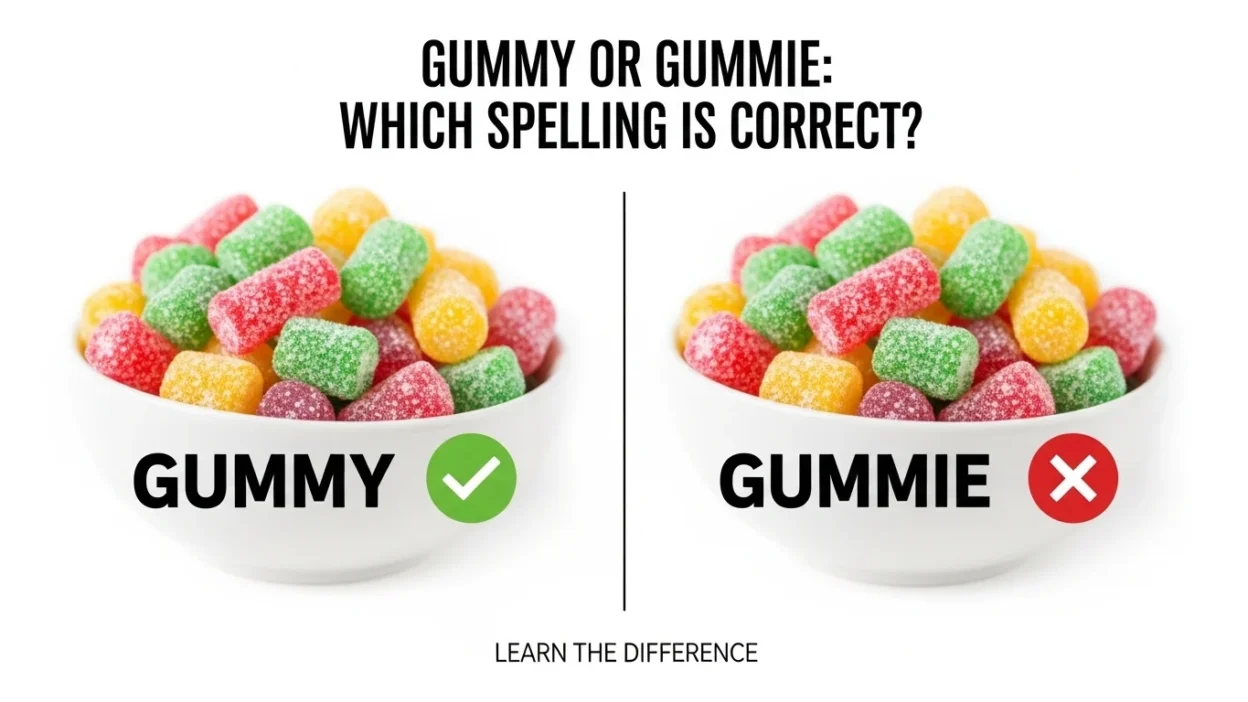
The correct and widely accepted spelling is gummy.
Gummie is usually considered a misspelling or rare variant.
- ✅ Gummy – Correct spelling used in dictionaries and standard English.
- ❌ Gummie – Non-standard spelling and generally considered incorrect.
For example:
- Correct: I love eating gummy bears.
- Incorrect: I love eating gummie bears.
What Does “Gummy” Mean?
The word gummy is an adjective that describes something sticky, chewy, or resembling gum. It is also commonly used to refer to chewy candy made with gelatin, such as gummy bears or gummy worms.
Common meanings include:
- Sticky or glue-like in texture
- Chewy candy made with gelatin
- Something soft or rubbery
Examples in sentences:
- The candy was gummy and sweet.
- My vitamins come in gummy form.
- The rice became gummy because it was overcooked.
Because of these meanings, gummy appears frequently in food, cooking, and candy-related contexts.
What Does “Gummie” Mean?
The spelling gummie generally does not appear in standard dictionaries. It is typically the result of:
- A spelling mistake
- A creative brand spelling
- Informal internet usage
Some brands or social media posts may intentionally use gummie, but in formal writing and SEO content, gummy is the correct spelling.
Example:
- Incorrect: These gummie candies taste amazing.
- Correct: These gummy candies taste amazing.
Gummy vs Gummie: Key Differences
| Feature | Gummy | Gummie |
| Correct spelling | ✔ Yes | ✖ No |
| Dictionary recognized | ✔ Yes | ✖ Rarely |
| Common usage | Very common | Very rare |
| Used in formal writing | ✔ Yes | ✖ No |
| Used by brands sometimes | Sometimes | Occasionally |
Conclusion: Always use gummy unless you are referencing a specific brand that intentionally spells it gummie.
American vs British English
Unlike many spelling differences in English, gummy vs gummie is not an American vs British variation.
Both American English and British English use the same spelling:
- Gummy ✔
- Gummie ✖
For example:
American English:
- Children love gummy bears.
British English:
- These gummy sweets are popular at parties.
So regardless of the region, gummy remains the standard spelling.
Common Examples of “Gummy” in Real Life
You’ll often see the word gummy used in these contexts:
1. Candy
The most popular use of the word.
Examples:
- Gummy bears
- Gummy worms
- Gummy rings
Example sentence:
- Kids enjoy colorful gummy candies at birthday parties.
2. Vitamins and Supplements
Many supplements come in gummy form because they are easier to eat.
Example:
- I take gummy vitamins every morning.
3. Food Texture
Sometimes food becomes sticky or overly soft.
Example:
- The pasta turned gummy after cooking too long.
4. Dental or Mouth Descriptions
In medical contexts, gummy can describe gums.
Example:
- The dentist checked for gummy inflammation.
Why People Write “Gummie”
There are several reasons people accidentally write gummie
1. Confusion With Words Ending in “ie”
Many English words end in -ie, such as:
- cookie
- brownie
- sweetie
Because of this pattern, some people assume gummie follows the same rule.
2. Typing or Spelling Mistakes
Online writing and quick typing can lead to accidental spelling errors.
3. Brand or Creative Spellings
Occasionally brands intentionally change spellings for marketing purposes.
However, this does not make the spelling grammatically correct.
Common Mistakes to Avoid
Here are frequent errors people make when using gummy vs gummie.
Mistake 1: Using “Gummie” in Formal Writing
Incorrect:
- This article reviews the best gummie candies.
Correct:
- This article reviews the best gummy candies.
Mistake 2: Thinking It’s a Regional Spelling
Some writers assume:
- gummy = American
- gummie = British
This is not true.
Mistake 3: Mixing Both Spellings
Incorrect:
- I bought gummy bears and gummie worms.
Correct:
- I bought gummy bears and gummy worms.
Consistency is important in professional writing.
Tips to Remember the Correct Spelling
Here are simple tricks to remember the correct word.
Think of “Gummy Bears”
The famous candy name always uses gummy.
Remember the “Y” Rule
Many adjectives describing texture end with y.
Examples:
- sticky
- chewy
- gummy
Use Spell Check
Modern writing tools will usually flag gummie as incorrect.
FAQs
1. Is “gummie” a real word?
No, gummie is generally not recognized in standard dictionaries. It is considered a misspelling of gummy.
2. Which spelling is correct: gummy or gummie?
The correct spelling is gummy.
3. Do Americans use “gummie”?
No. Americans also use the spelling gummy.
4. Is “gummie” used in British English?
No. British English also uses gummy, especially when referring to sweets or candy.
5. Why do I see “gummie” online?
It may appear because of typos, informal writing, or creative brand names.
6. Is “gummy” only used for candy?
No. It can also describe sticky textures, overcooked food, or gum-related conditions.
7. What are gummy vitamins?
Gummy vitamins are chewable supplements with a soft, candy-like texture.
8. Is “gummy bear” the correct spelling?
Yes. The correct phrase is gummy bear, not gummie bear.
Summary
Understanding the difference between gummy vs gummie is simple once you know the correct spelling. Gummy is the standard, dictionary-approved word used in both American and British English.
It commonly describes chewy candy, sticky textures, or gummy supplements. On the other hand, gummie is generally considered a misspelling or informal variation.
While it may appear occasionally online or in creative branding, it is not appropriate for formal writing, SEO content, or professional communication.
Actionable Takeaway
Whenever you write about chewy candy, supplements, or sticky textures, always use the spelling “gummy.” This ensures your writing stays clear, correct, and professional. If you see gummie, treat it as a typo unless it’s part of a specific brand name.

Noah Jacob is the administrator of SpellPeak, responsible for managing website operations, content coordination, and platform performance. He ensures smooth functionality, security, and reliability while supporting the team in delivering a seamless, user-focused experience and maintaining high standards of quality across the site.