When writing in English, small punctuation marks can completely change whether a word is correct or incorrect. A common confusion people face is “donts or don’ts.” You may have seen both versions online, in blogs, or even in social media posts. But which one is actually correct?
Understanding the correct spelling is important for clear writing, professional communication, and good grammar. In this guide, you’ll learn the correct form, the meaning, examples, common mistakes, and when to use it properly. By the end, you’ll confidently know whether to write donts or don’ts.
Quick Answer
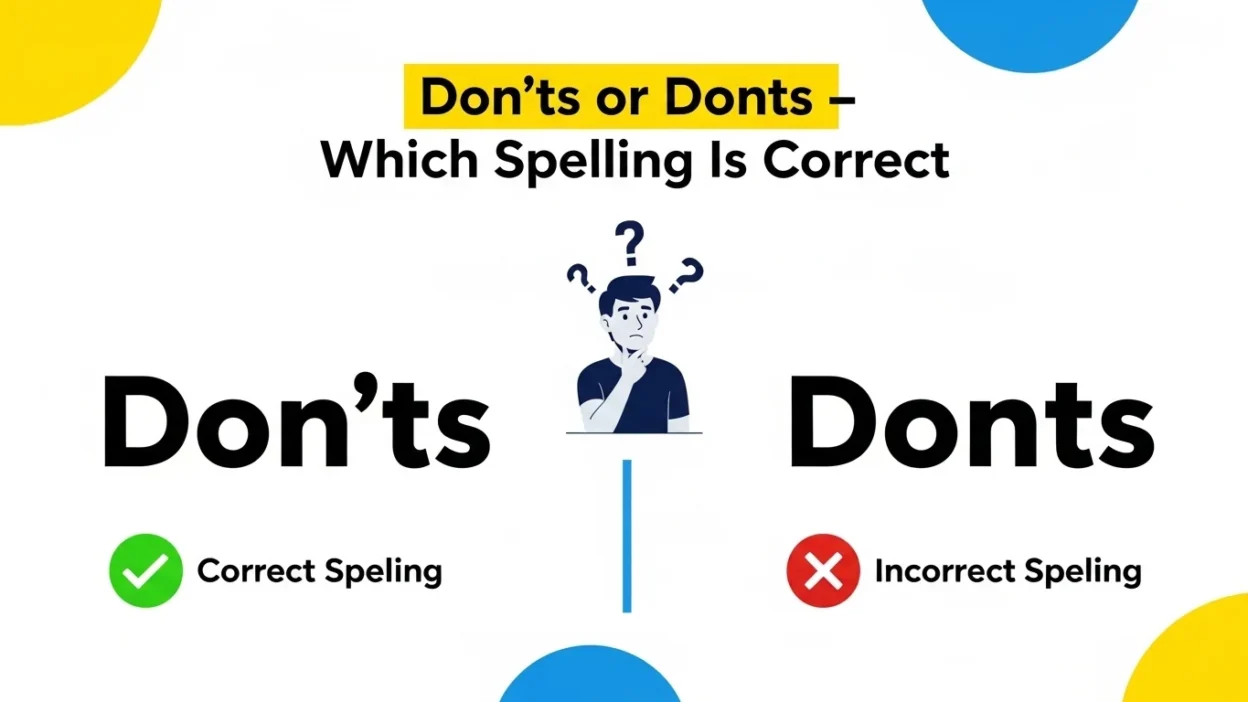
The correct spelling is don’ts (with an apostrophe).
Don’ts is the plural form of “don’t,” which means things you should not do.
❌ Donts – Incorrect spelling
✅ Don’ts – Correct spelling
Example:
- Here are some important do’s and don’ts for job interviews.
What Does “Don’ts” Mean?
The word don’ts refers to actions or behaviors that should be avoided. It is commonly used together with “do’s” to create a list of recommended and discouraged actions.
Think of it this way:
- Do’s → Things you should do
- Don’ts → Things you should not do
This phrase is very common in guides, tutorials, workplace rules, and etiquette advice.
Example sentence:
- The teacher explained the classroom do’s and don’ts to new students.
Here, don’ts simply means the things students should not do in class.
Why “Donts” Is Incorrect
The spelling donts is wrong because it ignores the grammatical rule behind the word.
The word don’t is a contraction of:
do + not = don’t
When we make it plural, we add ’s to the contraction.
So the correct form becomes:
don’t → don’ts
Without the apostrophe, donts is not recognized as a proper English word.
How “Don’ts” Is Formed
Let’s break it down step by step.
- Start with the verb phrase
do not - Contract it
don’t - Make it plural to refer to multiple rules
don’ts
So don’ts literally means multiple “don’t do this” rules.
Example:
- The safety manual lists several don’ts for working in the lab.
Examples of “Don’ts” in Sentences
Here are some simple and clear examples of the correct usage.
Everyday Examples
- Parents often teach their children basic do’s and don’ts of polite behavior.
- The guide explained the travel don’ts tourists should avoid.
- Social media has many unspoken don’ts about posting personal information.
Professional Examples
- The HR manager discussed workplace do’s and don’ts with new employees.
- The company handbook highlights important don’ts for maintaining professionalism.
Education Examples
- The professor shared the exam do’s and don’ts before the test.
- Students learned the online learning don’ts during orientation.
Common Phrase: “Do’s and Don’ts”
The phrase “do’s and don’ts” is extremely popular in English. It is used to describe guidelines that explain what people should and should not do.
Examples:
- Interview do’s and don’ts
- Social media do’s and don’ts
- Classroom do’s and don’ts
- Dating do’s and don’ts
Example sentence:
- This article explains the do’s and don’ts of public speaking.
This phrase helps readers quickly understand recommended actions versus mistakes to avoid.
Comparison Table: Donts vs Don’ts
| Word | Correct or Incorrect | Meaning | Example |
| Donts | ❌ Incorrect | Not a recognized English spelling | Avoid writing donts in formal writing |
| Don’ts | ✅ Correct | Things you should not do | Follow the interview don’ts carefully |
This table shows that don’ts is the only correct form.
Common Mistakes People Make
Many writers accidentally use the wrong spelling because apostrophes can be confusing.
Here are some typical mistakes.
1. Removing the Apostrophe
Incorrect:
- The article lists the social media donts.
Correct:
- The article lists the social media don’ts.
2. Mixing Plural Rules
Some writers avoid the apostrophe because they learned that apostrophes should not make plurals. While that rule is generally true, contractions are an exception.
3. Writing “Dont’s”
Incorrect:
- Dont’s
Correct:
- Don’ts
The apostrophe belongs between “n” and “t”, not before the s.
American vs British English
Interestingly, the spelling of don’ts is the same in both American and British English.
However, there is a small style difference regarding the phrase “do’s and don’ts.”
Some style guides prefer:
- dos and don’ts (without apostrophe in dos)
Others prefer:
- do’s and don’ts
Both are accepted in modern writing, but don’ts always keeps the apostrophe.
Examples:
American style:
- dos and don’ts
Traditional style:
- do’s and don’ts
Both versions are understandable and widely used.
When to Use “Don’ts”
You should use don’ts when talking about rules, advice, or behaviors that should be avoided.
Common contexts include:
- Etiquette guides
- Workplace policies
- Educational rules
- Parenting advice
- Lifestyle tips
- Online safety guides
Examples:
- Here are the travel don’ts you should know before visiting another country.
- The instructor explained the driving don’ts during the lesson.
Using the correct spelling helps your writing look professional and grammatically accurate.
Simple Trick to Remember the Correct Spelling
A helpful trick is to remember this:
If the word contains “don’t,” keep the apostrophe.
So when making it plural:
don’t → don’ts
If the apostrophe disappears, the word becomes incorrect.
FAQs
1. Is “donts” a real word?
No. Donts is not a correct English word. The correct spelling is don’ts.
2. Why does “don’ts” have an apostrophe?
Because it comes from the contraction “don’t” (do not). The apostrophe remains when the word becomes plural.
3. Can I write “dos and donts”?
No. The correct phrase is dos and don’ts or do’s and don’ts.
4. Is “don’ts” formal English?
Yes. Don’ts is acceptable in both formal and informal writing, especially in guides and instructional content.
5. What does the phrase “do’s and don’ts” mean?
It means rules that explain what you should do and what you should avoid.
6. Is “don’ts” used in professional writing?
Yes. It is widely used in business guides, educational materials, and online articles.
7. Why do people write “donts” by mistake?
Most mistakes happen because writers forget the apostrophe or misunderstand plural rules.
Final Summary
The confusion between donts and don’ts is common, but the rule is simple once you understand it. The correct spelling is don’ts, with an apostrophe, because it comes from the contraction “don’t,” meaning “do not.”
When we talk about multiple rules or actions to avoid, we simply add s, creating don’ts. Using the correct spelling helps your writing appear clearer, more professional, and grammatically accurate.
If you’re writing a blog, guide, or professional document, remembering the difference ensures your message is easy to understand.
Actionable takeaway:
Whenever you want to describe things people should avoid, always write don’ts, never donts.

Matthew Benjamin is a contributing author at SpellPeak, dedicated to clear, engaging, and purposeful writing. He focuses on creating informative content that helps readers understand complex ideas with ease. His work emphasizes accuracy, creativity, and practical value, supporting better communication and thoughtful digital learning for a global audience.