Many English learners and writers often get confused between discard and disgard. At first glance, both words look similar, and it’s easy to assume they mean the same thing. However, only one of them is actually correct in standard English.
If you’ve ever paused while writing and wondered whether to use discard or disgard, you’re not alone. This guide will clearly explain the difference, show you the correct spelling, provide examples, and help you avoid this common spelling mistake in the future.
Quick Answer
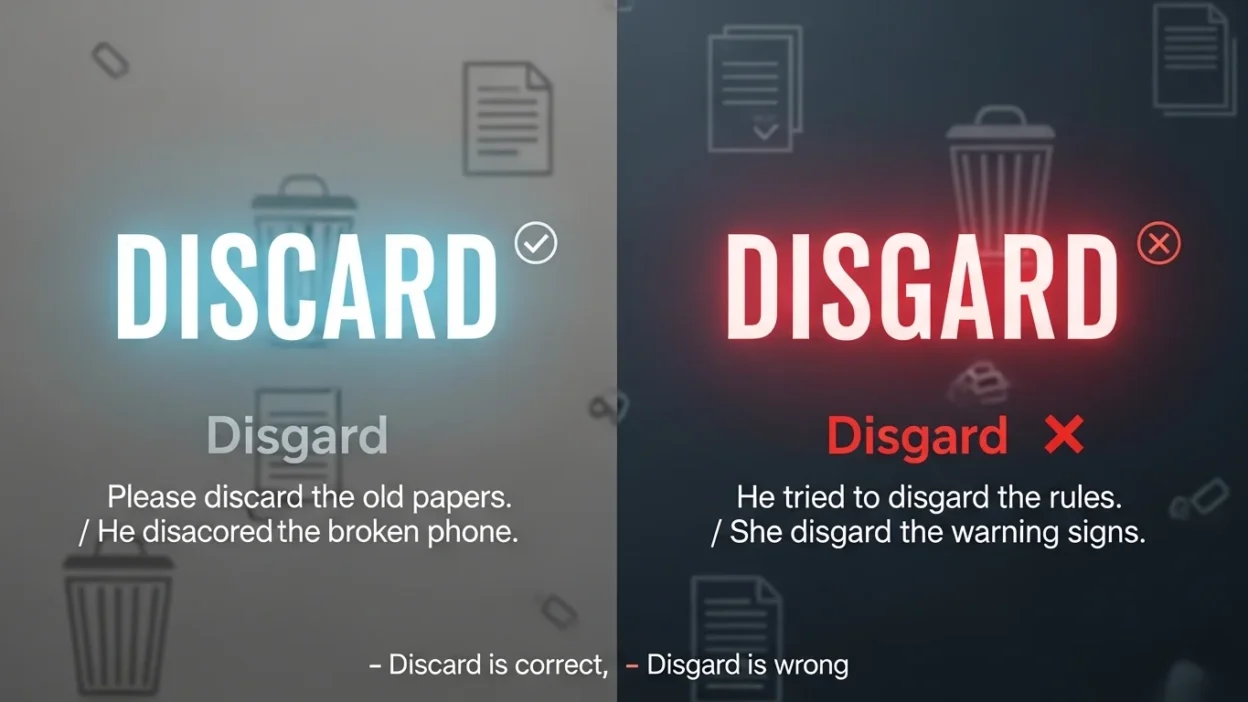
The correct spelling is discard.
Disgard is a misspelling and is not recognized as a valid English word.
- ✔ Discard = to throw away, get rid of, or remove something
- ✖ Disgard = incorrect spelling of discard
If you want to write correctly in English, always use discard.
What Does “Discard” Mean?
The word discard is a verb that means to throw something away or remove something that is no longer needed.
People use this word when they want to describe getting rid of something useless, old, broken, or unnecessary.
Simple Definition
Discard: to get rid of something because it is no longer useful or wanted.
Example Sentences
- Please discard the old documents after scanning them.
- She decided to discard the damaged clothes.
- The editor discarded several paragraphs from the article.
- Players must discard one card at the end of the round.
In each case, the word refers to removing or throwing away something.
Why “Disgard” Is Incorrect
The spelling disgard is simply a common typo or spelling mistake. It often happens because people confuse it with the word guard or mistakenly replace the letter C with G.
However, dictionaries and grammar references do not recognize “disgard” as a real English word.
Why People Write “Disgard”
Common reasons include:
- Typing errors
- Pronunciation confusion
- Mixing the word with guard
- Lack of familiarity with correct spelling
If you ever see disgard, remember that the correct spelling should always be discard.
Discard vs Disgard: Key Differences
| Feature | Discard | Disgard |
| Spelling Status | Correct | Incorrect |
| Meaning | To throw away or remove | No meaning |
| Dictionary Entry | Yes | No |
| Usage in Writing | Standard English | Spelling mistake |
| Recommended to Use | ✔ Yes | ✖ Never |
The table makes it clear that discard is the only correct option.
How to Remember the Correct Spelling
A simple trick can help you remember the correct spelling.
Discard contains the word “card.”
Think about card games.
When playing cards, players often discard a card they don’t need.
So remember:
Dis + card = discard
This small memory trick can help you avoid the incorrect spelling disgard.
Common Mistakes People Make
Many writers accidentally make spelling errors when typing quickly. Here are some of the most common mistakes related to discard.
1. Writing “Disgard” Instead of “Discard”
Incorrect:
- Please disgard the old files.
Correct:
- Please discard the old files.
2. Confusing Discard with Similar Words
Some people mix discard with other words like:
- disregard
- guard
- discardable (incorrect form)
Example:
Incorrect:
- He disgard the instructions.
Correct:
- He discarded the instructions.
3. Misspelling in Formal Writing
In professional writing, spelling mistakes can affect credibility. Words like discard should always be spelled correctly in:
- blog posts
- academic writing
- emails
- reports
- websites
Spell-check tools usually flag disgard as an error.
Discard in Everyday English
The word discard appears in many daily situations. It is commonly used in work, education, and everyday conversations.
In Offices
Employees may discard outdated documents to keep records organized.
Example:
- The company decided to discard unnecessary paperwork.
In Technology
When editing files or code, people may remove unnecessary parts.
Example:
- The developer discarded the old version of the file.
In Card Games
Players frequently use the term discard.
Example:
- You must discard one card before drawing a new one.
Synonyms of Discard
Several words share a similar meaning with discard. These synonyms can help vary your writing.
Common synonyms include:
- throw away
- dispose of
- eliminate
- remove
- reject
- dump
- abandon
Example:
- She discarded the broken phone.
- She disposed of the broken phone.
Both sentences express a similar idea.
American vs British English
Unlike some English words, discard has the same spelling in both American and British English.
Examples:
- American English: discard
- British English: discard
There is no spelling variation, so the word remains consistent worldwide.
However, pronunciation may differ slightly depending on accent, but the spelling never changes.
When Should You Use “Discard”?
Use discard whenever you want to describe getting rid of something unnecessary.
Situations Where It Fits
- removing old files
- throwing away damaged items
- deleting unnecessary data
- rejecting ideas
- dropping unwanted options
Example sentences:
- The teacher asked students to discard incorrect answers.
- The company discarded the outdated policy.
- Please discard empty boxes after unpacking.
Quick Spelling Tips
If you want to avoid spelling errors like disgard, follow these simple tips:
- Use spell-check tools
- Proofread your writing
- Remember card inside discard
- Read your sentence aloud
- Learn common spelling patterns
These habits help improve writing accuracy and confidence.
FAQs
1. Is “disgard” a real word?
No. Disgard is not a real English word. It is simply a misspelling of discard.
2. What does discard mean?
Discard means to throw away, remove, or get rid of something that is no longer needed.
3. Why do people write disgard instead of discard?
Most people write disgard by mistake due to typing errors or confusion between the letters C and G.
4. Is discard used in formal writing?
Yes. Discard is a standard English word and can be used in formal and informal writing.
5. Are discard and disregard the same?
No, they are different.
- Discard = throw away
- Disregard = ignore something
Example:
- She discarded the broken toy.
- He disregarded the warning.
6. Does discard have a different spelling in British English?
No. Both American and British English use the same spelling: discard.
7. What part of speech is discard?
Discard can function as both:
- a verb (to throw away)
- a noun (something that has been thrown away)
Example:
- Verb: Please discard the trash.
- Noun: The pile contained several discards.
8. What is the past tense of discard?
The past tense is discarded.
Example:
- She discarded the old magazines.
Summary
The difference between discard vs disgard is simple but important. Discard is the correct spelling and means to throw away or remove something unnecessary. On the other hand, disgard is a spelling mistake and should never be used in proper English writing.
Understanding this difference helps improve writing accuracy and prevents common grammar errors. If you are writing emails, blog posts, or academic content, using the correct spelling ensures your message appears professional and clear.
The key takeaway is easy to remember:
Always use discard, never disgard. If you remember the small trick “dis + card,” you’ll likely avoid this mistake forever and write with greater confidence.

Noah Jacob is the administrator of SpellPeak, responsible for managing website operations, content coordination, and platform performance. He ensures smooth functionality, security, and reliability while supporting the team in delivering a seamless, user-focused experience and maintaining high standards of quality across the site.