If you’ve ever typed costumer when you meant customer, you’re not alone. These two words look very similar, sound almost the same, and are often confused in writing. But here’s the truth: they have completely different meanings, and using the wrong one can change your sentence entirely.
In this guide, you’ll learn the difference between costumer vs customer, their meanings, examples, common mistakes, and when to use each word correctly. By the end, you’ll never confuse them again.
Quick Answer
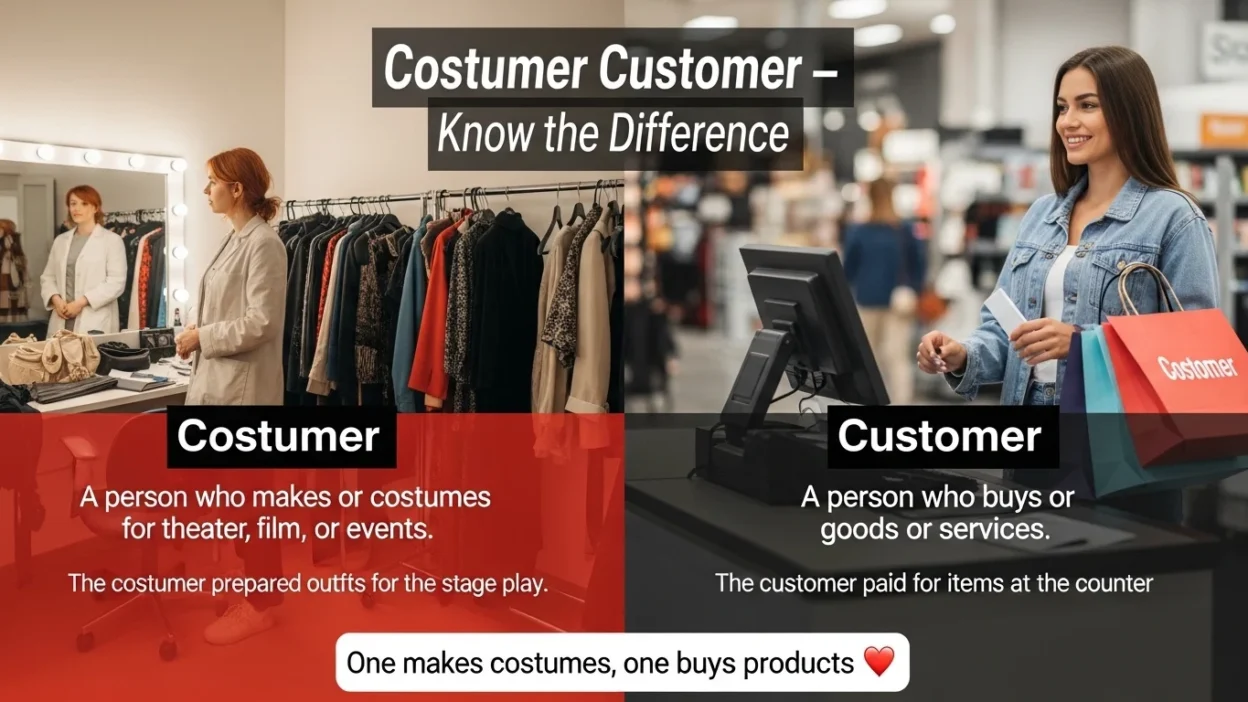
- Customer = A person who buys goods or services.
- Costumer = A person who makes, sells, or designs costumes.
Quick example:
- She is a customer at the store. ✅
- She is a costumer for a movie studio. ✅
- She is a costumer at the store. ❌ (Wrong word)
Meaning of Customer
A customer is a person who buys something from a shop, company, or business. This is the most commonly used word between the two.
Examples:
- The customer asked for a refund.
- This shop values every customer.
- We need more customers to grow our business.
- The customer is always right.
Related words (LSI keywords):
- Client
- Buyer
- Shopper
- Consumer
- Purchaser
These words are often used in business, marketing, and sales contexts.
Meaning of Costumer
A costumer is a person who makes, designs, or sells costumes. This word is used in theater, movies, fashion, and Halloween costume businesses.
Examples:
- She works as a costumer in Hollywood.
- The costumer designed dresses for the film.
- The theater hired a costumer for the play.
Related words:
- Costume designer
- Wardrobe designer
- Fashion designer
- Stylist
Costumer vs Customer: Key Differences
Here is a simple comparison table to help you remember the difference:
| Word | Meaning | Used In | Example |
| Customer | A person who buys something | Business, shops | The customer paid the bill |
| Costumer | A person who makes/sells costumes | Film, theater, fashion | The costumer designed costumes |
Memory tip:
Customer = Comes to buy
Costumer = Costumes
Common Mistakes People Make
Many writers confuse these words because the spelling difference is very small. But using the wrong word can make your sentence confusing or funny.
Wrong vs Correct Examples:
- ❌ Our shop welcomes every costumer.
- ✅ Our shop welcomes every customer.
- ❌ The customer designed costumes for the movie.
- ✅ The costumer designed costumes for the movie.
Spelling Trick to Remember:
- Customer → Has “custom” (custom = business, regular buyers)
- Costumer → Has “costume” (costume = clothes for acting)
American vs British English
Good news: There is no difference between American and British English for these words.
| American English | British English |
| Customer | Customer |
| Costumer | Costumer |
Both spellings and meanings are the same in American and British English.
When to Use Customer
Use customer when talking about:
- Shops
- Online stores
- Restaurants
- Banks
- Businesses
- Services
- Marketing and sales
Example sentences:
- The customer left a review.
- We must improve customer service.
- The customer bought two items.
- The company listens to its customers.
When to Use Costumer
Use costumer when talking about:
- Movies
- Theater
- Drama
- Fashion shows
- Costume shops
- Halloween costumes
Example sentences:
- The costumer prepared costumes for the actors.
- She works as a film costumer.
- The costumer designed historical dresses.
FAQs
1. Is it costumer or customer in a shop?
The correct word is customer because a customer buys something.
2. What is a costumer?
A costumer is a person who makes or sells costumes for movies, theater, or events.
3. Why do people confuse costumer and customer?
Because the spelling and pronunciation are very similar.
4. How do I remember the difference?
Remember:
Customer = Buy
Costumer = Costume
5. Is customer a common word?
Yes, customer is very common and used in business and daily life.
6. Is costumer a common word?
No, costumer is less common and used mostly in fashion, theater, and film industries.
7. Can costumer mean a buyer?
No, costumer never means buyer. The correct word is customer.
8. What is customer service?
Customer service is help and support a company gives to its customers before and after buying a product.
Summary
Understanding the difference between costumer vs customer is very important, especially if you write emails, articles, business content, or blog posts.
These words may look similar, but their meanings are completely different. A customer is someone who buys products or services, while a costumer is someone who makes or designs costumes.
A simple way to remember is this: customer = buyer, costumer = costume maker. If you keep this small trick in mind, you’ll never make this mistake again.
Always double-check your spelling when writing, especially in business or professional content.
Actionable Takeaway
Before using the word, ask yourself:
- Are you talking about a buyer? → Use customer
- Are you talking about costumes? → Use costumer
This one-second check can save you from a common English mistake and make your writing more professional and clear.

Mia Elizabeth is a contributing author at SpellPeak, passionate about thoughtful writing and clear communication. She creates engaging, well-researched content that helps readers learn and connect with ideas easily. Her work emphasizes clarity, creativity, and practical value, supporting meaningful digital experiences and accessible knowledge sharing worldwide.