If you’ve ever been confused about compair vs compare, you’re not alone. Many people accidentally write compair when they actually mean compare.
The reason is simple: both words sound similar when spoken, but only one is correct in standard English. This small spelling mistake can make your writing look unprofessional, especially in emails, essays, blog posts, or websites.
In this easy guide, you’ll learn the difference between compair and compare, their meanings, correct usage, examples, common mistakes, and simple tips to remember the correct spelling. By the end of this article, you’ll never confuse these two words again.
Quick Answer
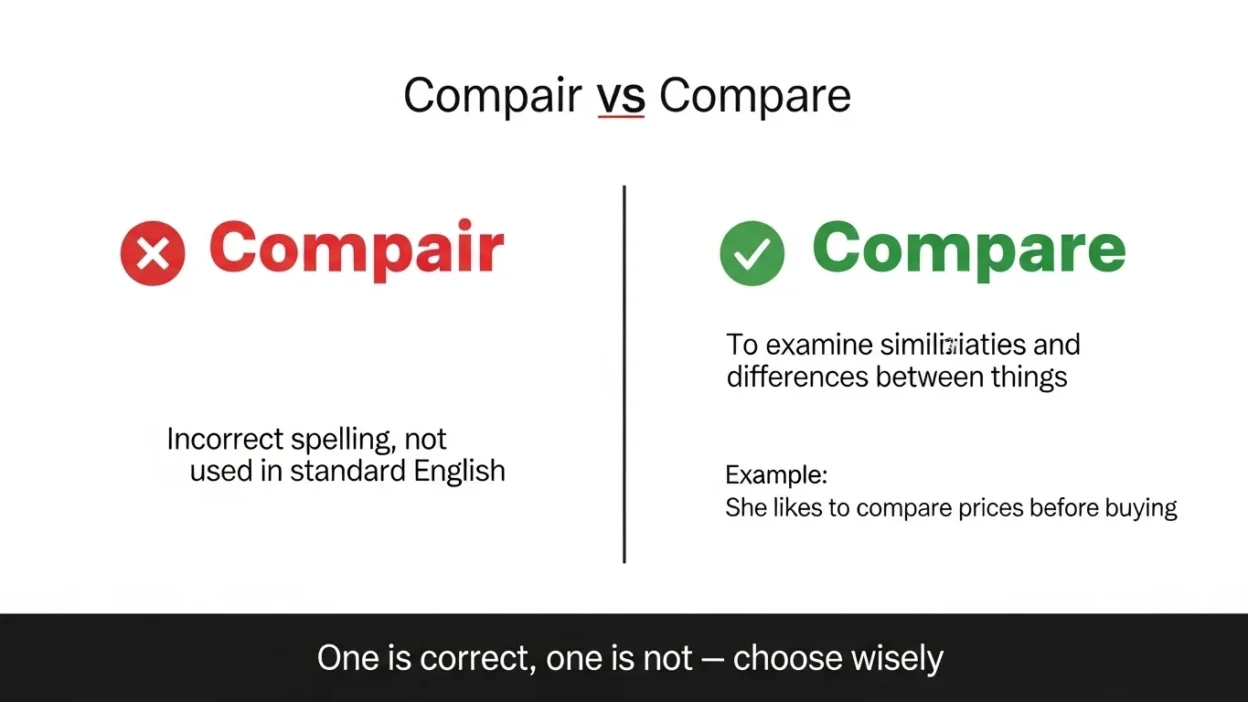
Compare is the correct spelling and means to examine the differences or similarities between two or more things.
Compair is an incorrect spelling and is not a real English word. Always use compare.
Meaning of Compare
The word compare means to look at two or more things and see how they are similar or different.
Simple Definition:
Compare = To examine similarities and differences between things.
Examples:
- Please compare these two phones before buying one.
- Teachers compare students’ results to check progress.
- We compared prices before choosing the best product.
- If you compare both options, the second one is better.
Why Do People Write “Compair” Instead of “Compare”?
The mistake happens because of pronunciation. Some people pronounce compare like compair, which leads to spelling confusion. But remember:
- Compare → Correct
- Compair → Incorrect
A helpful trick:
The word compare comes from the word pair (meaning two things). When you compare, you often look at a pair of things.
So think like this:
Com + pair = Compare
This trick makes it easy to remember the correct spelling.
Compair vs Compare (Comparison Table)
| Word | Correct or Incorrect | Meaning | Example |
| Compair | Incorrect | Not a real English word | ❌ I will compair the prices |
| Compare | Correct | To examine similarities or differences | ✅ I will compare the prices |
Common Mistakes People Make
Here are some common mistakes related to compair vs compare:
1. Wrong Spelling
❌ Compair the two products.
✅ Compare the two products.
2. Using Compare Without “To” or “With”
Both are correct, but used differently.
- Compare to → Show similarity
- Compare with → Show differences
Examples:
- She compared her dress to a flower. (similarity)
- He compared this phone with that phone. (differences)
3. Using Compare in the Wrong Context
Wrong: I compare yesterday.
Correct: I compared yesterday. (Use past tense when needed)
Compare in American vs British English
Good news: There is no difference between American and British English for this word.
| American English | British English |
| Compare | Compare |
The spelling compare is correct in both American and British English. The spelling compair is incorrect in both.
Synonyms of Compare (LSI Keywords)
Using synonyms helps improve your vocabulary and SEO writing.
Here are similar words you can use instead of compare:
- Contrast
- Examine
- Evaluate
- Analyze
- Review
- Match
- Measure
- Differentiate
- Assess
Example Sentences:
- We need to analyze both reports.
- She evaluated the two options carefully.
- He contrasted city life with village life.
More Example Sentences (Daily Use)
- Always compare prices before shopping.
- You cannot compare these two players.
- Let’s compare last year’s results with this year’s.
- If you compare both cars, this one is cheaper.
- Don’t compare yourself to others.
Quick Memory Tips
Here are easy tips to remember the correct spelling:
- Compare has the word pair in it → We compare two things (a pair).
- Compair is a spelling mistake.
- Think: Com + pair = Compare
- Always double-check spelling when writing.
FAQs
1. Is compair a real word?
No, compair is not a real English word. It is a spelling mistake of compare.
2. What is the correct spelling: compair or compare?
The correct spelling is compare.
3. What does compare mean?
Compare means to examine two or more things to see their similarities or differences.
4. How do you use compare in a sentence?
Example: Please compare these two laptops before buying.
5. Why do people write compair?
People write compair because it sounds similar to compare, which causes spelling confusion.
6. Is compare used in American English or British English?
Compare is used in both American and British English. The spelling is the same.
7. What is the noun form of compare?
The noun form is comparison.
Example: This is a comparison between two products.
8. What is the past tense of compare?
The past tense is compared.
Example: I compared both phones yesterday.
Summary
Understanding the difference between compair vs compare is very simple once you know the rule. Compare is the correct spelling and means to examine similarities and differences between two or more things.
On the other hand, compair is just a common spelling mistake and should not be used in correct English writing. To avoid mistakes, remember the trick: Compare = Com + Pair.
Whe n you compare, you usually look at a pair of things. This small memory trick can help you always spell the word correctly.
If you focus on correct spelling and practice using the word in sentences, you will never confuse compair and compare again.
Actionable Takeaway
Next time you write the word, pause and check the spelling. Remember that compare contains the word pair, which can help you recall the correct spelling quickly.
Practice writing a few sentences using compare, and you’ll build confidence in your English writing. Small spelling corrections like this can greatly improve your writing quality, SEO content, and professional communication.

Matthew Benjamin is a contributing author at SpellPeak, dedicated to clear, engaging, and purposeful writing. He focuses on creating informative content that helps readers understand complex ideas with ease. His work emphasizes accuracy, creativity, and practical value, supporting better communication and thoughtful digital learning for a global audience.