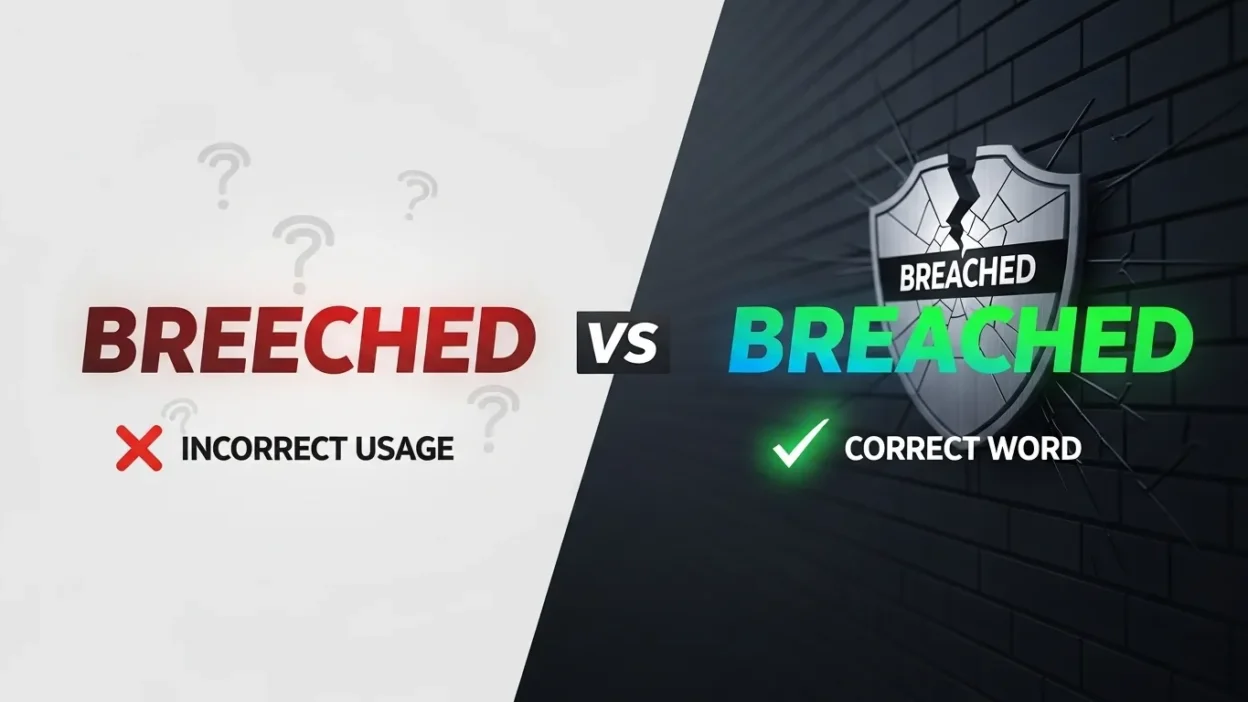
Confused about breeched vs breached? You’re not alone. These two words look almost identical, sound similar, and are often mixed up in writing especially in legal, business, and security contexts.
But they have very different meanings.If you’ve ever wondered whether it’s a “contract breeched” or “contract breached,” this guide will clear up the confusion once and for all.
Let’s break it down in simple, human language so you can use the correct word confidently every time.
Quick Answer:
- Breached is the correct word in most modern contexts. It means broken, violated, or infringed (e.g., breached contract, breached security).
- Breeched is rare and mainly refers to something related to a breech, such as a baby in a breech birth position or clothing like breeches.
If you’re talking about a broken agreement, hacked system, or violated rule, the correct spelling is breached.
What Does “Breached” Mean?
The word breached comes from the noun “breach,” meaning a break, gap, violation, or failure to follow rules. It is commonly used in:
- Legal contexts (breach of contract)
- Cybersecurity (data breach, security breach)
- Personal trust (breach of trust)
- Agreements and policies
Common Meanings of Breached
- To break a rule, law, or agreement
- The company breached the terms of the contract.
- He breached his confidentiality agreement.
- To break through a barrier or defense
- Hackers breached the security system.
- The floodwaters breached the dam.
- To violate trust or duty
- She breached patient confidentiality.
Real-Life Examples
- The organization reported a data breach after customer records were leaked.
- The tenant breached the lease agreement by failing to pay rent.
- The firewall was breached during the cyberattack.
In almost all professional, legal, and technical writing, “breached” is the word you need.
What Does “Breeched” Mean?
The word breeched comes from “breech,” which has a very different meaning.
“Breech” can refer to:
- The lower or rear part of something (especially firearms)
- A baby positioned feet-first during birth (breech position)
- Historical knee-length trousers called breeches
“Breeched” is rarely used in modern everyday English. It generally means:
- Clothed in breeches (historical usage)
- Related to a breech position (medical context)
Examples of Breeched
- The child was breeched (an old-fashioned way of saying dressed in breeches).
- The baby was delivered in a breech position.
Notice how uncommon this usage is. You would almost never write “breeched contract” or “breeched security” that would be incorrect.
Breeched vs Breached: Side-by-Side Comparison
| Feature | Breeched | Breached |
| Main Meaning | Related to breech (birth position, clothing, rear part) | Broken, violated, or infringed |
| Common Context | Medical or historical | Legal, business, cybersecurity |
| Example | Breech birth | Breached contract |
| Frequency in Modern English | Very rare | Very common |
| Correct for agreements? | ❌ No | ✅ Yes |
If you’re unsure, ask yourself: “Am I talking about something being broken or violated?” If yes, the correct word is breached.
Why People Confuse Breeched and Breached
Spelling confusion is natural here because:
- Both words sound similar.
- Only one letter is different.
- English spelling can be tricky.
But their meanings are completely unrelated.
Think of it this way:
- Breach = Break
- Breached = Broken
- Breech = Baby position or rear part
That simple memory trick can save you from embarrassing mistakes in professional writing.
Common Mistakes to Avoid
Here are some incorrect and correct examples to make things crystal clear.
❌ The company breeched the contract.
✅ The company breached the contract.
❌ The hacker breeched the database.
✅ The hacker breached the database.
❌ She breeched the agreement.
✅ She breached the agreement.
The only time you would use “breeched” is in very specific medical or historical contexts and even then, it’s uncommon.
Legal and Business Usage: Why “Breached” Matters
In legal writing, precision is everything. Using “breeched” instead of “breached” can:
- Reduce credibility
- Create confusion
- Make documents look unprofessional
In contract law, a breach of contract happens when one party fails to fulfill their obligations. This can result in:
- Lawsuits
- Financial penalties
- Termination of agreements
In cybersecurity, a data breach refers to unauthorized access to sensitive information. This term is widely used in compliance, risk management, and privacy regulations.
Using the wrong spelling in such serious contexts can damage trust and authority.
American vs British English Differences
Good news: there is no difference between American and British English when it comes to “breached.”
- In both the United States and the United Kingdom, “breached” is the correct spelling when referring to violations or broken agreements.
- “Breech” and “breeched” retain the same meanings in both varieties of English.
So whether you’re writing for a US or UK audience, the rule remains the same.
Related Words and LSI Keywords
To deepen your understanding, here are related terms often used with “breached”:
- Breach of contract
- Data breach
- Security breach
- Breach of trust
- Violated agreement
- Infringed policy
- Non-compliance
- Legal violation
- Confidentiality breach
- Cyberattack
These terms commonly appear in legal documents, cybersecurity reports, and compliance discussions.
FAQs
1. Is “breeched” ever correct?
Yes, but only in rare contexts related to breech birth or historical clothing. It is almost never used in legal or business writing.
2. What is the correct spelling for a broken contract?
The correct phrase is “breached contract” or “breach of contract.”
3. Is it breeched or breached security?
The correct phrase is breached security or security breach.
4. Why does “breached” have an “ea”?
It comes from the word “breach,” which historically means a break or violation. The spelling follows traditional English roots.
5. How do I remember the difference?
Think:
- Breach = Break
- If something is broken, it’s been breached.
6. Is breeched common in modern English?
No. It is extremely rare and mostly found in historical texts or specialized medical contexts.
7. Can spell check confuse breeched and breached?
Yes, because both are technically real words. Always double-check context, especially in professional documents.
8. What does breach mean in cybersecurity?
In cybersecurity, a breach means unauthorized access to confidential or protected data.
Final Summary:
The difference between breeched vs breached is simple once you understand their roots. “Breached” refers to something broken, violated, or infringed like a contract, policy, or security system.
It is widely used in legal, corporate, and digital contexts and is the correct choice in almost all modern writing situations.
“Breeched,” on the other hand, relates to a breech position or historical clothing. It is rarely used today and almost never appropriate in business or professional communication.
Actionable Takeaway
If you’re writing about agreements, laws, cybersecurity, or trust being broken, always use breached.
Before publishing or submitting professional content, quickly scan for this common spelling mistake.
A small correction can protect your credibility and strengthen your writing authority.
Clear language builds trust and now you know exactly which word to use.

Mia Elizabeth is a contributing author at SpellPeak, passionate about thoughtful writing and clear communication. She creates engaging, well-researched content that helps readers learn and connect with ideas easily. Her work emphasizes clarity, creativity, and practical value, supporting meaningful digital experiences and accessible knowledge sharing worldwide.