If you’ve ever typed alterior vs ulterior into Google, you’re not alone. These two words look and sound similar, but only one is actually correct in standard English. This confusion often trips up writers, students, and even professionals who want their communication to be polished and error-free.
In this guide, you’ll get a clear, friendly explanation of the difference, along with examples, common mistakes, and simple tips to help you remember the correct usage every time. Let’s clear it up once and for all.
Quick Answer
- “Ulterior” is the correct word in English.
- “Alterior” is a misspelling and not recognized in standard dictionaries.
- Use ulterior when referring to hidden motives or intentions.
What Does “Ulterior” Mean?
The word ulterior is an adjective that describes something hidden, not openly stated, or beyond what is obvious.
Common meanings:
- Secret or concealed intention
- Motive that isn’t immediately visible
- Something lying beyond what is openly expressed
Example sentences:
- She offered help, but I suspected she had an ulterior motive.
- His kindness wasn’t genuine it felt like there was an ulterior purpose.
- The proposal seemed simple, but there were ulterior implications.
In most cases, you’ll see “ulterior” used with the word motive a very common phrase in English.
What About “Alterior”?
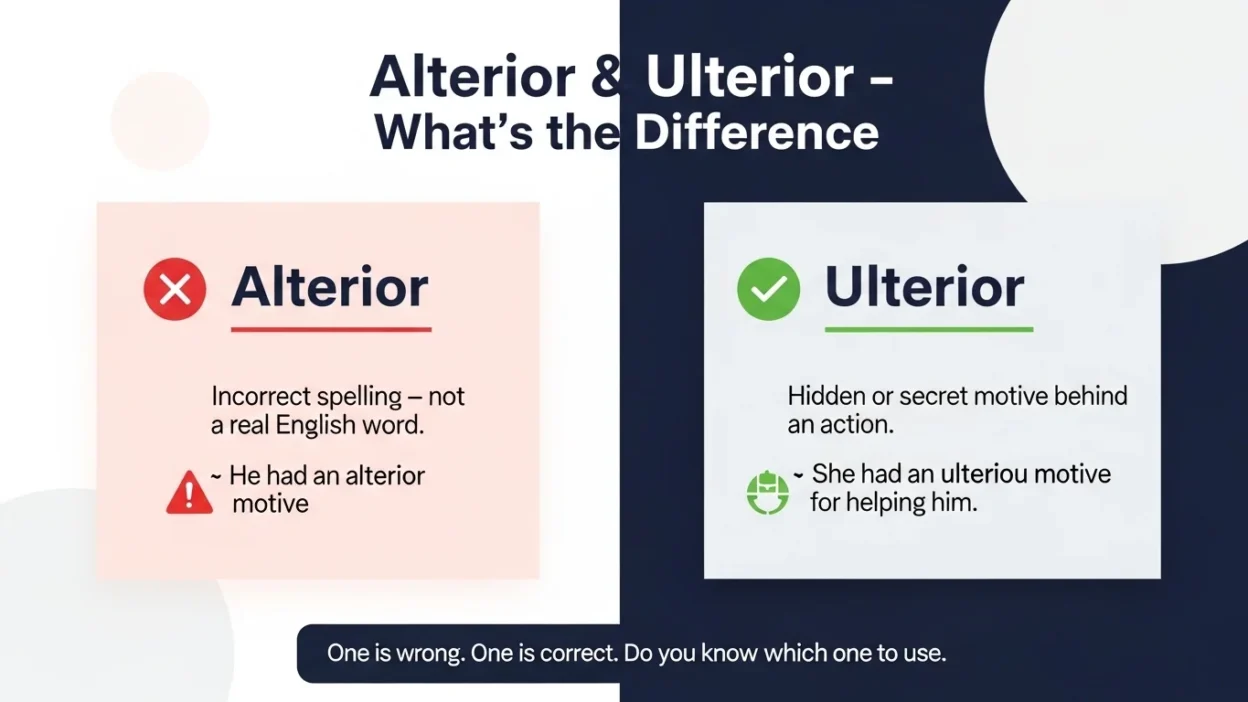
Here’s the truth: “alterior” is not a correct English word.
It’s simply a misspelling of “ulterior.” People often write it by mistake because:
- It sounds similar when spoken
- The prefix “al-” exists in other English words (like alternate)
- Typing errors or autocorrect issues
Example of incorrect usage:
❌ He had an alterior motive for helping.
✔️ He had an ulterior motive for helping.
Why Do People Confuse Alterior vs Ulterior?
This confusion happens for a few key reasons:
- Phonetic similarity: Both words sound close when spoken quickly
- Typing habits: “A” and “U” are easy to mix up when typing fast
- Lack of familiarity: “Ulterior” isn’t used in everyday casual speech as much
Understanding that only one is valid helps eliminate the confusion instantly.
Comparison Table: Alterior vs Ulterior
| Feature | Alterior ❌ | Ulterior ✅ |
| Correct spelling | No | Yes |
| Meaning | None | Hidden or secret intention |
| Dictionary status | Not recognized | Fully recognized |
| Usage in writing | Incorrect | Correct |
| Example | Alterior motive (wrong) | Ulterior motive (correct) |
Common Mistakes to Avoid
Here are some typical errors people make:
1. Using “alterior” in formal writing
This is a major red flag in essays, emails, or professional documents.
2. Assuming both words exist
Some think “alterior” is just a variation it’s not.
3. Spellcheck dependence
Sometimes spellcheck doesn’t catch contextual errors, so always double-check.
4. Misunderstanding the meaning
Even when “ulterior” is used correctly, it’s sometimes misunderstood.
Easy Memory Trick
A simple way to remember the correct word:
👉 “Ulterior” starts with “U” think “Undercover motive.”
This helps link the word to its meaning of something hidden or secret.
American vs British English
Good news there’s no difference here.
- Ulterior is spelled and used the same way in both American and British English.
- Alterior is incorrect in both versions.
So no matter where you’re writing from the US to the UK or anywhere else the rule stays the same.
Related Words and Synonyms
To strengthen your vocabulary, here are some alternatives to “ulterior”:
- Hidden
- Secret
- Concealed
- Underlying
- Covert
- Unspoken
- Subtle motive
Example:
- She had a hidden agenda (similar to ulterior motive).
- His actions revealed a covert intention.
Using these synonyms can make your writing more dynamic and engaging.
When Should You Use “Ulterior”?
Use “ulterior” when:
- You suspect someone’s intentions aren’t fully honest
- You’re describing something beyond the obvious
- You want to imply deeper meaning or motive
Real-life examples:
- In business: “The deal seemed fair, but there was an ulterior agenda.”
- In relationships: “I felt he had an ulterior reason for being so nice.”
- In storytelling: “The villain had an ulterior plan hidden beneath his charm.”
FAQs
1. Is “alterior” ever correct?
No, “alterior” is always incorrect in standard English.
2. Why do people write “alterior” instead of “ulterior”?
Mostly due to pronunciation confusion or simple spelling mistakes.
3. What does “ulterior motive” mean?
It means a hidden or secret reason behind someone’s actions.
4. Can “ulterior” be used in positive contexts?
Rarely. It usually has a negative or suspicious tone.
5. Is “ulterior” a formal word?
Yes, it’s commonly used in formal writing, literature, and professional contexts.
6. Are there similar confusing word pairs?
Yes, like:
- Affect vs Effect
- Accept vs Except
- Then vs Than
7. How can I avoid spelling mistakes like this?
- Practice common confusing words
- Read more
- Proofread carefully before publishing
8. Is “ulterior” commonly used today?
Yes, especially in writing, journalism, and conversations involving motives or intentions.
Final Summary
The confusion between alterior vs ulterior is common, but the solution is simple: only “ulterior” is correct. It describes hidden intentions or motives, often with a slightly negative implication. On the other hand, “alterior” isn’t a real word and should be avoided entirely in both casual and professional writing.
By understanding the meaning, practicing correct usage, and using memory tricks, you can confidently avoid this mistake. Clear, accurate language builds trust and small corrections like this can make a big difference in how your writing is perceived.
Actionable Takeaway
Next time you’re about to write “alterior,” pause and replace it with “ulterior.” Make it a habit to double-check tricky words, and consider keeping a personal list of commonly confused terms. Over time, these small improvements will sharpen your writing and boost your confidence.

Mia Elizabeth is a contributing author at SpellPeak, passionate about thoughtful writing and clear communication. She creates engaging, well-researched content that helps readers learn and connect with ideas easily. Her work emphasizes clarity, creativity, and practical value, supporting meaningful digital experiences and accessible knowledge sharing worldwide.